17 photos show thousand of ill people flooding Europe’s hospitals as the second wave of the coronavirus pandemic grips the continent

From businessinsider / By  /Nov.16

Medical workers take care of a patient at the ICU of the George Papanikolaou General Hospital in Thessaloniki, Greece, on November 11, 2020.
Alexandros Avramidis/Reuters

Europe’s second coronavirus wave is intensifying as the number of hospitalizations and deaths are dramatically rising across the continent.

Netherlands coronavirus
Medical personnel wearing full protective suits are seen as they treat a patient infected with the coronavirus in the ICU at Maastricht UMC+ in Maastricht, Netherlands, on November 10, 2020. 
Piroschka van de Wouw/Reuters

On Thursday, the UK because the first country in Europe to pass 50,000 COVID-19 deaths, according to latest government figures.

liverpool testing
Soldiers wearing full PPE wait at a coronavirus rapid testing center in Liverpool, England on November 11, 2020. 
Paul ELLIS / AFP via Getty Images

Source: BBC

NHS bosses said this week they were seriously concerned by the number of hospitalizations, adding that medical professionals are facing a “very difficult winter.”

manchester
A cyclist wearing a face mask pushes a bike past a barrier outside the NHS Nightingale Hospital North West field hospital, set up to provide more hospital capacity during the pandemic, on October 13, 2020. 
Oli Scarff / AFP via Getty Imagess

Hospitals are currently treating just over 10,000 patients, but are expected to get close to 20,000 in the next few weeks.

Source: BBC

In France, hospitalizations are also rising rapidly, with the prime minister saying on Thursday that someone is being admitted to hospital every 30 seconds.

2020 11 12T180058Z_557744969_RC2U1K985QJA_RTRMADP_3_HEALTH CORONAVIRUS FRANCE HOSPITAL.JPG
A patient suffering from the coronavirus lies on his front in the ICU at Ambroise Pare clinic in Neuilly-sur-Seine, near Paris, France, November 12, 2020. 
Benoit Tessier/Reuters

The hospitalizations come despite the country seeing a decrease in its infection rate.

“The pressure on our hospitals has intensified enormously,” Prime Minister Jean Castex said on Thursday, according to Sky News.

Source: Sky News 

The number of people infected with COVID-19 in French hospitals reached a new all-time high on Friday, with 32,638 reported admissions.

france covid-19 europe second wave
A medical worker swabs the nose of a man as she administers a novel coronavirus Covid-19 test at a mobile testing unit at the main train station in Marseille, southern France, on November 12, 2020. 
Nicolas Tucat/AFP via Getty Images

Source: The Guardian

The spike in cases and hospitalizations comes even though the country has been on one of the strictest second lockdowns in Europe.

Paris lockdown coronavirus
A restaurant on the Champs-Elysees avenue is shut down during a second national lockdown in Paris, France, on November 12, 2020. 
Stephane De Sakutin/AFP via Getty Images

People living in France are only allowed to leave home for essential work or medical reasons. If they leave for any other reason, they must have a permission form with them.

Source: The Local France

Even in Germany — a country that was praised for handling the first COVID-19 wave efficiently — doctors are struggling to keep up with a rising number of cases.

germany coronavirus
An intensive care nurse works in the Intensive Care Unit (ICU) of the University Hospital Dresden in Saxony on November 13, 2020. 
Robert Michael/picture alliance via Getty Images

According to the Robert Koch Institute, COVID-19 cases in the country hit a record of 23,542 on Friday.

Source: Robert Koch Institute

The figures are particularly dire in Berlin, which has one of Germany’s highest infection rates.

germany hospital coronavirus
Nurses have their daily shift handover briefing on the medical treatment for patients suffering from the coronavirus at the COVID-19 isolation ward of DRK Kliniken Berlin Mitte hospital in Berlin, Germany, on November 11, 2020. 
Fabrizio Bensch/Reuters

Source: Deutsche Welle

But the country is still doing relatively well compared to others. At the beginning of the month, Germany’s health minister said it would open its hospitals to neighboring countries.

coronavirus france
Medical staff members move a patient suffering from the coronavirus to a plane during a transfer operation from Lille-Lesquin airport in France to Munster airport in Germany, France, on November 10, 2020. 
Pascal Rossignol/Reuters

Germany’s health minister Jens Spahn said on October 30: “It makes us humble and grateful to be lucky enough to be able to support our neighbours. So far we have taken from the Netherlands. Of course, we will help Belgium, the Czech Republic and all our neighbours as soon as they ask and as long as we can,” according to the Guardian.

Source: The Guardian

However, Germany’s partial lockdown — which was put in place on November 2 — could be extended beyond the end of the month, government officials warned.

germany coronavirus
A man stands in front of a closed christmas tree decorations stall at the cancelled annual Christmas market during the second wave of the coronavirus pandemic on November 12, 2020 in Essen, Germany. 
Andreas Rentz/Getty Images

Government spokesman Stefan Seibert said lockdown measures “were not expected to be relaxed” by next week and that winter festivities were unlikely to go ahead, the Guardian reported.

Source: The Guardian

Meanwhile, Italy’s hospitals are reaching a breaking point as cases continue to spike dramatically.

Sant'Orsola Covid-19 Hospital ICU italy
Medical professionals wearing personal protective equipment treat a patient inside a COVID-19 ward at Sant’Orsola Hospital on November 12, 2020, in Bologna, Italy. 
Roberto Serra – Iguana Press/Getty Images

In Naples, the situation is so bad that medical staff were forced to bring oxygen tanks outside hospitals to treat patients waiting in their cars.

Naples cotugno hospital oxygen in cars coronavirus
A patient is administered oxygen whilst waiting in a car outside the Cotugno hospital as the battle with the coronavirus disease (COVID-19) intensifies, in Naples, Italy, on November 9, 2020 
Ciro de Luca/Reuters

Source: Business Insider

“The situation in Campania is out of control,” the Italian foreign minister, Luigi Di Maio, said this week. “We need urgent restrictions…people are dying.”

italy coronavirus
Doctors wait for patients to arrive at the Policlinico Tor Vergata hospital where patients suffering from the coronavirus disease (COVID-19) are being treated in Rome, Italy November 13, 2020. 
Guglielmo Mangiapane/Reuters

Source: The Guardian

His comments came after a heart-wrenching video emerged of a man who died in the bathroom of a Naples emergency room while waiting to be tested. He is suspected to have had COVID-19.

italy coronavirus talk
A medical worker wearing a face mask talks on her mobile phone inside the new coronavirus intensive care unit of the Brescia Poliambulanza hospital, Lombardy, on March 17, 2020. 
Piero Cruciatti/AFP via Getty Images

Source: Business Insider

The country passed the million-mark in total infections this week, with cases rising at more than 30,000 a day.

italy hospital coronavirus second wave
Members of the medical personnel prepare in the emergency room of the Maggiore di Lodi hospital in Lodi, Italy, on November 13, 2020. 
Flavio Lo Scalzo

Source: Johns Hopkins University Tracker

Some good news has come out of Belgium and the Netherlands where new infections are slowing down. However, hospital services remain under severe pressure, with Belgium having to send some of their patients to Germany to be treated.

netherlands coronavirus
A member of the medical personnel wearing a full protective suit is seen as she treats a patient infected with COVID-19 in the intensive care unit at Maastricht UMC+ Hospital in Maastricht, Netherlands, on November 10, 2020. 
Piroschka van de Wouw/Reuters

Source: The Guardian

Sweden — which thought its herd immunity strategy would prevent a second wave — is also struggling, reporting a record 5,990 new cases on Friday, its highest since the start of the pandemic.

stockholm sweden coronavirus
A man wearing a face mask walks in the street during the COVID-19 pandemic in Stockholm, capital of Sweden, on November 3, 2020 
Xinhua/Wei Xuechao via Getty Image

Sweden’s chief epidemiologist, Anders Tegnell, admitted this week that the country is now experiencing a second wave of coronavirus despite predicting that its no-lockdown policy would prevent another wave.

Meet the 4 astronauts SpaceX just launched on the longest human spaceflight in NASA history

 From businessinsider / Nov.16/ByAria Bendix , Morgan McFall-Johnsen , and Dave Mosher

On Sunday evening, a SpaceX rocket roared to life, spewed fire through the dark, and carried the company’s first operational human mission for NASA into orbit. The crew consists of three NASA astronauts — Shannon Walker, Mike Hopkins, and Victor Glover — as well as Japan Aerospace Exploration Agency astronaut Soichi Noguchi.

The astronauts’ Crew Dragon spaceship is set to dock to the International Space Station on Monday night, where NASA astronaut Kathleen Rubins and two Russian cosmonauts, Sergey Ryzhikov and Sergey Kud-Sverchkov, will be waiting to greet them.

The mission, called Crew-1, calls for the astronauts to stay on the ISS for the standard six months. During that time, they’ll conduct spacewalks, do science experiments, and work on regular station maintenance. Since humans haven’t launched from US soil since the Space Shuttle Program — which flew missions that lasted just a couple weeks — this will be the longest human spaceflight in NASA’s history.

Meet the crew.

Mike Hopkins, commander

michael "mike" hopkins NASA
Astronaut Mike Hopkins stows items in a locker in the Destiny laboratory of the International Space Station. 
NASA

Hopkins grew up on a farm in Missouri. Before becoming a NASA astronaut in 2009, he was a special assistant to the Vice Chairman of the Joint Chiefs of Staff. A colonel in the Air Force, he served as a flight test engineer.

This is Hopkins’ second trip to space. He first went to the ISS in September 2013 as a member of Expedition 37/38. During that mission, Hopkins logged 166 days in space and conducted two spacewalks.

“I can’t wait to get to float again,” he told Business Insider.

Hopkins was announced as a Crew-1 member in 2018. As commander, he’s tasked with ensuring that the mission runs smoothly. That includes making a sacrifice: The ISS is currently short one crew quarters, so Hopkins may have to sleep on SpaceX’s Crew Dragon spacecraft, Resilience, which will remain docked to the ISS. Eventually, however, a sleeping pod is expected to be sent to the station on a cargo mission.

“The nerves start to really pile on as you get closer to launch,” Hopkins said during a pre-mission news conference.

Victor Glover, pilot

victor glover NASA crew dragon selected
NASA astronaut Victor Glover cheers after being selected to fly on the second crewed mission of SpaceX’s new Crew Dragon spaceship, August 3, 2018. 
David J. Phillip/AP

Glover is the only Crew-1 member who hadn’t flown in space before, but he had logged more than 3,000 hours of flying experience on Earth. Like Hopkins, he was selected as a Crew-1 member in 2018. He’s the mission’s pilot.

“I really look forward to every single bit of it,” he told Business Insider. “Every time I do something in space, it will be the first time.”

Glover became part of NASA’s 21st astronaut class in 2013, while serving as a Legislative Fellow in the US Senate. He is also a former Navy commander, aviator, and test pilot.

Glover and his wife, who both hail from California, have four children. As the Crew-1 mission approached, their family had to be careful about their behavior during the pandemic, he said.

“We’ve essentially been isolating since mid-March,” Glover said. “They’re ready for me to go, one because they want to see their father accomplish one of his lifelong dreams, but they also really want to go back to school and have a chance to see their friends and go to the mall.”

Shannon Walker, mission specialist — and trailblazer

shannon walker nasa astronaut spacex spacesuit portrait crew 1 dragon spaceship mission KSC 20200814 PH SPX01_0002 orig
NASA astronaut Shannon Walker in a space suit. 
SpaceX

Walker, a mission specialist, was born in Houston, Texas. She was hired by NASA in 1995.

Walker worked on robotics hardware and other initiatives before being selected as an astronaut in 2004. She spent 161 days on the space station in 2010.

She was assigned to the Crew-1 mission in February of this year. With the Crew-1 launch, she became the first woman to fly to space in a commercial spacecraft.

“To be honest, I haven’t really put much thought into the fact that I am the first woman on a commercial vehicle,” Walker told Business Insider. “I expect to be the first of many, and look forward to the day that we don’t have to note such events.”

Ahead of the launch, Walker — who is married to astronaut Andy Thomas — said she was looking forward to having a 360-degree view of Earth again.

“In some ways, it’s the start of all those science-fiction movies that we watched as kids coming to fruition where you’ve got entities living and working out in space and off the planet,” she said. “Just to be at the forefront of that is enormously exciting.”

Soichi Noguchi, mission specialist — and a spaceflight veteran

shannon walker nasa astronaut spacex spacesuit training crew 1 dragon spaceship mission KSC 20200924 PH SPX01_0004_orig
JAXA astronaut Soichi Noguchi participates in equipment testing for the Crew-1 mission at SpaceX headquarters. 
SpaceX

Noguchi, also a mission specialist, is an aeronautical engineer from Japan. A former Boy Scout, he was selected as an astronaut in 1996 and has spent 177 days in space.

Like Walker, he was also appointed to the Crew-1 mission in 2020. He is the team’s only non-NASA member, and the fifth Japanese astronaut to fly in space.

Noguchi was on the US Space Shuttle in 2005 and a Russian Soyuz expedition in 2009. Now, with SpaceX, he’s the third person ever to fly on three different launch systems.

“I’ll be the first one to experience Space Shuttle, Soyuz, and SpaceX. I feel very honored,” Noguchi told Business Insider. “Obviously, this is a transition era. This is the beginning of the commercial spaceflight program. I’m happy to live long enough, from the Space Shuttle age all the way to commercial.”

Susie Neilson contributed reporting.

Negative Media Frames and Female Politicians: A Case Study of Jamaica’s First Female Prime Minister, Portia Simpson-Miller

Media Bias

Media bias is also inherent in the coverage of female political candidates and leaders. There is an awareness in the extant literature on media and women’s representation that there is a difference in both the volume and substance of media coverage received by female politicians when compared to male politicians (Fowler and Lawless 2009Hooghe, Jacobs, and Claes 2015Kahn 1994Dan and Lorgoveanu 2013). Several studies have found that aspiring female politicians receive less positive attention or coverage in the form of news commentary, cartoons, and commentaries when compared to their male counterparts (Gilmartin 2001Kahn 199219941996Norris 1997O’Neill and Savigny 2014Sampert and Trimble 2003). When looking at the media’s representation of men and women in politics, the general consensus among scholars is that women get less policy/issue coverage and more “horse-race” coverage. This type of coverage “emphasize[s] which candidates are ahead and behind and the strategies and tactics of campaigning necessary to position a candidate to get ahead or to stay ahead” (Cappella and Jamieson 1997, 74).

Hooghe, Jacobs, and Claes (2015), in their assessment of media coverage of female Members of Parliament (MPs) in Belgian news broadcasts, found that female MPs were significantly less likely to be allotted speaking time, and they received less speaking time than their male colleagues. Aldering’s (2018) assessment of male and female leadership in the Netherlands between 2006 and 2012 found that males received more media coverage of leadership traits than women. He also speculated that this sex-differentiated coverage likely contributed to the underrepresentation of women. Even though there is a general consensus that male candidates receive more media coverage than their female counterparts, some recent studies have produced mixed results, with some indicating that gender bias in media coverage might be decreasing (Bystrom, Robertson, and Banwart 2001Hayes and Lawless 2015). Others have suggested that high-profile female candidates do receive more or the same media coverage as males (Lavery 2013Wasburn and Wasburn 2011).

Portia Simpson-Miller (“Sista P” or “Mama P”)

Portia Simpson-Miller, affectionately known as “Mama P” or “Sista P,” entered Jamaica’s political scene in the early 1970s; first as a member of the Kingston and St. Andrew Municipal Council as an elected council member (Councilor), then as a MP with the People’s National Party (PNP)—a position she held since 1976. Having worked assiduously to reach the pinnacle of power, she also served as a Cabinet member; Minister of Labour, Welfare and Sports; Minister of Tourism; and Minister of Local Government and Sports. In 1978, she was appointed vice president of the PNP—a position she held until 2006 (Jamaica Information Service 2015Skard 2014). On March 30, 2006, Simpson-Miller broke the proverbial “glass ceiling” for women she became the first female president of the PNP and the first female prime minister of Jamaica. She also positioned herself as the third female prime minister in the Anglophone Caribbean. Simpson-Miller’s initial rise to power was, however, short-lived when on September 3, 2007, the PNP narrowly lost the general election to the rival Jamaica Labour Party. The 2011 general election proved more successful for Simpson-Miller, as the PNP won the election by a convincing margin (claiming forty-one of sixty-three seats). According to Helps (2013, 17):

The 2011 general election proved a turning point for Simpson-Miller, as it not only solidified her status as one of the greats of the Jamaican political scene, but thrust her into the annals of Jamaica’s history as a strategist par excellence.

Simpson-Miller became prime minister of Jamaica, elect; a position she held until 2016 when she was narrowly defeated by Andrew Holness of the Jamaica Labour Party (JLP). In March 2017, Simpson-Miller stepped down as opposition leader and president of the PNP.

Portia Simpson-Miller’s ascension to Jamaica’s highest political office came at a time when Jamaicans were ready for a change. It was hope that she would upset the status quo and cause a stir in the male-dominated two-party system that has come to define Jamaican politics. During the elections of 2006 and 2011, the phrase “Woman Time Now” became a running theme, and people, especially women, prepared themselves to welcome Simpson-Miller as the first female prime minister (Helps 2013). As Skard (2014, 269–70) rightfully noted:

In a country where there were supposed to be “matriarchs”, where 70 per cent of university students were women, and where women had long constituted more than half of the labour force and were about to get leading positions in economic life, but not in politics, many felt that it was time for a woman at the helm.

Despite gaining universal adult suffrage in 1944, at the time of Simpson-Miller’s ascent to power, only about seven women sat in the House of Representatives (Skard 2014).

Even though Simpson-Miller’s tenure as prime minister of Jamaica was short-lived, her political career can be described as remarkable. She was an advocate for the poor and working class to whom she often showed genuine love and concern. She was also considered a woman for the people. Jamaicans, especially women and those from the lower class, loved and revered Simpson-Miller. Her political successes by the end of her tenure in 2016 include a reduction in crime, increased economic growth, improving the justice system, and instituting a new healthcare benefit policy guaranteeing free healthcare and medical coverage for children in Jamaica (Skard 2014). In 2006 and 2007, Forbes magazine ranked Simpson-Miller eighty-ninth and eighty-first, respectively, on its list of “The 100 Most Powerful Women.” In 2012, Time magazine ranked her among its “100 Most Influential Persons in the World.” In 2013, Simpson-Miller was inducted into the prestigious International Women’s Forum Hall of Fame.

Despite her career success, Simpson-Miller endured immense backlash and criticism from those who perceived her as being unsuitable for the office of prime minister. Attacks against Simpson-Miller were perpetrated through several media, but the media in Jamaica played a significant role in perpetuating gendered stereotypes and criticism against her. Simpson-Miller and several others seem to believe that the media targeted her because of her gender and class. Female political leaders are often harshly scrutinized and criticized based on gender, but Simpson-Miller had both gender and class working against her (Skard 2014). Born in the remote district of Woodhall, St. Catherine (Jamaica), Simpson-Miller often describes herself as coming from the “bowels of the poor.” While Simpson-Miller found favor with Jamaica’s lower class, she struggled to be accepted by the upper and growing middle classes. Since the nationalist period of the 1950s, the middle “brown” class has dominated politics and government in Jamaica (Meeks 1996; Stone 1985).

In a January 2016 interview with The Jamaica Gleaner, Simpson-Miller explained that throughout her political career, she has endured “political pain” and “personal hurt” (The Gleaner 2016). Much of this pain she said was not because she is a female, but because she had the wrong color, address, and social class (The Gleaner 2016). In a 2007 interview with Harvard University Professor Orlando Patterson, Simpson-Miller explained that she faced mounting criticism from the media because she was a woman in a male-dominated field, and also because of her background. She lamented that she has been “beaten, banged and bashed by the media” (Patterson 2007). She further articulated that the media tried to kill her charisma, and every time they see her “they are looking at the majority of Jamaicans who are poor, and they can only think, how dare this uppity [self-important, arrogant] woman …” (Patterson 2007). After losing the 2016 General Election to Andrew Holness, Simpson-Miller received mounting pressure both from within her party and the wider populace to step aside as president of the PNP and Leader of the Opposition. Simpson-Miller questioned whether this was because she is a woman.

Personal life

Similar to female politicians worldwide, Simpson-Miller has been subjected to many interrogations of her personal life, her spending patterns, and whether she was using government money for personal reasons. Between 2012 and 2014, there was public outcry and much scrutiny from the media about Simpson-Miller’s spending habits and whether she used government funds to finance her lifestyle. In 2013, it was reported that Simpson-Miller spent $6.5 million Jamaican dollars (approximately $52,000) on a trip to Ethiopia. By 2014, it was estimated that she had spent $50 million Jamaican dollars ($400,000) on her overseas trips. Simpson-Miller fired back at her detractors, noting that she used a credit card given to her by her husband, and not taxpayers’ money, to fund her trips. Las May capitalized on this statement, depicting Simpson-Miller in one of his cartoons as a Jamaican “hot gal” (material girl) who does little work, relying heavily on handouts from a spouse or partner. This is deducted from the statements in the cartoon: “…mi always travel in style…seet mi husband gimme credit card!” (I always travel in style—see, my husband gave me [a] credit card). A similar cartoon by Clovis showed an airplane waiting in the background with the words “European Tour” written on it; in the foreground is Simpson-Miller, wiping sweat from her husband’s face as he worriedly tells her: “Portia duh, tek time wid the credit card!” (Portia, please do not abuse the credit card). These depictions of Simpson-Miller demonstrate blatant sexism, class prejudice, and a strong disrespect for the prime minister because she is a woman. They also amplify the assumption that most successful women get where they are because of their husbands or partners.

Cast in the shadows

During her tenure as prime minister of Jamaica, Simpson-Miller was harshly criticized by Jamaicans and the media for not openly discussing policy issues or providing information on policy issues in a timely manner. Others have questioned why her husband, “a good manager,” has not given her some “husbandly” advice. Not only are Simpson-Miller’s leadership skills brought into question, but she is cast in the shadow of her husband who presumably has better leadership skills and qualities. In at least 5 percent of the cartoons by Clovis and Las May, she is depicted asking the male members of the PNP for advice or giving them free rein of the Party. In one cartoon by Las May, Simpson-Miller is depicted in a boat labeled “Jamaica”; at the helm is Peter Phillips, who sweats profusely. In the back of the boat is Simpson-Miller barking directions: “Onward Peter!” What this image signals to readers is that while Simpson-Miller was the prime minister of the country, she was not necessarily the one in control. In another image, we see Simpson-Miller sitting at a desk, taking commands from Bruce Golding (Leader of the Opposition) who says to her: “Here’s how I want you to run the country…” The most striking image, however, depicts Simpson-Miller on her knees praying to God for divine intervention in pulling Jamaica out of a quagmire. She asks for a sign and Andrew Holness (then Leader of the Opposition) appears before her. Simpson-Miller has also been depicted telling her speechwriter (a male) what to include in the speech for a national budget presentation, while she watches television. Another portrays Simpson-Miller as a puppet on a string being dangled by her party handlers. While cartoons of this nature make up only 5 percent of the overall total, they paint a strong image of Simpson-Miller as someone who lacked leadership skills and qualities. As such, she needed the assistance or directives of her husband and/or male members of her party to carry out her role effectively. Images of this nature also support the narrative that in order to be effective leaders, women need the help and support that only men can offer them. They also reinforce the stereotype that females are incapable of being good leaders.

Gender

Even though a significant majority of the cartoons analyzed focused on Simpson-Miller’s leadership skills and ability to run the country, there were gender-stereotyped images of her that sought to undermine her authority as prime minister of Jamaica. Jamaica’s political system is highly masculinized, and so for female politicians, they face the double bind, of not appearing too weak on the one hand, and too aggressive on the other. Of neither appearing too feminine or not feminine enough (Bates 2014). For both cartoonists, Simpson-Miller is perceived as the latter—as being ordinary, not particularly elegant or fashionable. This could potentially account for their general focus on her leadership style, personal traits and decorum, and less on her physical appearance. This is generally not the norm for female politicians when covered in the media. In Jamaica, female politicians with a modest outward appearance often become invisible in the media. Those who dare to straddle the line between modesty and being fashionable face more media coverage and/or public backlash.

Simpson-Miller’s outward appearance was not accompanied by “modest” behavior. She was bold, vocal, and self-assured. Her approach to politics, and how she chose to carry herself, made it difficult for her to be categorized or pigeonholed by the media. This put her in direct opposition to the traditionally held notions of femininity. It is not surprising, therefore, that gendered attacks by the media were centered primarily around her behavior, and less on her physical appearance. She was often presented as incompetent, vulgar, unintelligent, silent, or erratic.

Conclusion

By using traditional frames built around the dominance of men in the coverage of women in politics, the media makes it very difficult for them to be taken seriously, and often paints them as bystanders. Misogynistic, sexist, and biased references to female politicians in the media only serve to devalue the legacy and work of women who fought for women’s right to vote and run for office. In this article, I set out to analyze the media’s portrayal of Jamaica’s first female prime minister, Portia Simpson-Miller. I found that unlike many female political leaders, media coverage focused less on Simpson-Miller’s gender and physical appearance, and more on her leadership style and performance. When present, gender stereotypes were used to draw correlations between her personal traits, her leadership abilities, and her suitability for the office of prime minister.

Simpson-Miller’s gender and physical appearance were less critiqued in the analyzed media, but gendered stereotypes and concepts were present in the cartoons’ evaluation of her leadership abilities. The most obvious characteristic of gendered media coverage is mention of female politicians’ physical appearance, character traits, marital status, family, and sexual orientation. Gendered media coverage, however, goes beyond physical appearance and character traits. While the cartoonists might be simply pointing out that Simpson-Miller was an ineffective leader, they did so in a gendered manner: questioning her spending habits and decorum, comparing her to male members of her political party and past prime ministers (all males), and magnifying concerns about her education. Male leaders are usually not scrutinized or assessed as intensely as women are. They are simply assumed to be competent leaders, having more agentic traits than women. Even when a woman portrays herself as masculine, the media will use certain gender filters in its coverage of them. Simpson-Miller was often depicted as unintelligent, emotionally weak, confrontational, erratic, hot-tempered, and vulgar; communal traits that are generally reserved for women. By depicting Simpson-Miller as ordinary, not particularly elegant, feminine, or fashionable, the cartoons were again gendered in their critique of her. Despite Simpson-Miller’s remarkable rise to power, both cartoonists also failed to highlight any positive aspects of her leadership style. This is a gendered approach used by the media to undermine female politicians and question their leadership abilities. Finally, by focusing primarily on her “failures” as prime minister, both Clovis and Las May portrayed Simpson-Miller in ways that helped to emphasize her “otherness” in politics in much the same way that focuses on her appearance, personal style, and character traits would.

Dr. Tracy-Ann Johnson-Myers is a Lecturer in the Department of Government at the University of the West Indies. She holds a Bachelor of Arts degree in History (major) and Political Science (minor), and a Master of Science in Government (Comparative Politics/Political Theory) from the University of the West Indies. She earned her PhD in Interdisciplinary Studies at the University of New Brunswick (Canada). Her research interests include political institutions, electoral systems, electoral reform, and the political representation of women and ethnic minorities

Vice President-elect Kamala Harris’ remark

November 7, 2020
Good evening.
Congressman John Lewis, before his passing, wrote: “Democracy is not a state. It is an act.”
And what he meant was that America’s democracy is not guaranteed.
It is only as strong as our willingness to fight for it, to guard it and never take it for granted.
And protecting our democracy takes struggle.
It takes sacrifice. There is joy in it and there is progress.
Because We The People have the power to build a better future.
And when our very democracy was on the ballot in this election, with the very soul of America at stake, and the world watching, you ushered in a new day for America.
To our campaign staff and volunteers, this extraordinary team — thank you for bringing more people than ever before into the democratic process and for making this victory possible.
To the poll workers and election officials across our country who have worked tirelessly to make sure every vote is counted — our nation owes you a debt of gratitude as you have protected the integrity of our democracy.
And to the American people who make up our beautiful country — thank you for turning out in record numbers to make your voices heard.
I know times have been challenging, especially the last several months.
The grief, sorrow, and pain. The worries and the struggles.
But we’ve also witnessed your courage, your resilience, and the generosity of your spirit.
For 4 years, you marched and organized for equality and justice, for our lives, and for our planet.
And then, you voted. You delivered a clear message.
You chose hope, unity, decency, science, and, yes, truth.
You chose Joe Biden as the next President of the United States of America.
Joe is a healer. A uniter. A tested and steady hand.
A person whose own experience of loss gives him a sense of purpose that will help us, as a nation, reclaim our own sense of purpose.
And a man with a big heart who loves with abandon.
It’s his love for Jill, who will be an incredible First Lady.
It’s his love for Hunter, Ashley, his grandchildren, and the entire Biden family.
And while I first knew Joe as Vice President, I really got to know him as the father who loved Beau, my dear friend, who we remember here today.
To my husband Doug, our children Cole and Ella, my sister Maya, and our whole family — I love you all more than I can express.
We are so grateful to Joe and Jill for welcoming our family into theirs on this incredible journey.
我们非常感谢拜登和吉尔欢迎我们家庭和他们家庭共同踏上这段不可思议的旅程。
And to the woman most responsible for my presence here today — my mother, Shyamala Gopalan Harris, who is always in our hearts.
When she came here from India at the age of 19, maybe she didn’t quite imagine this moment.
But she believed so deeply in an America where a moment like this is possible.
So, I’m thinking about her and about the generations of women — Black Women.
Asian, White, Latina, and Native American women throughout our nation’s history who have paved the way for this moment tonight.
Women who fought and sacrificed so much for equality, liberty, and justice for all, including the Black women, who are too often overlooked, but so often Prove that they are the backbone of our democracy.
All the Women who worked to secure and protect the right to vote for over a century: 100 years ago with the 19th Amendment, 55 years ago with the Voting Rights Act, and now, in 2020, with a new generation of women in our country who cast their ballots and continued the fight for their fundamental right to vote and be heard.
Tonight, I reflect on their struggle, their determination and the strength of their vision — to see what can be unburdened by what has been — I stand on their shoulders.
And what a testament it is to Joe’s character that he had the audacity to break one of the most substantial barriers that exists in our country and select a woman as his Vice President.
But while I may be the first woman in this office, I won’t be the last.
Because every little girl watching tonight sees that this is a country of possibilities.
And to the children of our country, regardless of your gender, our country has sent you a clear message:
Dream with ambition, lead with conviction, and see yourself in a way that others might not see you, simply because they’ve never seen it before.
And we will applaud you every step of the way.
To the American people:
No matter who you voted for, I will strive to be the Vice President that Joe was to President Obama — loyal, honest, and prepared, waking up every day thinking of you and your families. Because now is when the real work begins.
The Hard work. The Necessary work. The Good work.
The essential work to save lives and beat this pandemic.
To rebuild our economy so it works for working people.
To root out systemic racism in our justice system and society.
To combat the climate crisis.
To unite our country and heal the soul of our nation.
The road ahead will not be easy.
But America is ready. And so are Joe and I.
但美国准备好了,拜登和我也准备好了。

Lebanese Artist Creates Powerful Sculpture From the Ashes of Beirut Port Explosion [Interview]

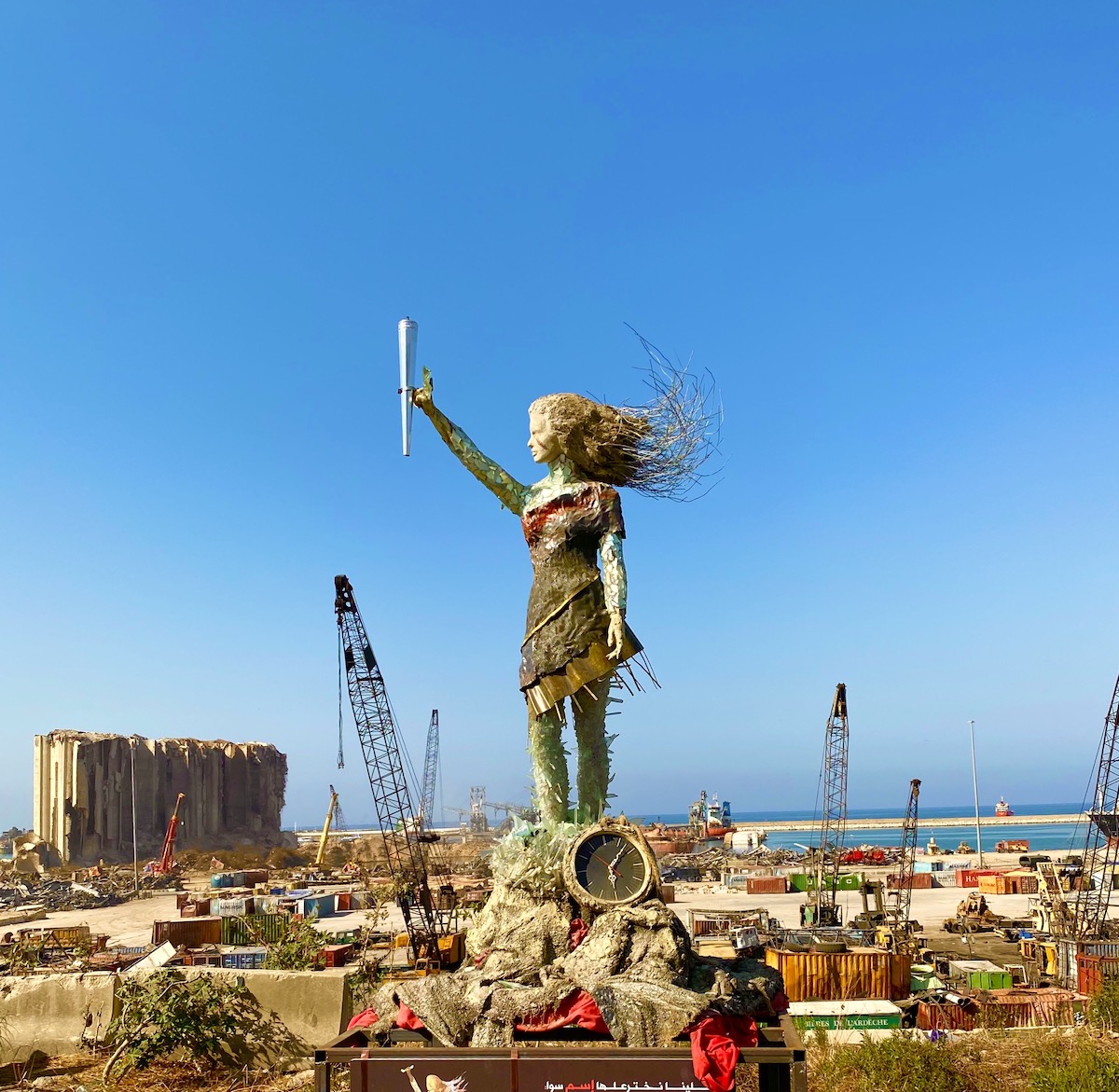
In August 2020, an enormous explosion at Beirut’s port rocked the city. Causing over 200 deaths and 6,500 injuries, the incident occurred after nearly a year of protests calling for an end to sectarian rule in Lebanon. Artist Hayat Nazer, who is highly involved in the Revolution, used rubble from the explosion to fashion a powerful sculpture that speaks to the pain of the nation. The piece is the latest in a series of sculptures inspired by the Revolution that have shined an international spotlight on the country’s struggles.

Though several of her sculptures, all made with upcycled materials, were destroyed by pro-government activists, Nazer was not deterred. In fact, her desire to create art that speaks to the masses only grew and has culminated with this untitled sculpture of a woman proudly standing at the port. Though the sculpture has now been moved for fear that it will be destroyed, Nazer is hopeful that with proper funding she’ll be able to create a larger, permanent memorial, to all those who were lost or injured in the explosion.

We had a chance to chat with the Lebanese artist about what motivated her to create this revolutionary art and the symbolism behind this powerful sculpture. Read on for My Modern Met’s exclusive interview.

Sculpture Made from Rubble of Beirut Port ExplosionWhat drove you to begin creating these sculptures?I used to work with the United Nations, then I quit my job to be an artist because I felt the need—it was not the want, but the need—to paint and to do art. So I quit my job around 2016 or 2017. I started painting, and I sold a few paintings in several countries. Then during the Revolution, I went to the streets on the first day, and we did all that we could, but then I felt that I needed to express more, to do more. And the best way for me to express is through art.

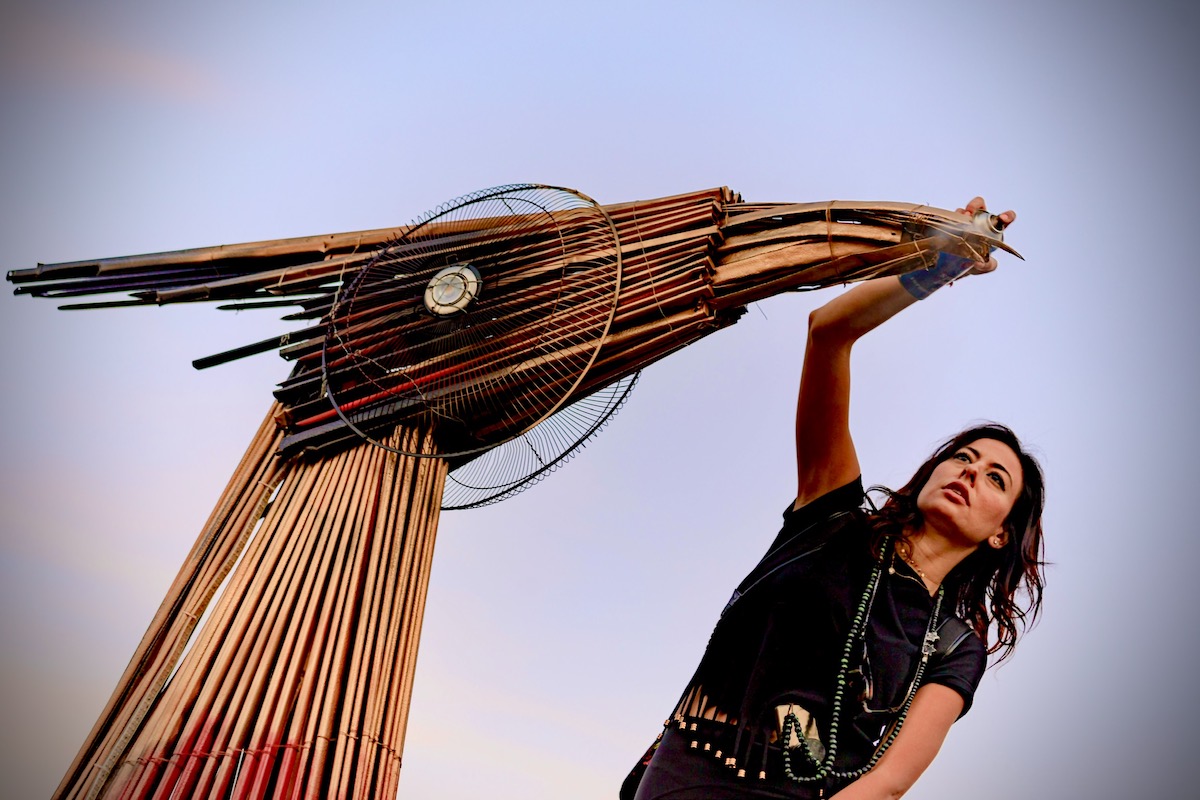
I saw some guys, some pro-government protesters, they came and they broke our tents—the protester’s tents—in Martyrs Square. And people had put the broken tents under the Fist of the Revolution. So I got the idea to create a phoenix out of the broken tents because I could not see broken things related to the Revolution. I did not want them to break us. And I wanted to fight back through art. And I hadn’t done any sculpture ever in my life before. I did not know how to do it, but I so wanted to do it.

Hayat Nazer Creating Phoenix in Beirut(continued) Then, on the Day of Independence, I woke up and I saw that some pro-government people came and burnt the Fist of the Revolution because they want to end our revolution. So I said to myself, today the phoenix should be born and it will rise and I went to the street and when I went to Martyrs Square and I started removing the metal. Then people—because it was Independence Day and it was a day off—who had come from all over Lebanon to participate in an event to protest started asking me, why are you removing the metal? What are you going to do? I told them that I wanted to build a phoenix out of it because a phoenix is a bird that every time they burn it, it will rise again from its own ashes. Then suddenly, people started helping me build the Phoenix—old, young, children, women, men from all over Lebanon. All religions, sects, all areas, hand in hand, they were helping me without knowing each other’s names.

We built the Phoenix together and it became a huge symbol of the Revolution. It got a lot of attention and media coverage and everyone was taking pictures next to it—even tourists came to Lebanon to participate in the Revolution and to take pictures of the Phoenix. But a few days ago, those pro-government people broke and burnt the Phoenix. They broke its wings and stole the head of the Phoenix, which broke my heart, actually. That was the first sculpture I’ve ever done. Lots of people cried while we were building it because it was very emotional and lots of people cried and called me when it got broken.

Burned Revolutionary Art by Hayat Nazer in Beirut

Lebanese Revolution Art by Hayat NazerHow did you go about gathering the material to create the port sculpture?The explosion happened and I stopped everything. I went to the streets and I started bringing mattresses, tents, food, everything that I could gather to help people who got affected by the explosion. And that’s what I did at the beginning. Then we started cleaning people’s houses and the streets so that people could go back to their homes because the houses were filled with shattered glass, broken furniture, and everything. So I asked for volunteers on my Instagram. Lots of people joined me and we went and cleaned houses, and I did not want to throw away the rubble. I packed it in bags, and I took it with me to my house which is also my workshop.

Sculpture Made from Rubble of Beirut Port ExplosionCan you describe some of the items that went into making her?I had started a sculpture of a woman before the explosion. I did not know why I was doing it. But I was. Sometimes I don’t know why I do projects. And then, after I do them, I discover why I’m doing them. And, you know, Beirut has been destroyed so many times. It’s not the first time so I felt that the struggle should be part of the creation of the sculpture of the woman and I felt that Beirut is a woman. And to so many people, Beirut is a woman, and she’s a beautiful woman.

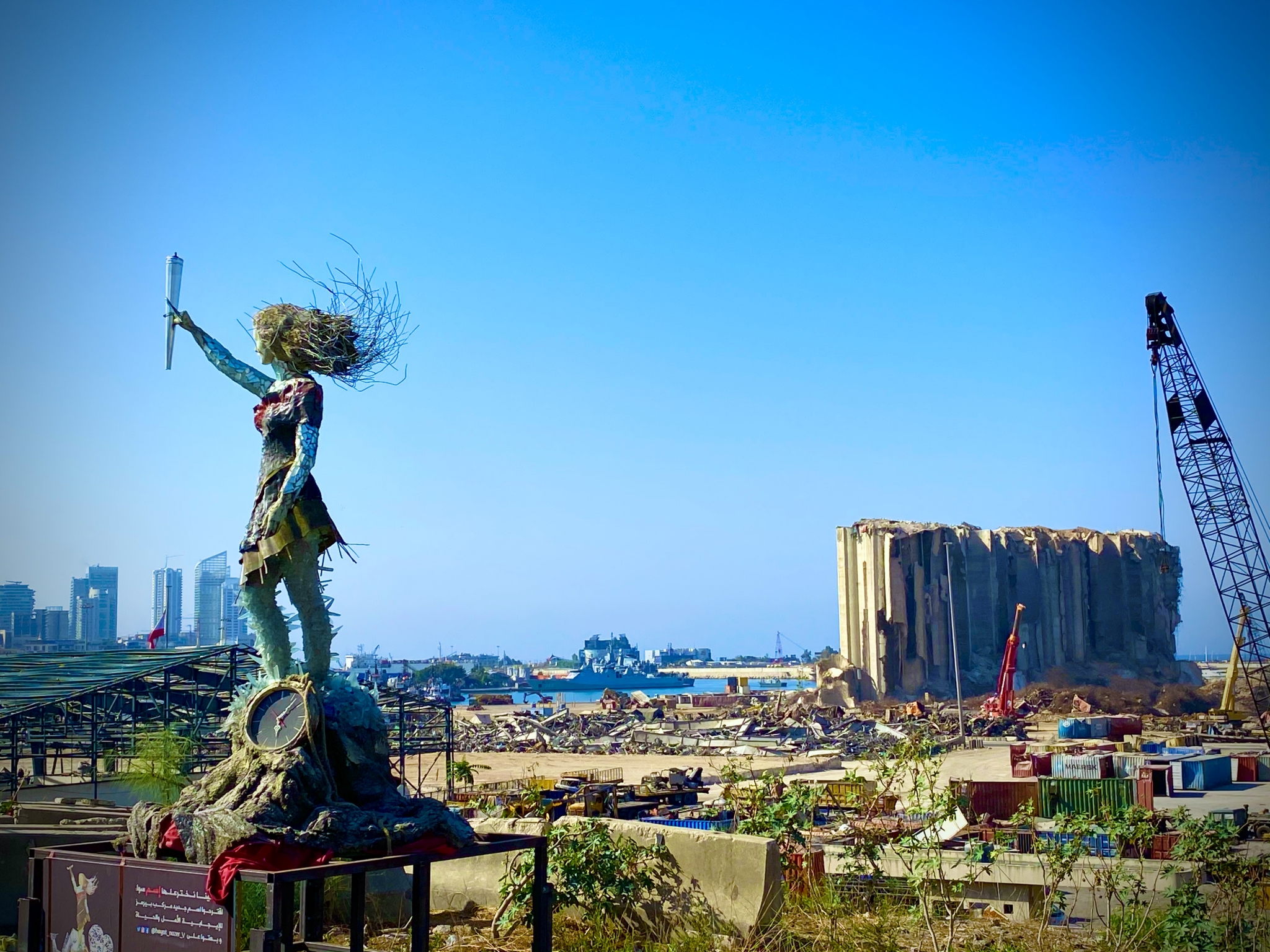
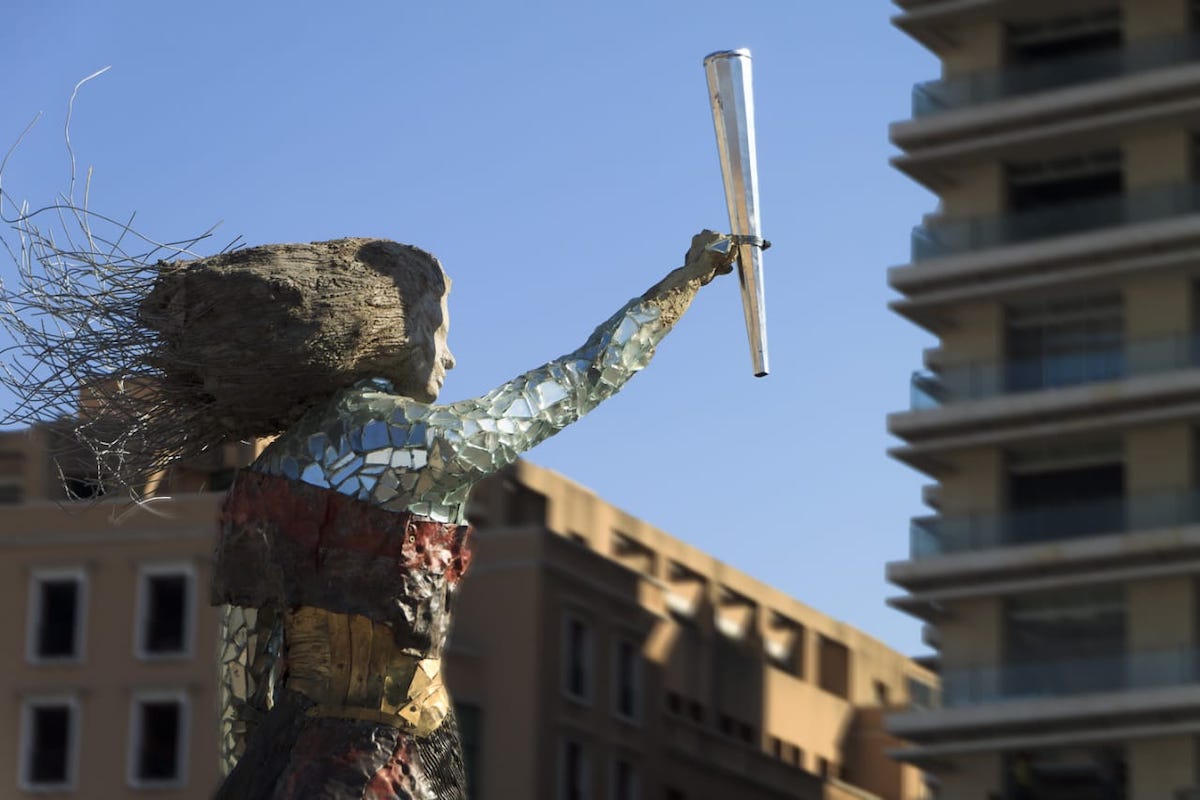
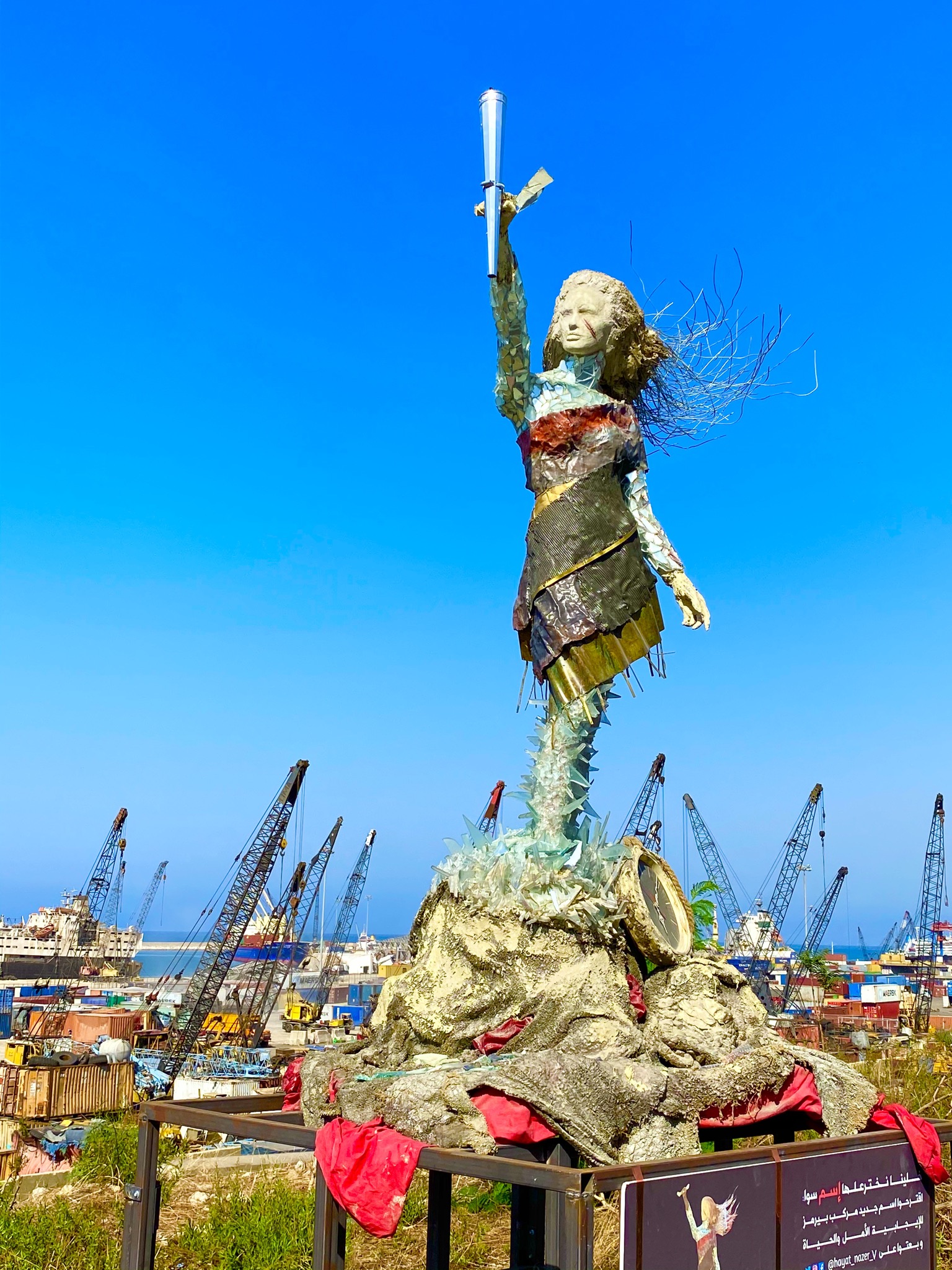
So I started creating the sculpture made out of the rubble. I wanted her to look beautiful because Beirut is beautiful, but she had to show the pain of those who died and of those who got injured. There was a thin line between making her look beautiful because Beirut is beautiful. Beirut is so beautiful, that everyone wants a piece of Beirut. And that’s what happens when a woman is so beautiful and everyone wants her and it hurts her sometimes and that’s what happened to Beirut. If you see her face, it’s injured; her legs are made out of broken glass, her dress is made out of broken metal and copper that I also found. It’s all upcycled. There are also broken mirrors that reflect the light.

Lebanese Revolution Art by Hayat NazerCan you describe the sculpture in your own words and your thought process in the composition?

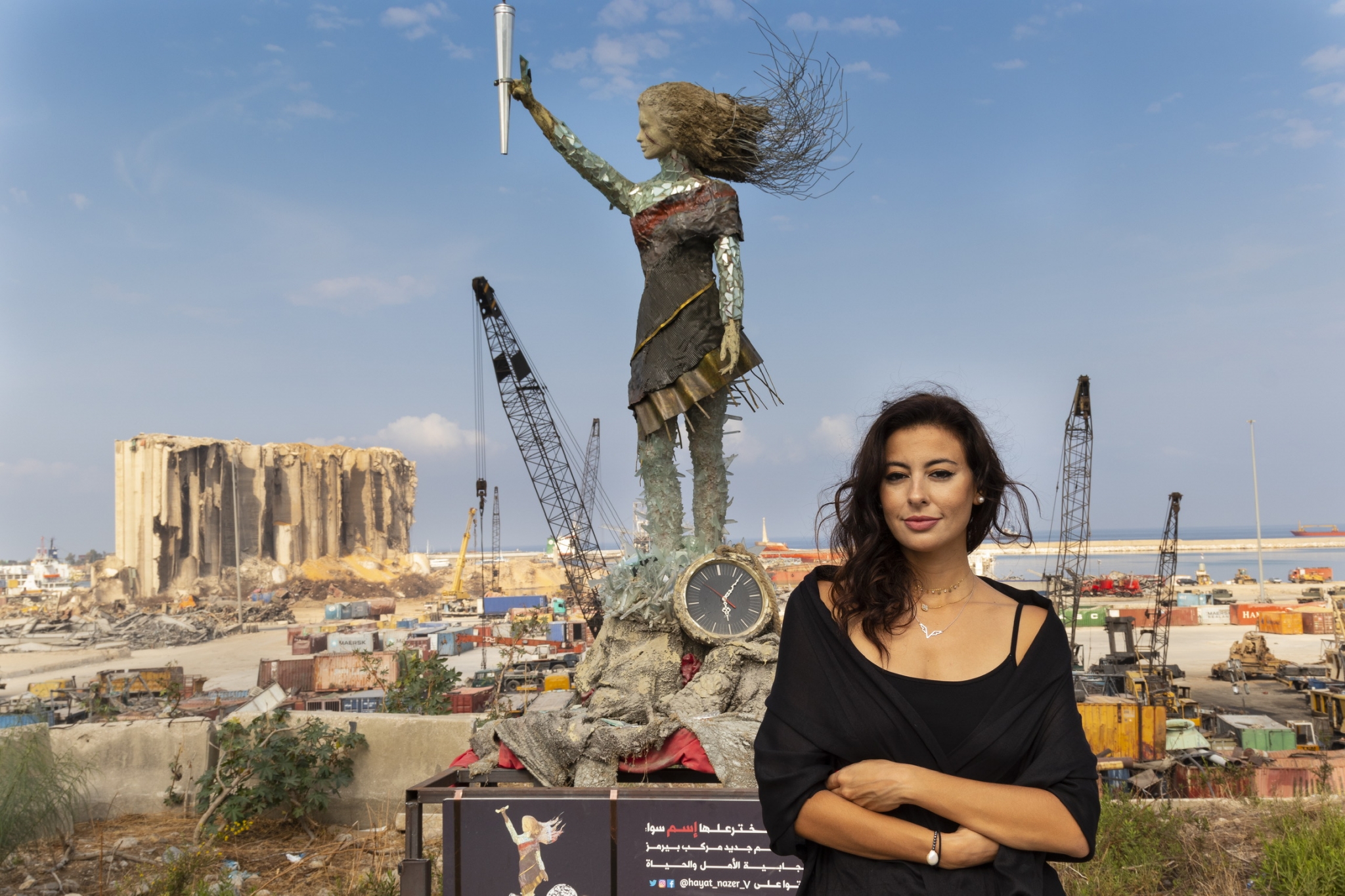
I kept one hand down. She’s too tired, this hand is too tired to even be lifted. And her legs are just standing still as if she doesn’t want to move. The hair looks as if it’s still flowing in the air. And, you know, when the explosion happened there was a lot of force and pressure from the air. So I wanted her hair to feel as if the explosion is still happening. Underneath all of that on the right, there’s the broken clock that I found in the streets and it had stopped at 6:08 or 6:07, which was the time of the explosion.

I included it in the sculpture because so many of us feel like we cannot move on. We are still stuck in time at the time of the explosion, we are not over it, we are still traumatized. And this part expresses the pain that we are going through and the trauma that we are going through. On the left, you see the hand is lifted because she wants to rise, she wants to continue to rise again, she wants strength. Also the leg on the left. If you see it, it’s a bit bent as if she’s just about to walk—she just was about to move to rise. And this is what I wanted to show. It’s reality. We want to rise, but we are in pain.

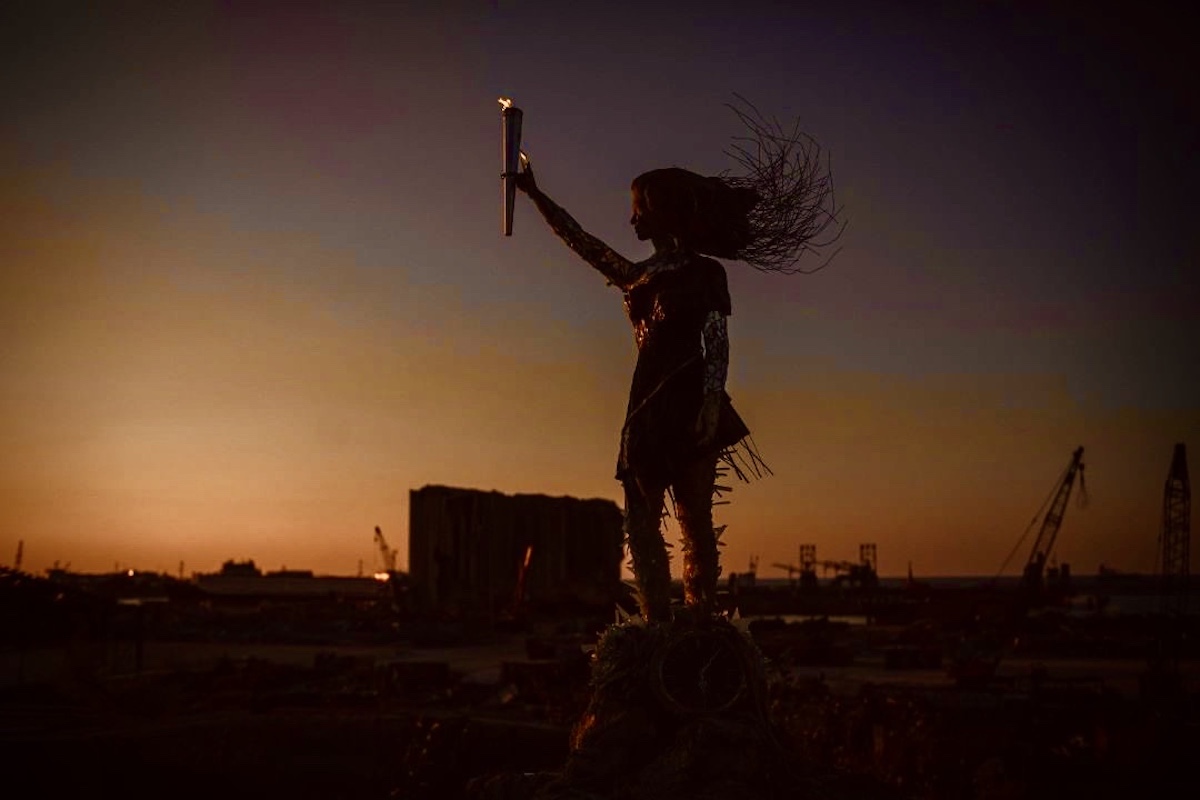
At first, I made her carry a broken mirror in the shape of a V because I wanted people to see themselves in the reflection. But unfortunately, while moving the statue to the port, the mirror in her hand broke. On October 17 people were carrying torches from all over Lebanon to light a big torch and so I also made her carry one. So first there was a broken mirror and then she was carrying a torch and then I had to remove the torch from her hand on the day of the first anniversary of the Revolution. During that event, I took the torch, which represented the torch carried by people from all over Lebanon, from her hand and used it to light a huge torch which is also at the port.

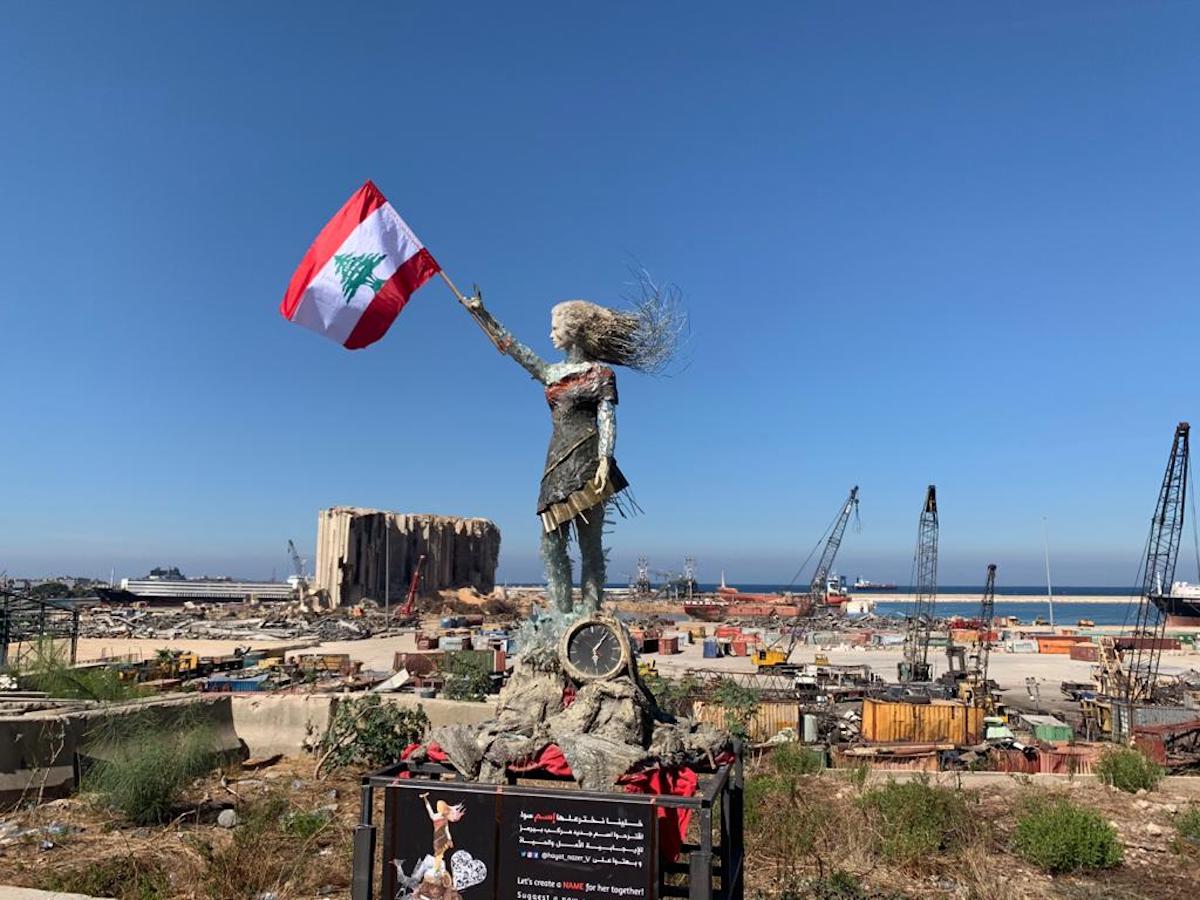
She was lighting the torch of the Revolution. When I removed the torch, her hand was empty. Someone came and asked me if he could put the Lebanese flag in her hand, and so we made her carry the Lebanese flag. The next day, because of the wind, the flag flew away. So she was left with the wooden stick and looks like she is carrying a sword. So in some pictures, you see her carrying a sword, in some pictures a torch, in some a flag, and some just a mirror. I love that it’s interactive.

Placing Lebanese Flag in the Hands of Revolutionary SculptureWhat was the reaction of people to the artwork?

So many people have contacted me—those who lost people in the explosion, the families who lost their mothers or their children, some who have the same injury on their faces, they contacted me and they told me they cried. When they saw this sculpture, they told me that they were not able to express how they feel on the inside. Sometimes words cannot express a feeling that is so deep and enormous on the inside and they told me that this sculpture represents exactly how they feel. It was very emotional for them.

Sculpture Made from Rubble of Beirut Port ExplosionBecause the Phoenix was burned, you’ve decided to move this sculpture to protect it. Can you talk a bit about that?

A few days ago, some people came and burned and broke the Phoenix. People were very worried that someone would break her, because she now represents the people and their pain and their dreams and everything. So I had to remove her from the port. But my plan, and what people actually want, is to create a replica of her—a huge one. This one is a little less than three meters tall. What we wish to do is to create a huge replica that would last, that would serve as a memorial for everyone who died and for everyone who got injured—physically and emotionally and psychologically. And for that, I need to raise funds to create a long-lasting sculpture that represents the first biggest explosion—nonnuclear explosion—in the world, and the third biggest in the world.

Hayat Nazer Posing In Front of Sculpture Made from Rubble of Beirut Port ExplosionWhat do you hope that people in Lebanon and beyond take away from your work?

I am an artist and even I did not know the effect and the importance of art before the Revolution. I loved art, but I used to feel that I cannot make a change through art and I’m someone who believes that we have a life purpose and we need to make a change in this world. I’m driven by positive change and I felt that through art I was not going to be able to do that. But during this Revolution, it actually changed my life.

So when I started, many people questioned me. They said, it’s just art, let’s go and do better things like blocking the roads and all of that. Some people—very few—were like, oh, it means nothing. You know, it’s just art. How is it going to make a change? But then they saw international media filming and they saw how we were able to deliver our message all over the world through art. They were like, okay, you were right about doing the sculpture. And then, when the government sent people to remove all the tents from Martyrs Square because of COVID-19, the only thing that stayed was the artwork. And these same people, they called me and told me they were wrong. It’s the only thing that stays, that is still shouting revolution.

And some of the protesters who never even knew anything about art or who did not care about art, they were the ones who helped me build it, who kept on protecting the Phoenix. I received calls from people who never cared about art, they were like, let’s build it again, we can not let them break us. We are ready, whenever you want. They are the ones who take pictures. And they send me pictures of themselves cleaning around the Phoenix, although it’s broken, but they are cleaning and trying to fix it. These are the people who never knew anything about art or industry. Now, through art, they were touched.

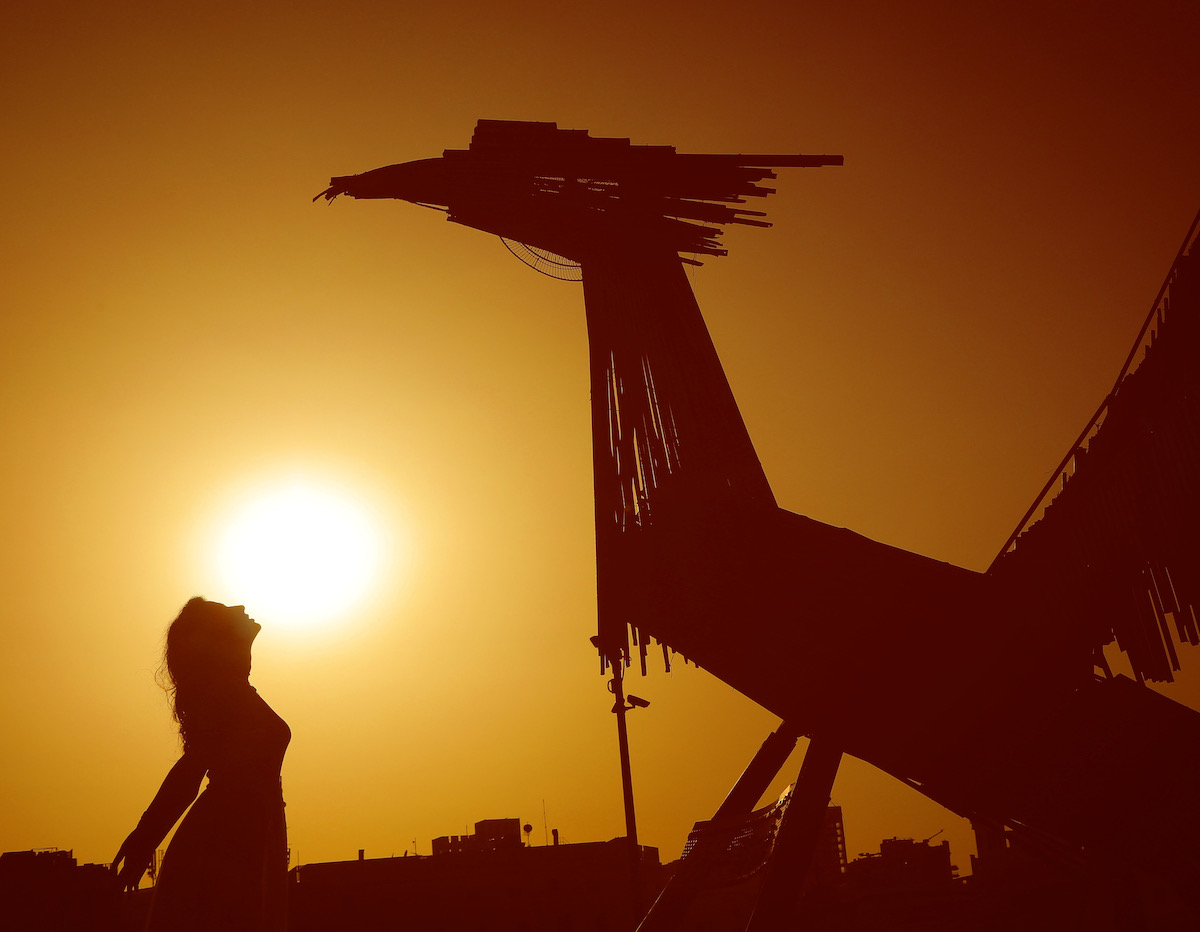
Hayat Nazer in Silhouette in Front of the Phoenix in Lebanon

Hayat Nazer: Website |  Instagram 

My Modern Met granted permission to feature photos by Hayat Nazer.

蒂芙尼蓝色礼享 轻启蓝色礼盒, 邂逅心动“金”喜

Tiffany & Co. 蒂芙尼2020节日季大片

华灯璀璨,星光点点,缤纷烂漫的节日季悄然降临。2020,纵然经历了全新的考验,短暂偏离过生活的轨道,节日的美好依然如约而至。回望过去,无数珍贵时刻交织——自我的成长、挚爱的诺言,抑或是至亲挚友的相伴,每个瞬间都值得珍藏与纪念。

在如梦似幻的冬日光影间,美好的一切即将拉开序幕。跟随蒂芙尼踏上满载爱与希冀的节日旅程,轻解柔情缎带,邂逅至臻之礼,让每个重要时刻都有蒂芙尼蓝色礼盒见证。

「个性之作,献给独一无二的自己」

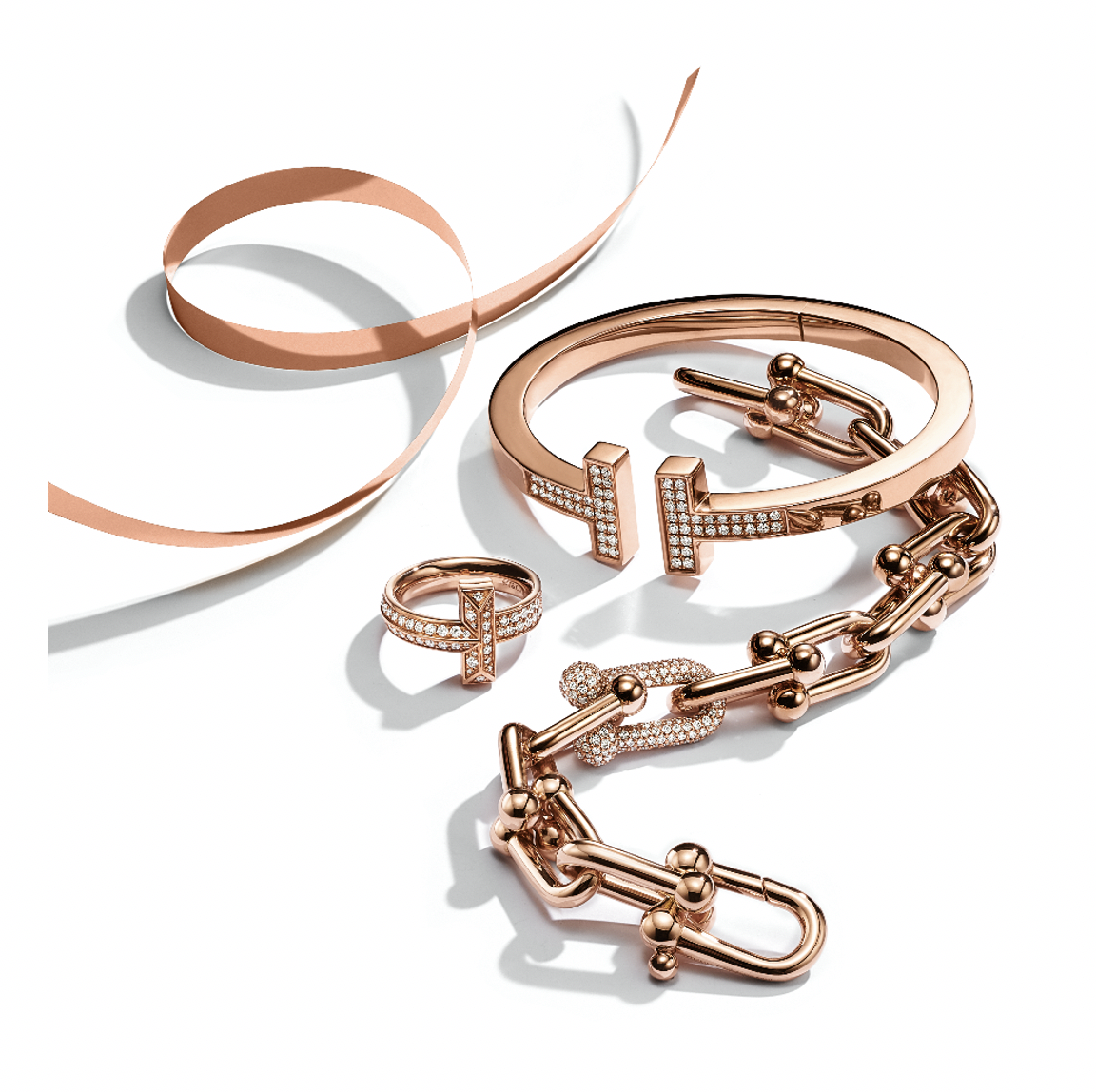
打破桎梏,独立张扬——与内心自我的连结,皆赋予每个人独一无二的风格与态度。蒂芙尼甄选一系列个性佳作致敬强大自我,从自信独立的Tiffany T系列,坚韧无畏的Tiffany T1系列,到大胆前卫的HardWear作品,为自己每一个勇往直前的瞬间,每一个自信坚定的决定,更为以率性摩登的姿态迎接全新未来。

从上至下:Tiffany & Co. 蒂芙尼T系列18K玫瑰金镶钻手镯;Tiffany & Co. 蒂芙尼T1系列18K玫瑰金镶钻宽式戒指 ;Tiffany & Co. 蒂芙尼HardWear系列18K玫瑰金镶钻链环手链

「风格典范,为家人点亮珍贵时光」

一段惬意的陪伴,一份承载温情的蓝色礼盒,都让与家人相伴的节日时光变得愈发珍贵而闪耀。经典Tiffany T系列,将标志性“T”形图案进行不同解构与设计,演绎时尚多元的风格趣味,诠释人与人之间的亲密纽带,无论闪耀指腕,还是环绕颈项,都让爱时刻相伴家人左右。

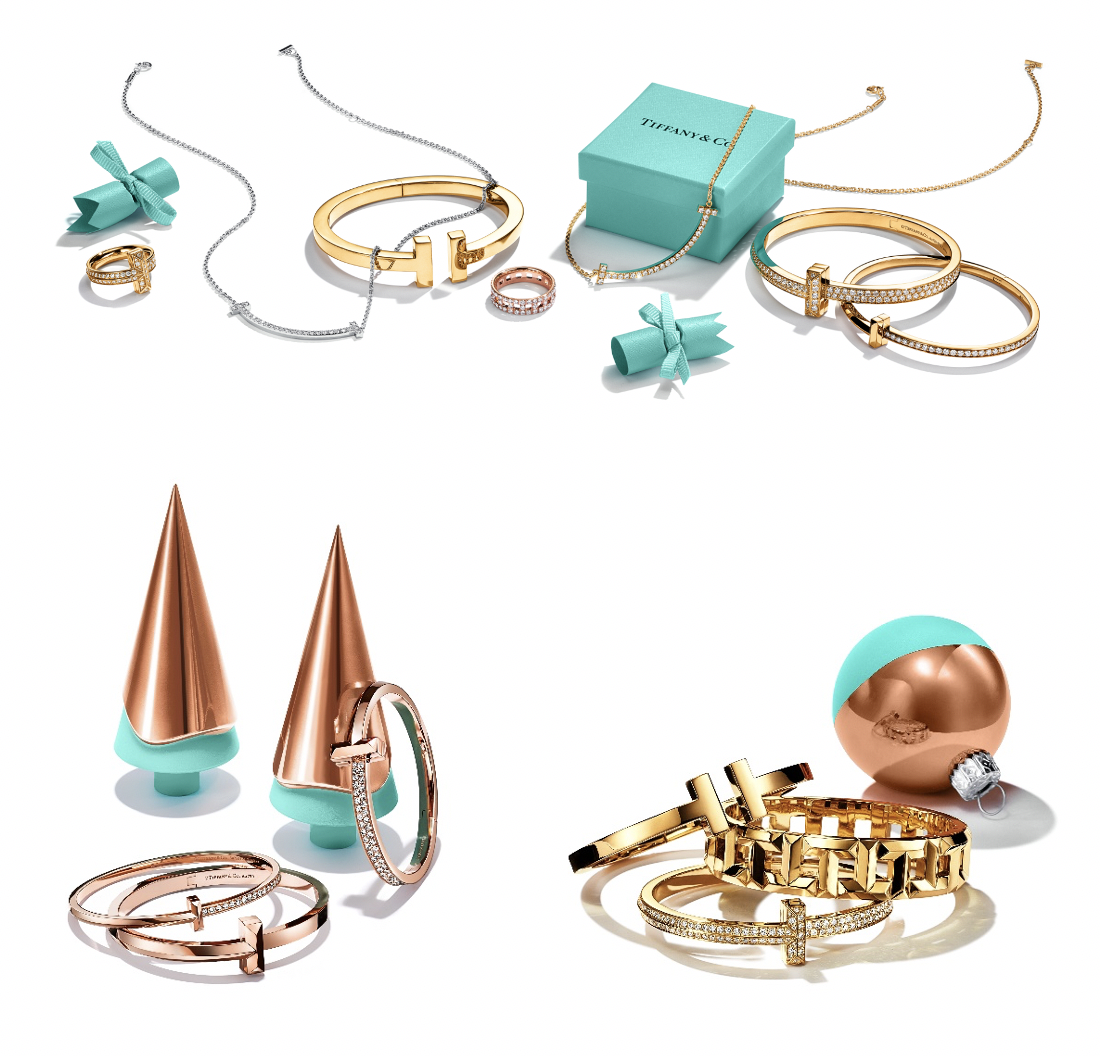
Tiffany & Co. 蒂芙尼T系列、T1系列作品


 「至臻光华,为挚爱许下幸福诺言」

浓情冬日,爱意蔓延,最浪漫的节日总有一抹蓝色相伴。蒂芙尼璀璨钻戒,以跨越百年的匠心设计,定下属于彼此的心动契约,凝结熠熠幸福时刻。搭配风格万千的不同对戒,将专属爱意化为指间缱绻,许下共携未来的挚爱诺言。

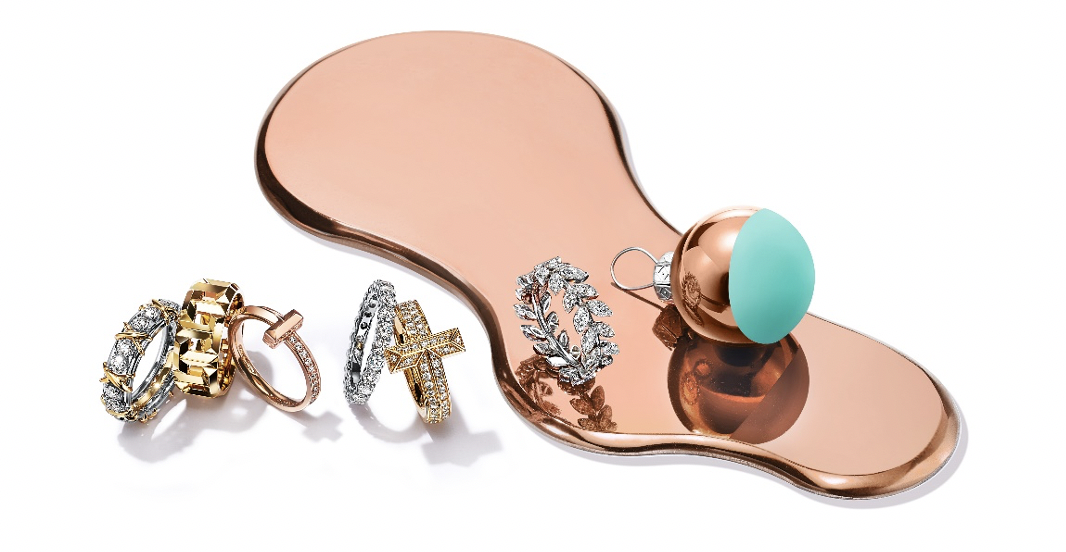
Tiffany & Co. 蒂芙尼The Tiffany® Setting六爪镶嵌钻戒
 从左至右:Tiffany & Co. 蒂芙尼Schlumberger®系列戒指;T系列T True 18K黄金戒指;T1系列18K玫瑰金镶钻窄式戒指;Embrace®系列钻戒;T1系列18K黄金镶钻宽式戒指;Victoria系列铂金镶钻藤蔓戒指

「璀璨心意,为挚友送上美好祝愿」

无论相聚一起,还是远隔万里,将真情祝愿藏于臻选之礼,让友谊绵长而又缤纷。Tiffany Keys系列作品,悬于胸前聆听挚友的初心祈愿,紧握手中凝结乐观向上的无限潜能。臻美钻石点缀其间,开启未来无限可能。Tiffany T系列作品,以摩登之姿,彰显个性,表达自我,呈现挚友之选。

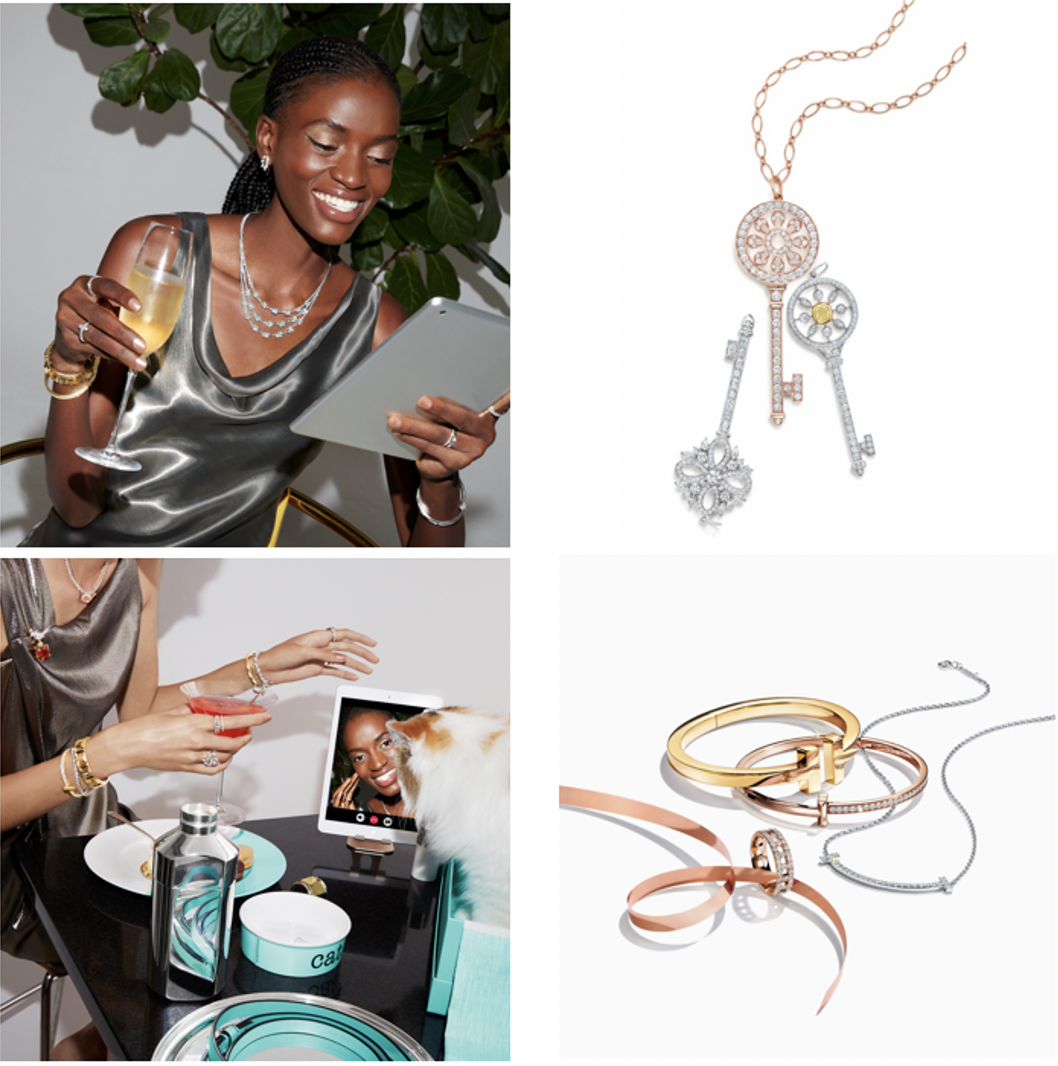
从左至右:Tiffany & Co. 蒂芙尼Keys系列Victoria铂金镶钻钥匙吊坠;18K玫瑰金镶钻花瓣形钥匙吊坠;铂金镶嵌黄钻及白钻圆形万花筒钥匙吊坠
从上至下:Tiffany & Co. 蒂芙尼T系列18K黄金手镯;T1系列18K玫瑰金镶钻窄式手镯;T系列T Smile 18K白金镶钻项链;T系列T True 18K玫瑰金铺镶钻石戒指


「家居精品,为生活增添时尚格调」

生活需要一份格调将其点亮。蒂芙尼家居精品系列,融合精美造型与实用功能,赋予日常更多不凡风尚。独具特色的麻将套装,以奢华材质与精湛工艺打造而成,为游戏生活再添别样趣味。蒂芙尼精选宠物配饰,则在这个节日为家庭小成员带来特别的爱,俏皮设计彰显可爱趣态,更同步与主人的时尚风范。

从左至右:Tiffany & Co. 蒂芙尼国际象棋套装;Tiffany & Co. 蒂芙尼麻将套装
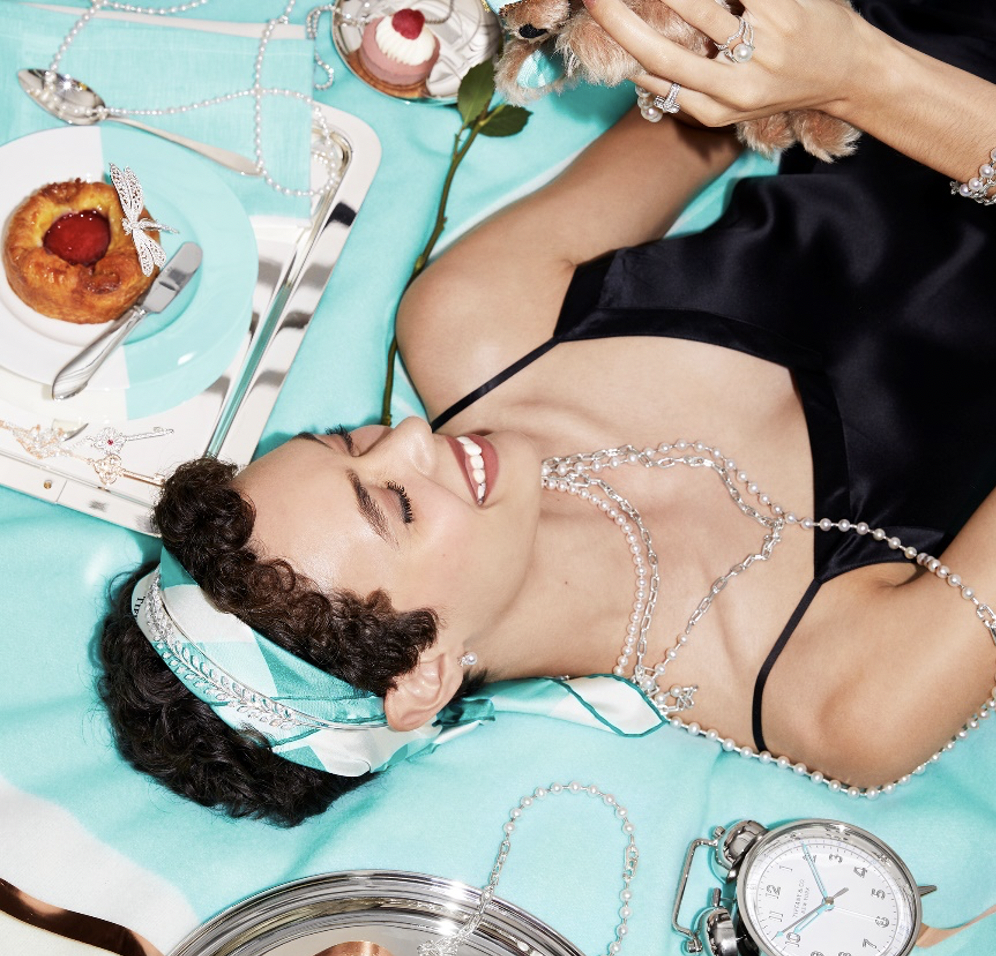
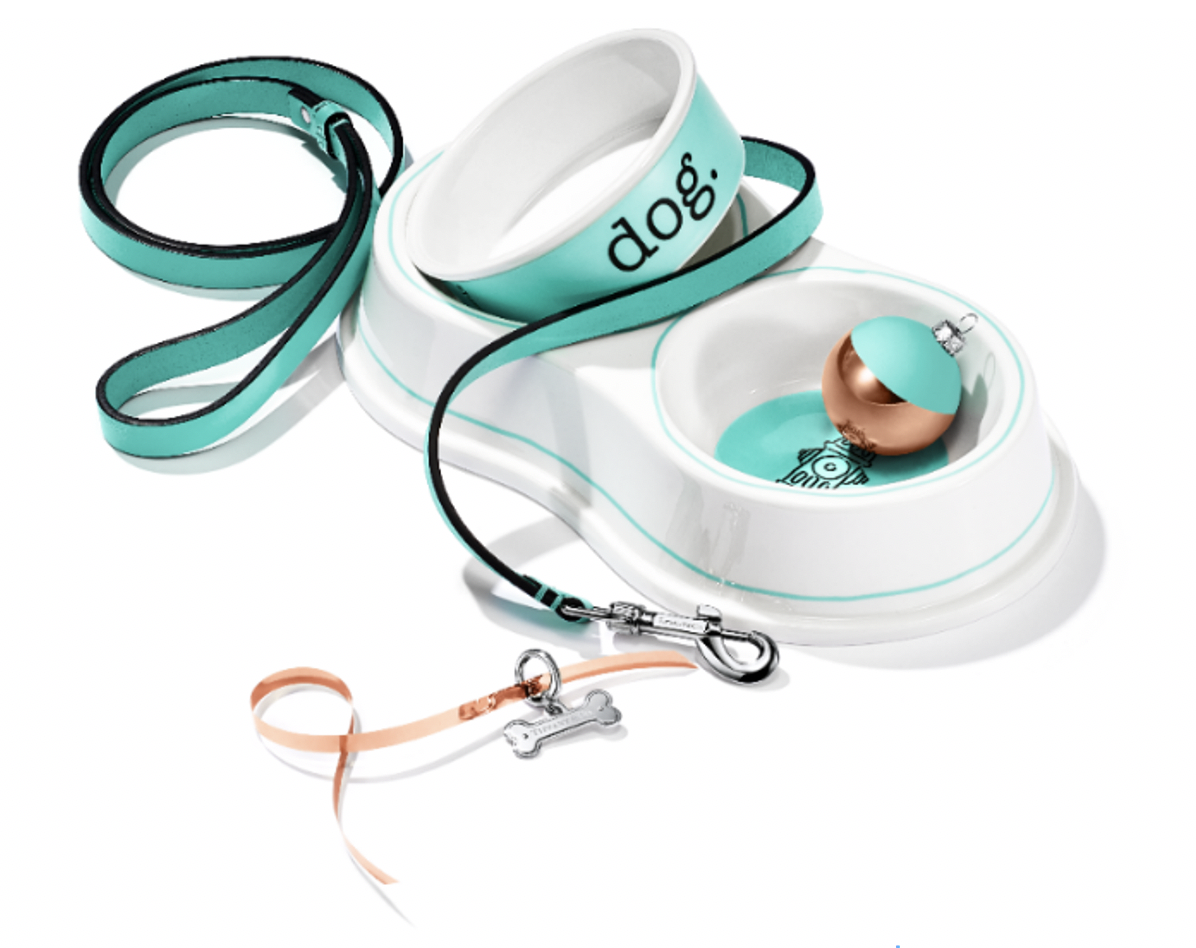
Tiffany & Co. 蒂芙尼精选宠物配饰

旖旎动人的蓝色,斑斓温暖的光影,蒂芙尼捕捉节日梦幻,传递爱与美好。从摩登新作,风格典范,再到生活精品,在蒂芙尼,总有一份属于你的挚爱佳礼。


大胆优雅,简约风格 Tiffany & Co. 蒂芙尼Elsa Peretti®系列

作为享誉世界的殿堂级珠宝设计师,艾尔莎·柏瑞蒂不仅创制了对时尚领域产生深远影响的珠宝作品,而且为设计领域作出了恒久贡献。

蒂芙尼将艾尔莎·柏瑞蒂的设计全新引入中国市场,更以此向她完全颠覆20世纪珠宝设计的卓然才华致敬。艾尔莎·柏瑞蒂是一位真正拥有想象力的设计师,她创造了全新的奢华设计,于自然清新的外形上呈现出利落感性的线条与优雅简约的风格。

“风格即是简约。”艾尔莎·柏瑞蒂如是说道。这一理念引领她一生的创作,也是她杰出设计生涯的基石。 “我力求呈现出极致完美的品质,去繁就简。我只为那终极的纯粹。”

每一款设计背后的灵感都赋予作品更多魅力,透露出艾尔莎·柏瑞蒂对艺术、手工艺和自然世界的热爱。Open Heart是她著名的设计作品之一,这一原创珠宝设计历久弥新,并完美阐释了她的经典名言——“优美的线条与形状即是永恒。”若将Open Heart吊坠悬饰于纯银项链或丝绳之上,它优雅灵动,令人目醉神迷。这一设计的精髓所在恰是其毫无矫揉造作的成熟魅力。

艾尔莎·柏瑞蒂的Diamonds by the Yard®系列一经推出便被视为革新之作。柏瑞蒂希望钻石更富现代感,更易于佩戴。她将精致流畅的项链与包镶镶嵌的钻石巧妙搭配,赋予钻石项链以全新定义,并永远改变了钻石在时尚领域中所扮演的角色。正是她令这些璀璨美钻呈现出从未有过的全新风格与成熟魅力。全球女性都倾慕于此款耀目钻石项链的灵动神采,或单链佩戴,或层叠搭配,日夜之间,流光溢彩。

她创作的另一经典设计便是Bottle吊坠。这一瓶形吊坠既可容纳花朵,又珍藏了她早年游历意大利菲诺港的美好回忆。在那里,她与身着明丽绸服、手执栀子花的女士们一道乐享生活之美。

艾尔莎·柏瑞蒂的其它经典设计还包括了风格大胆、外廓优雅的Bone系列手镯,灵感源自她在孩提时代偶然拾得的一块令她无比着迷的骨头;线条流畅、触感宜人的Bean®系列,令人自然想到寓意生命起源的种子;Teardrop系列则捕捉到泪滴所蕴含的至深情愫与美感;而西班牙一位弗拉明戈舞者佩戴的耳环便启发了Sevillana™系列的诞生。

与柏瑞蒂精诚合作的超凡工匠们将她的设计手工打造成蒂芙尼的珠宝珍品。工匠们采用纯银、18k金、铂金、涂漆与雕刻宝石,搭配以绚丽宝石凸显其珠宝作品的感性线条和雕塑质感。金属与宝石交相辉映,展示出柏瑞蒂于自然形态中抽离出本真精华的独特才华。

如其珠宝设计一般,艾尔莎·柏瑞蒂的家居设计同样兼具风格美感与功能特性。Thumbprint系列的碗具采用了手工吹制的威尼斯玻璃或者纯银材质,并匠心独具地在碗的边缘做出凹槽设计,便于用拇指握牢。手感宜人这一特质同样体现在Bone系列烛台、Bean®系列相框以及闪闪发光的水晶或纯银Heart盒子之上。

艾尔莎·柏瑞蒂最早期的珠宝设计成为那个时代多位伟大时装设计师秀场时装的完美点缀。其后,她受到蒂芙尼公司的垂青,加入蒂芙尼的首个珠宝系列于1974年面世。自那时起,她设计的珠宝和其它作品绽放出历久弥新的永恒之美,成为蒂芙尼设计美学中不可分割的重要组成,吸引着全世界女性的忠实倾慕。

In Europe and the US, abortion rights are under renewed threat

 November 1, 2020

(CNN)The Abortion Dream Team usually receives about 400 calls a month, from women seeking advice and information. Last week, the Polish advocacy group had 700 in the space of three days, according to team member Justyna Wydrzynska.

Some came from women who had just arrived at hospital to have abortions because of fetal defects — only to be told to go home after Poland’s highest court on October 22 imposed a near-total ban on abortion.
“They are furious and sad and they don’t know what to do,” Wydrzynska told CNN. “They cannot take pills because [their pregnancy is] above 20 weeks so it could be dangerous for them.” The likelihood of a woman taking abortion pills needing a further procedure is far greater after 14 weeks, according to the UK’s National Health Service.

A demonstrator in Warsaw holds flares as hundreds of thousands took to the streets this week to voice their opposition to the tightening of Poland's abortion law.

 A demonstrator in Warsaw holds flares as hundreds of thousands took to the streets this week to voice their opposition to the tightening of Poland’s abortion law.
The women Wydrzynska and her team spoke to may be forced to travel abroad for the procedure, or left to carry a pregnancy to term even if they know the baby will not survive, since providers could be jailed, she said.
However, President Andrzej Duda submitted a draft amendment to the law on Friday, which would legalize abortion in situations where the baby has “lethal defects” and would die soon after birth.
Hundreds of thousands of protesters, some dressed as handmaids, took part in the country’s largest demonstrations in decades this week. Some were met by riot police with pepper spray and arrests on the streets, while others stormed churches, and scuffles broke out in parliament.

Friday's protest in Warsaw was the largest Poland has seen in decades as demonstrators wearing face masks and holding placards took to the streets.

 Friday’s protest in Warsaw was the largest Poland has seen in decades as demonstrators wearing face masks and holding placards took to the streets.
Poland’s abortion laws were already restrictive, even before the latest rule change. It is estimated that around 100,000 Polish women travel abroad each year for a termination, according to a statement by United Nations experts.
Of more than 1,110 legal abortions in Polish hospitals in in 2019, approximately 98% were carried out because of fetal defects, according to data from the Polish Ministry of Health cited by the Polish Press Agency. The decision to declare terminations unconstitutional in these cases means it will be virtually impossible to obtain an abortion in the country, except in cases of rape, incest or where there is a provable threat to the woman’s life.
The lawmakers proposing the change argued that allowing abortion in cases of fetal defects was discrimination and violated the unborn child’s right to life.
“There is a lot of rage and frustration,” Urszula Grycuk, from Poland’s Federation for Women and Family Planning, told CNN of the reaction in Poland.
“Even wanting to get pregnant in this country, women would be afraid they would not get services like prenatal testing, for example. Many may go abroad to obtain professional pregnancy care,” she added.
Grycuk, the nongovernmental organization’s (NGO’s) international advocacy coordinator, said she and others do not recognize the legitimacy of Poland’s Constitutional Tribunal. The European Commission has reported concerns over the tribunal’s independence and legitimacy, partly because of how judges are selected.
Not everyone agrees. “I think that the decision of Polish constitution is a major step towards full realization of human rights in our country,” Karolina Pawlowska, director of the Center of International Law at Poland’s Ordo Iuris Institute and a PhD student at the University of Warsaw, told CNN.
“It’s about fetal defects and syndromes like Down syndrome, Turner syndrome or other conditions that are seen as a defect,” she added. “We of course know that many people with Down syndrome, that many people that are disabled, can live a life of satisfaction.”

‘A time for deep concern’

Poland is the only European Union member state — barring Malta — to have such harsh laws. In Malta, abortion is completely banned, even when a woman’s life is at risk.
But Poland’s move to strip away reproductive rights is one of a series of blows to abortion rights in western countries — including the United States and Slovakia — in recent weeks. While Slovakia’s attempt to restrict abortion access was voted down in Parliament, each is an example of regular attempts in modern democracies to make abortion harder to access, despite campaigners saying it needs to be made easier.
In many cases, attempts to roll back abortion rights are being made where there have also been rollbacks on democracy, civil society and human rights.
Last week saw the signing of the Geneva Consensus Declaration, which emphasizes the “strength of the family and of a successful and flourishing society” and challenges the right to an abortion.
The document, signed by 30 countries including Poland and Belarus, states that it aims “to express the essential priority of protecting the right to life.”
It was co-sponsored by a group of largely repressive governments: Brazil, Egypt, Indonesia, Uganda, Hungary — and the United States.
Abortion is more contentious in the US than in Europe. While Roe v. Wade settled the question of whether a woman can legally have one almost 50 years ago, the appointment of Amy Coney Barrett to the US Supreme Court on Monday was met with dismay by abortion rights supporters who fear she’ll overturn it.
In a 2013 essay about how principles of “stare decisis” might impact Roe v. Wade, Barrett, then a professor at Notre Dame University, pointed to the strength of the doctrine but suggested room for some cases to be overturned. “Court watchers,” she wrote, “embrace the possibility of overruling, even if they may want it to be the exception rather than the rule.”
She has previously signed a “right to life ad” that called for the protection of unborn children; suggested access to abortion could be limited; and in 2013 spoke “to her own conviction that life begins at conception” during a professorial talk, according to Notre Dame Magazine.
“This is a time for extraordinarily deep concern about the right to abortion in the United States,” Julie Rikelman, senior director of US litigation at the Center for Reproductive Rights, told CNN.
“At every level of the Federal Court, we now have judges and justices who do not support the right to abortion and so the basic federal constitutional right is in jeopardy in a way that it hasn’t been for decades,” said Rikelman.
She said the right to abortion was also in “critical danger” at a state level, with 468 restrictions enacted since the start of 2011, according to the Guttmacher Institute, a non-profit organization focused on reproductive rights.
That will disproportionately affect poor women, who are more likely to need abortions and to struggle with the expense of the procedure and traveling to a different state, Rikelman said.
“We already know there are 21 states that would ban abortion outright if given the opportunity to do so,” Mary Ziegler, a law professor at Florida State University and author of Abortion and the Law in America: Roe v. Wade to the Present, told CNN when asked what might happen if Roe v Wade is overturned.
Ziegler said recent restrictions on abortion, seen in at least nine states, have a “chilling effect” on women who want a termination but are afraid of the consequences.

Restrictions across Europe

Central and Eastern Europe in particular have, seen multiple attempts to reduce women’s legal entitlements to abortion or to introduce new barriers.
Slovakia’s parliament earlier this month voted against proposed restrictions that would have required women to wait 96 hours before an abortion, banned clinics from “advertising” abortion services, and required women to justify their reasons for seeking an abortion.
It was one of several bills proposing restrictions on reproductive rights that were rejected in Slovakia’s parliament in 2019 and 2020.

In the past decade, several countries including ArmeniaRussia, and Georgia introduced preconditions that women must fulfill before they can obtain abortion services.

In other countries attempts to roll back abortion rights have been largely unsuccessful, often following a public outcry and large-scale demonstrations, but “they provide a powerful illustration of the extent and nature of the backlash to the advancement of women’s rights and gender equality in some parts of Europe,” according to a 2017 paper published by the Council of Europe Commissioner for Human Rights.

“A lot of countries in Europe are promoting women’s roles as procreators and as wives and mothers,” Hillary Margolis, senior researcher in women’s rights division at Human Rights Watch, told CNN.
“There are different ways these attacks are happening, they’re not always about blatantly rolling back abortion,” said Margolis.
In Germany, where abortion is relatively accessible, information dissemination or advertising by service providers is banned, although doctors may now state they provide the service on their websites, and this has been exploited by anti-abortion groups, she said.
In 2019, two gynecologists were fined in Berlin for “advertising” abortion — and this was widely reported as having stemmed from efforts by anti-abortion activists. Other gynecologists have also been reported by anti-abortion campaigners, according to local media.

An anti-abortion protest "National March for Life," demanding a ban on abortions, in Bratislava, Slovakia on September 2019. An anti-abortion protest “National March for Life,” demanding a ban on abortions, in Bratislava, Slovakia on September 2019.

Croatia and Italy have seen extensive use of the “conscience clause,” which allows providers to opt out of offering terminations because of moral objections, Margolis added.
Despite the backlash, human rights lawyer Payal Shah told CNN that it was important to remember there is a “clear global trajectory towards abortion law liberalization.”
“Over the last 25 years nearly 50 countries have actually liberalized their laws and several others have even removed abortion wholesale from their criminal codes,” she said.
New Zealand, Northern Ireland, and most Australian states have decriminalized abortion to remove sanctions.
Countries including Ireland and Cyprus have liberalized to allow abortion up to certain gestational limits, and the likes of France and Germany have introduced reforms to remove barriers — but criminal sanctions are still possible outside certain parameters. There have even been steps to make abortion more accessible in countries with restrictive laws, such as the Philippines and Colombia.
Other countries such as the UK, Ireland and France have temporarily amended laws during the pandemic to allow abortion pills to be taken at home.
But activists say abortion laws still need updating in many countries to remove barriers. And steps taken by developed countries to reduce abortion access can have an impact on other parts of the world.
“The US is … really exporting its political agenda against abortion … under this administration,” said Shah. “The US has lost its legitimacy as a leader in reproductive rights.”

Global attitudes about abortions

Another element affecting abortion access worldwide is the fact that the US is a big donor to NGOs globally but this has been scaled back under President Donald Trump. He reinstated, expanded and renamed a restriction formerly known as the Mexico City Policy — which prohibits foreign NGOs from receiving US funds if they provide abortion services or referrals. Critics refer to it as the Global Gag Rule.
The sector has seen a loss of funding, with services scaled back, leading to greater need in communities, Sarah Shaw, global head of advocacy at Marie Stopes International, an NGO organization that provides abortion services, told CNN.
She said the rule was also damaging partnerships and perceptions around sexual and reproductive health and rights. “This is the bit that’s really sort of starting to change norms and has a really corrosive effect.”
Contrary to what might be expected, research shows that in countries most reliant on US funding, abortions increase by 40% when the policy is in place.
Countries that liberalize their laws to increase access usually see the number of abortions drop, thanks in part to increased education, says Shaw.
Most people are in favor of at least some access to abortion. A recent Ipsos Global Advisor survey of nearly 17,500 people from 25 countries found that 44% said abortion should be permitted whenever a woman wants one and 26% said it should be permitted under certain circumstances, such as if a woman has been raped.”
A 2018 Pew Research Center poll found that 58% of Americans surveyed say abortion should be legal in all or most cases, compared with 37% who said it should be illegal in all or most cases.
And 2018 Gallup polling found that 60% of American adults think first trimester abortions should generally be legal. In another Gallup poll the same year 64% of those questioned said they didn’t want Roe vs. Wade — which guarantees the right to an abortion in the first trimester — to be overturned.
Looking ahead, Wydrzynska says, “We are not worrying about the future.” She is continuing her work with the Abortion Dream Team to help women travel abroad, obtain the abortion pill or find other services and information on terminations. “We have been preparing for most of this.”
She says her team has been traveling Poland since December last year “activating the people in local communities” to become abortion activists and supporters.
“We are not seeking people to work because we have them on our side, months ago.”

What If Women’s Suffrage Never Happened?

There’s a tendency, when looking back on the history of women’s suffrage in the United States, to assume that it was inevitable that women would get the right to vote: By the time Tennessee became the final state to ratify the 19th Amendment, on August 18, 1920, 15 states had already granted women suffrage, starting with Wyoming, which became a state in 1890. (As a territory, it gave women suffrage in 1869.) How long could such an electoral-rights imbalance reasonably be expected to survive?

Then again, was it really inevitable? The amendment’s passage was the culmination of probably the longest sustained sociopolitical movement in American history, and even so it came down to a single 24-year-old Tennessee state legislator’s vote—changed from nay to aye after his mother wrote him a letter lobbying him to do so—or it wouldn’t have happened, at least not in 1920. And even then, the 19th Amendment hardly put an end to systematic disenfranchisement (and not only of women) in this country. On a practical basis, Black women in the South, and to some extent Black women anywhere, still didn’t get to exercise their right to vote (as Black men hadn’t and didn’t)—not until the Voting Rights Act of 1965 swept away many of the tactics vote suppressors had used for decades to thwart them. Native American women (along with Native American men) didn’t get the vote until 1924, when their citizenship was recognized (they weren’t guaranteed the right to vote in every state until 1962); all Asian-American citizens didn’t get the vote until 1952, when the McCarran-Walter Act granted all people of Asian ancestry the right to become citizens. As an additional point of comparison, women in Switzerland were not granted the right to cast a ballot in their national elections until 1971. Imagine how different this country might be—socially, culturally, politically—if women had been forced to wait 51 more years before successfully seizing the right to exercise their power at the polls. Imagine how different things might be if women never got that right.

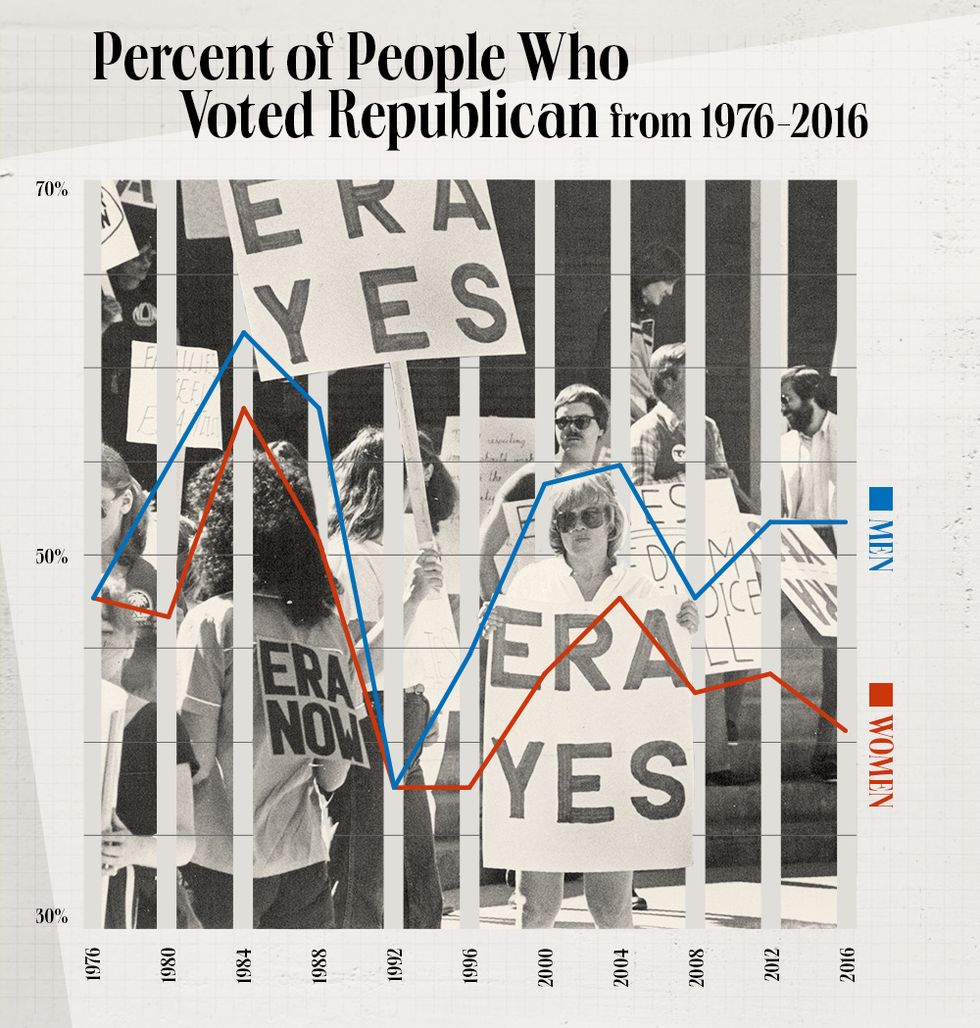
Demonstrators in support of the Equal Rights Amendment for women in 1981; Republicans dropped their support of the ERA in 1980, for the first time in 40 years, one likely factor in the subsequent widening of the gender gap.

Dave Buresh / The Denver Post / Getty Images

The contemplation of hypothetical, alternative histories—the conjuring of counterfactual scenarios and the spinning of stories about what the world and our lives might be like if this, this, or this had happened or not—is an endlessly fascinating pastime. (The “What if the Nazis had won?” alternative-history subgenre has lately seen a particularly strong resurgence with the bingeworthy Hollywood adaptations of The Man in the High Castle and The Plot Against America.) It’s also a deeply fraught exercise, with each counterfactual pivot triggering an endless range of possible implications and outcomes, each of which in turn sets in motion its own innumerable ripples of “what if.” We can’t say definitively how a century of women voting has shaped the world we live in or what that world would look like in its absence. But we can crunch some numbers and offer some data-driven possibilities. We can, for instance, examine state-by-state exit polling from presidential elections to see whether and how the Electoral College might have swung if men alone had wielded the ballot.

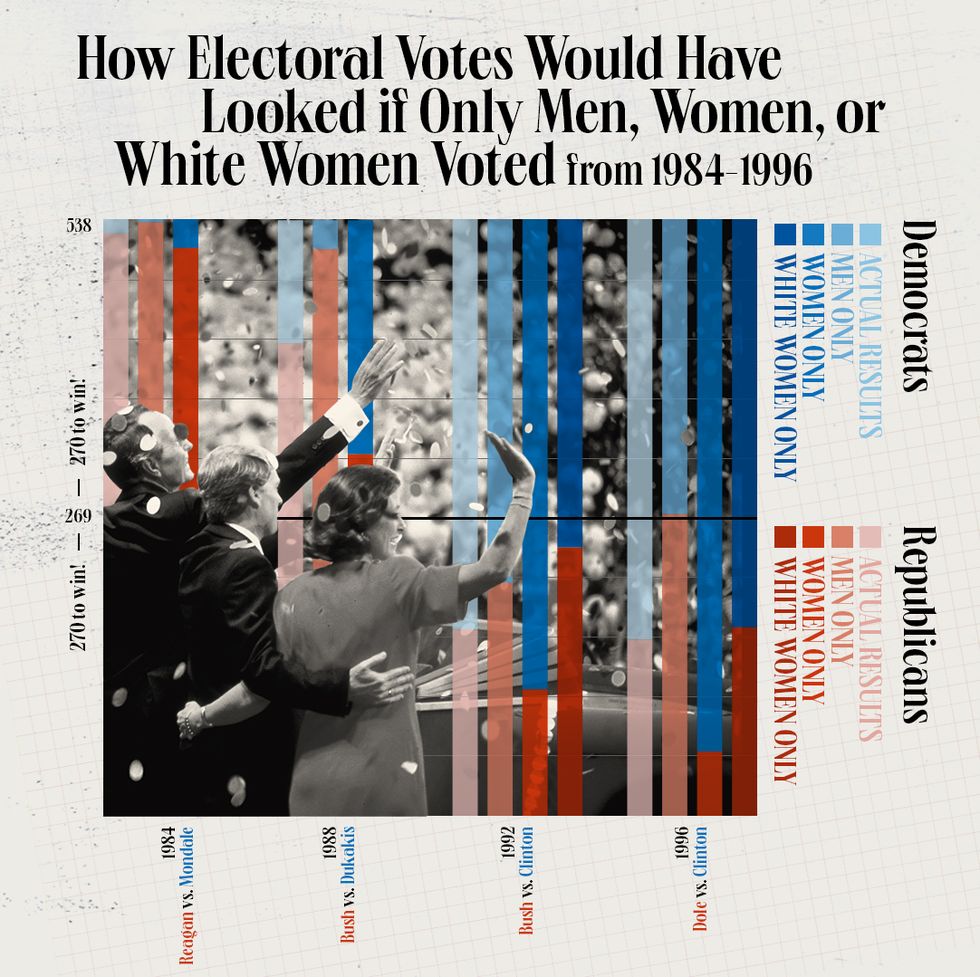
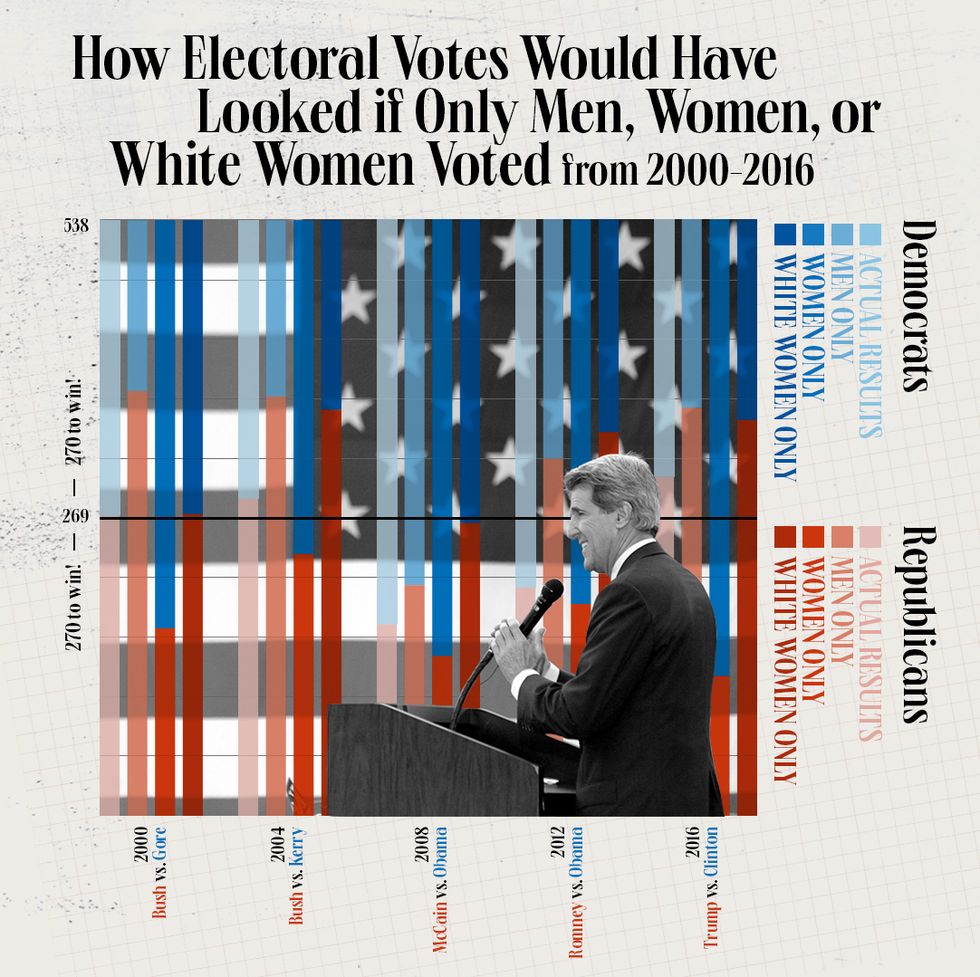
And when we do so, here is what we find: Women’s and men’s votes have been diverging in significant ways for several decades, so much so that at least two relatively recent elections might very well have gone the other way—from the Democratic candidate to the Republican—if women had still been barred from the polls on election day.


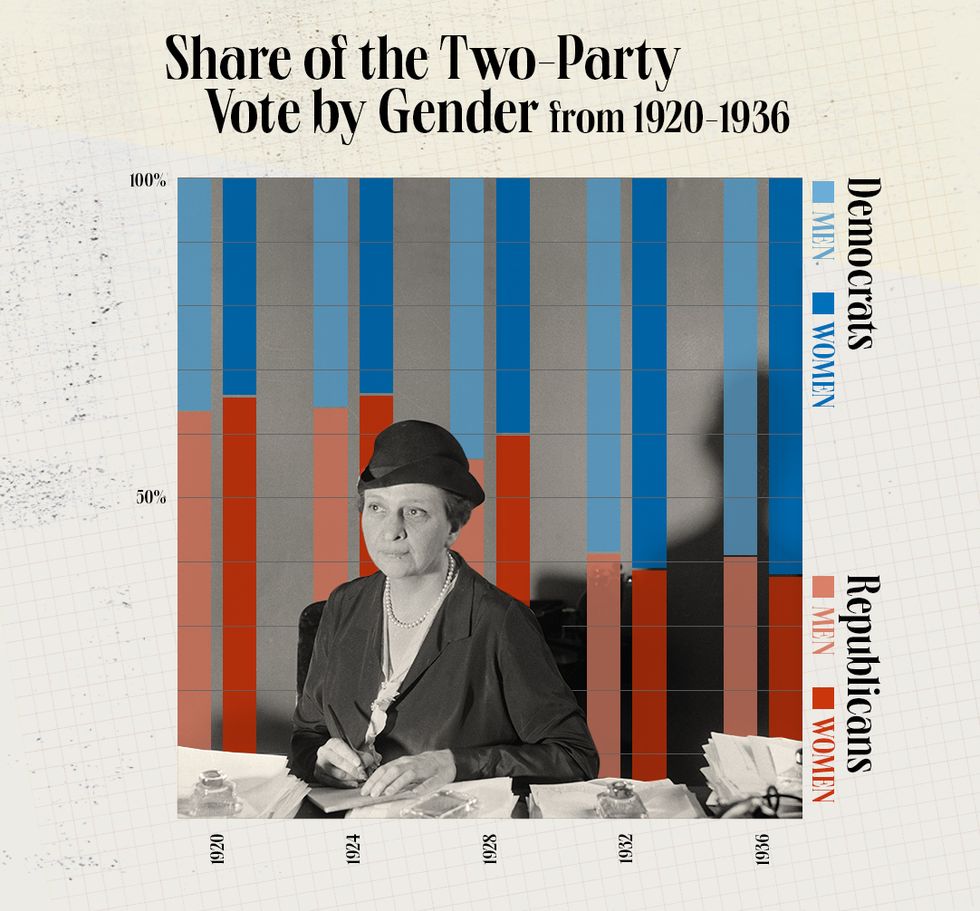
For a while after the 19th Amendment went into effect, it looked as if the entry of women into the electorate would have little or no tangible impact at all. Women didn’t vote at nearly the level men did—36 percent of eligible women cast a ballot in 1920, versus 68 percent of men—and when they did vote, they tended to do so pretty much as men did. “Suffragists get a bad rap because the amendment passes, and then the world doesn’t change,” says Susan Ware, author of Why They Marched: Untold Stories of the Women Who Fought for the Right to Vote. “It wasn’t as if all of a sudden women threw all the politicians out of office and decided to end war and end prostitution and all these things. But suffragists never claimed that the world would change. They didn’t say women would vote as a bloc and war would end.”

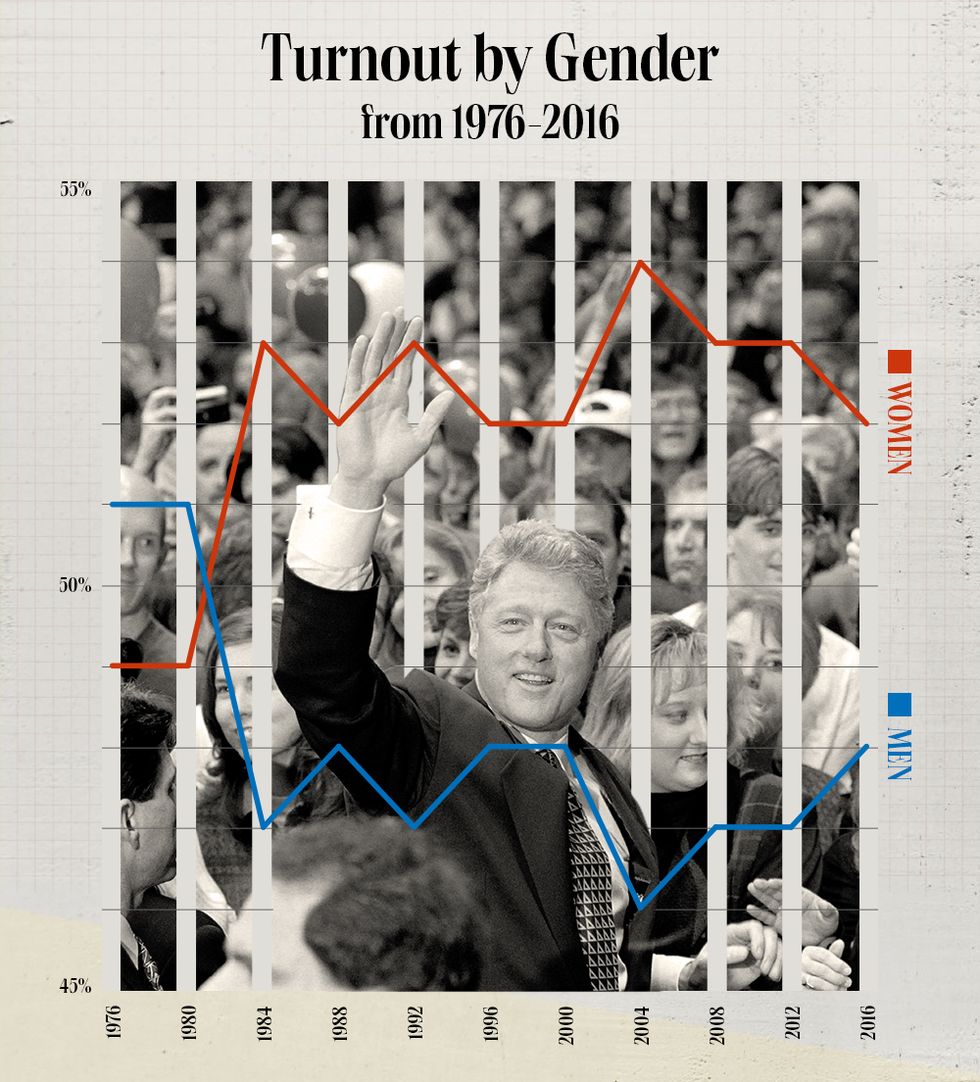
President Bill Clinton works the crowd in Iowa in 1996 before he beat Republican Bob Dole—thanks to women. Women have turned out at a greater rate than men in every presidential election since 1984.

Paul J. Richards / Getty Images

In some ways, the specter of a woman’s vote seems almost to have had more power than the vote itself—at first. “Right after 1920, we get the Sheppard-Towner Act, which provides support for mothers and infant care,” says Christina Wolbrecht, director of the Rooney Center for the Study of American Democracy at the University of Notre Dame and co-author of A Century of Votes for Women: American Elections Since Suffrage (which is where the 1920 voter-turnout stats above come from). “We also get the Cable Act, which says that if you’re a woman and you marry a foreigner, you don’t immediately lose your American citizenship. And then it turned out that women didn’t vote that differently than men and most of them stayed home, so politicians decided that they weren’t really a threat anymore, and so we don’t really need to pay as much attention to their agenda items. So you don’t see as much of those issues in the ’30s and into the ’40s.”

But what you do see in the ’30s and ’40s is women deploying a political savvy honed during the long campaign for suffrage, gathering and exercising a type of soft power to mold policy and shape national agendas from positions just out of the spotlight. “When we think about the impact of women’s suffrage,” Wolbrecht says, “an obvious focus is outcomes of elections. But we also might ask about something we would call in political science the second face of power. One face of power is, something is being debated and you can determine the winner or the loser. The second face of power is just getting that thing to be talked about in public life, to be on the political agenda. And by becoming voters, women had more power to influence the political agenda.”

Ware offers the Social Security Act as an example of this sort of exercise of soft power. “The secretary of labor at the time that was passed was Frances Perkins, the first woman to serve in the cabinet,” she says. “And Frances Perkins was a former suffragist.” (In fact, so pervasive was Perkins’s influence on the blossoming of social programs during the FDR administration that Collier’s magazine would later describe those accomplishments as “not so much the Roosevelt New Deal as…the Perkins New Deal.”)

Men and women voted similarly in the early days after suffrage, but all the while women such as Frances Perkins (above), FDR’s secretary of labor and the first woman to hold a cabinet post, were shaping policy and laying the groundwork for future influence. (Data courtesy of political scientist Kevin Corder.)

Bettmann / Getty Images

But for the most part, if your hopes as a suffragist, or your aims as a counterfactualist, are to find in the early decades of women’s voting evidence that the ballot was a power wielded by women to bring about sociopolitical change, you are doomed to disappointment. “In eras where there’s a lot of traditional ‘family values’ conservatism, where men are the primary breadwinners, stay-at-home women will support the conservative party very strongly,” says Kevin Corder, a professor of political science at Western Michigan University and co-author with Wolbrecht of A Century of Votes for Women. “In countries where they introduced suffrage at a time when you had a lot of traditional values, women were overwhelmingly voting for the conservative party. And that’s what the U.S. electorate in the ’50s did.”

In fact, to the extent that there was a partisan gender gap—a measurable difference between women’s and men’s relative support for the same candidate—throughout the 1950s and into the early ’60s, it showed a tendency for a slightly higher proportion of women than men to vote Republican. That changed by 1964, with both women and men favoring Lyndon Johnson in his trouncing of Barry Goldwater and women favoring the Democrat to a slightly greater degree, a pivot that heralded what became a slowly growing schism between the sexes, driven by some combination of men migrating rightward and women leftward.

share of the two party vote by gender from 1948 1972
An election official at the polls in 1957 New York City. In some states, Black voters were shut out decades after women’s suffrage was won, but the passage of the Voting Rights Act in 1965 opened up the electorate to far greater numbers of Black women.

Thomas J. O’Halloran / Getty Images

“The 1960s is also when the parties become sharply defined on social welfare,” Wolbrecht says. “One party says government is the problem; the other says government is the solution. If you’re economically vulnerable, the party that wants to have a social safety net may be more attractive to you. But even for women who are not economically vulnerable, something like 60 to 70 percent of the growth in middle-class women’s employment comes from the public sector. They are the public schoolteachers for the baby-boom kids. They’re the nurses in public hospitals. They are the social workers in all of these Great Society programs. They’re all these sorts of things that make their own economic interests much more linked to an active federal government.”

There is an insistent article of faith among scholars of women’s suffrage that goes like this: “Women” is not a voting bloc. “The category of ‘women,’ when it comes to voting, is just too broad,” Ware says. “I’ll give you two examples. One is the suffrage movement itself, where you had women who were for the vote and a lot who were against it. And the Equal Rights Amendment, where you had a lot of feminists struggling for the ERA and then you had antifeminists who were vehemently opposed to it. You have to be very, very careful about talking about women as a group and any expectation that there would be a women’s bloc; it just doesn’t hold up.” And with the passage of the Voting Rights Act in 1965 opening the electorate up to far greater numbers of Black women, it would soon become clear just how absurd it is to think that women all vote the same.


Ronald Reagan’s 489–49 electoral-vote shellacking of Jimmy Carter in the 1980 presidential election was fueled, not surprisingly, by support from both men and women. What was surprising, or at least notable, was the difference in the scope of support for Reagan between the sexes. Reagan outpolled Carter among men by a whopping 55–38 margin (Independent candidate John Anderson took 7 percent of the votes); among women, Reagan barely squeaked out a 47–46 victory. Feminists seized on the eight-point (55 versus 47 percent) “gender gap” in votes for Reagan (Eleanor Smeal, president of the National Organization for Women at the time, is generally credited with coining the term) as a way to highlight the importance of the women’s vote and of promoting policies that women care about. (This came at a time when the parties were becoming distinctly polarized around some of those issues; Republicans removed support for the Equal Rights Amendment from their party platform in 1980 for the first time in 40 years.)

Republican presidential candidate George H.W. Bush and VP pick Dan Quayle (with wife Marilyn) at the Republican National Convention in 1988. The gender gap waxed and waned until 1996, when men shifted dramatically toward the GOP and women moved toward the Democratic Party. The gap is still widening.

Cynthia Johnson / The LIFE Images Collection / Getty Images
Did candidates take note? They certainly did, though what’s less clear is how successful they were at figuring out just what those issues that matter most to women voters are—which may have something to do with the fact that “women” is not a voting bloc. In 1984, Walter Mondale went so far as to choose Geraldine Ferraro as his running mate, the first woman ever to appear on a major-party ticket. Reagan went ahead and trounced him by an even more lopsided margin than he had Carter four years earlier, 525–13, with Mondale taking only the District of Columbia and his home state of Minnesota.

The gender gap waxed and waned, though mostly waned, until 1996, when Bill Clinton ran for his second term, against Bob Dole, and the gap ballooned to 11 percent. The interesting thing about this particular shift is what it reveals about the dynamics that underpin it. In the previous election, the gap had been only 4 points, with both women and men favoring Clinton over George H.W. Bush—women giving Clinton 45 percent of their vote and men 41. (The numbers are skewed by the fact that H. Ross Perot performed so well as a third-party candidate, taking 21 percent of men’s votes and 17 percent of women’s.) “What happens in 1996,” Wolbrecht says, “is that women become more Democratic, but it’s also that many men returned to the Republican Party.” This is an important point: The gender gap is not just about how women vote. As Wolbrecht puts it, “1996 is such a great example of how the gender gap can be driven by both men and women.”

If just men had voted in 1996, Dole would have squeezed out a 272–266 victory over Clinton.

And those antipodal shifts by men, in turn, lead us to the first of our “What if women never got the right to vote?” electoral overturns: A close examination of state-by-state exit-poll numbers indicates that if women hadn’t voted in 1996, Bob Dole would have flipped the results in nine states and won a narrow victory, depriving Clinton of a second term. Here are a few other things that an all-male electorate would have deprived Clinton of: credit for four straight years of budget surpluses and the longest uninterrupted economic expansion in U.S. history; a successfully negotiated end to the war in Kosovo; and making Madeline Albright the first female secretary of state. Dole would have enjoyed Republican control of both houses of Congress, giving him the opportunity, perhaps, to achieve more in his first term than Clinton was able to in his second, so maybe he would have managed to abolish the four cabinet departments (Housing and Urban Development, Energy, Commerce, and Education) he had in his sights or to sign a bill (like the one Clinton vetoed toward the end of his first term) to allow drilling in the Arctic National Wildlife Refuge. One distraction he (and the country) likely would not have faced: the impeachment of a sitting president. Monica Lewinsky would probably not have become the household name she did. And who knows what impact all that might have had on Hillary Clinton’s political career.

Of course, if that’s the way history had actually gone, all bets would be off for how subsequent elections would have unfolded—since two Dole terms means no George W. Bush hanging-chad victory in 2000, and on and on. So let’s file Dole’s 1996 triumph away in the annals of alternative history and travel ahead another 16 years to take a look at the second upset the all-male electorate would have bestowed. This one, again, is the denial of a second term to a Democratic president, with Mitt Romney snatching nine additional states away from Barack Obama in 2012 and scoring a 322–216 Electoral College win. Here are a few things that happened in Obama’s second term that might thus have vanished into the alternative-history mists: the Iran Nuclear Deal, the Clean Power Plan, the Paris climate accord. One other thing that almost certainly would have gone away if Romney had run in 2016 for his second term: the presidency of Donald Trump. (Didn’t we warn you this was a fraught exercise?)

If just men had voted in 2012, Romney would have defeated Obama 322–216. If just white women had voted, the spread would have grown to 346–192.

To illuminate the influence of women’s votes on presidential elections from a different angle, we also crunched the numbers on the opposite postulate: What if only women had the right to vote? A few highlights: Bill Clinton beats George H.W. Bush by a lot more in 1992 and absolutely demolishes Bob Dole in ’96; Al Gore wins with a comfortable 368 electoral votes (and no need for a Supreme Court intercession) in 2000; John Kerry claims a victory in 2004; Obama cruises to two terms; and Hillary Clinton actually does become the first woman president in U.S. history, beating Donald Trump 412–126 and presumably presiding this year over many joyous celebrations of the centennial of women’s suffrage.

Senator John Kerry kicking off his campaign in 2004 in Ohio. If it had been up to women voters, Kerry would have beaten George W. Bush.

Marc Andrew Deley / FilmMagic / Getty Images

If that litany of outcomes reinforces your belief that women have become a staunchly reliable source of Democratic votes…then you haven’t been paying close enough attention. Remember “‘Women’ is not a voting bloc”? Because a deeper crunch of the exit-poll data reveals just how consequential the passage of the 1965 Voting Rights Act truly was on the electoral calculus: It’s not “women” who, if they were the only ones with the vote, would have been responsible for sweeping an unbroken string of Democratic candidates into office over the past three decades; it’s Black women and, to a slightly lesser extent, other women of color. If the power to vote had been held by white women only, every presidential election over those 32 years would have had the same outcome, with one exception: Romney would have beaten Obama in 2012 (and by a bigger margin than if only men had voted in that election).

Trump would have won in 2016 by 51 more electoral votes than he did. It’s only the overwhelmingly Democratic votes of non-white women that push the overall category of “women voters” resolutely into the Democratic column. As University of Michigan political scientist Ken Kollman pithily sums up: “Trump won the majority of white women. He got slaughtered among Black women and Latina women.”

If just women had voted in 2016, Hillary Clinton would have decimated Trump, 412–126.
the demographic breakdown of voters in 2016
Jewel Samad / AFP / Getty Images
the makeup of hillary clinton voters 2016
Scott Olson / Getty Images

Above: In 2016, nonwhite women made up 16 percent of all voters yet contributed to 26 percent of Clinton’s total votes. If just white women had voted, Trump would have won by an additional 51 electoral votes.

Kollman is far from alone among electoral scholars in anticipating the possibility that the 2020 election might emerge as a gender-gap pivot point—and a harbinger of challenging times to come for the Republican Party. “The data show that Trump is uniquely disliked by women,” he says. “And a lot of that is driven by women under 45. The partisan gap between men and women is increasing in the population as a whole, but it’s really a big step by generation. You go down in age and the gap gets bigger and bigger and bigger. And the modern Republican Party is in trouble. It’s not just that young people are being driven away from the Republican Party, which is true, but that young women are being dramatically driven away from the Republican Party.”


Heading into this centennial year for women’s suffrage, Susan Ware would find herself trying to conjure in her imagination a society where women can’t vote. “I went to my first feminist demonstration in 1970, on the 50th anniversary of women voting,” she says. “That’s not that long ago! I was born in 1950, and women had been voting for only 30 years, and that seems really bizarre to me. I haven’t found a really good way of conveying this to people, but just try to imagine a landscape where half the population is arbitrarily denied the right to vote because of their sex. To me, that’s the importance of suffrage: that we got past that hurdle.”

turnout of eligible women voters by race from 2008 2016
Then-candidate Barack Obama speaks to supporters in 2008. If only white women had voted in 2012, Mitt Romney would have denied Obama a second term.

Scott Olson / Getty Images

Ware, who has spent much of her career writing about the early suffragists, also likes to torture herself by trying to imagine what her biographical subjects would make of how far—or not—the country has come since 1920: “If I could bring my women up to the present and say, ‘All right, here’s where we are 100 years later,’ what would they think? Would they say, ‘Way to go, this is much further than we expected!’ or would they say, ‘Come on, Susan, not enough has happened.’ I go back and forth.”

One thing she does know, though, is that the right to vote, and to have a voice, is not something to be won and then taken for granted. “The suffragists needed to get women the vote, and it was a hard and a long struggle, and then it’s been up to women in the years since to figure out what they want to do with it,” Ware says. “And that process is still ongoing. And it will be going on long after I’m not here. But I see myself as being part of something bigger. And I see the centennial as being part of something bigger. I would hope that maybe you will get your readers thinking about that. And then the last line of your story has to be to remind them to vote no matter what.”
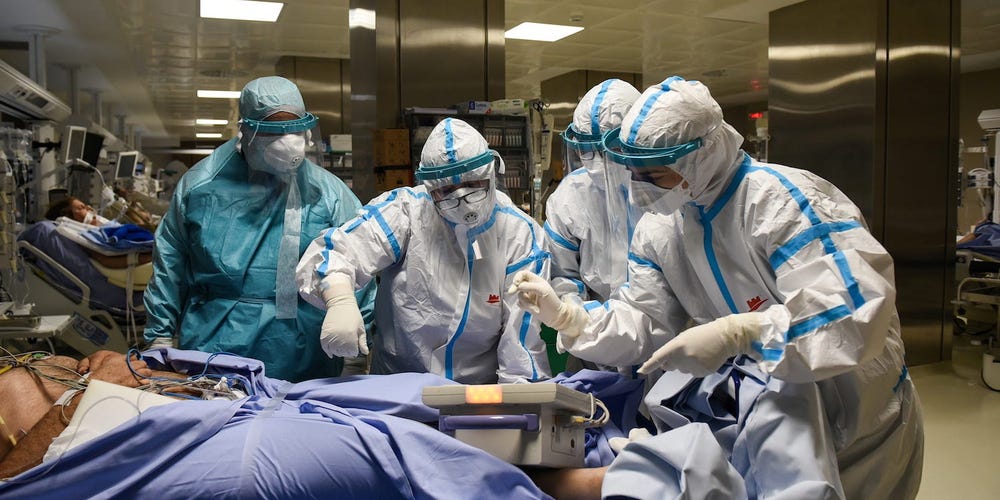
Oxford dictionaries change ‘sexist’ and outdated definitions of the word ‘woman’

From CNN/By Christina Zdanowicz/ November 9, 2020

https://www.cnn.com/2020/11/09/world/woman-definition-revised-oxford-dictionary-trnd/index.html

(CNN)Even the dictionary can be sexist and out of date, especially when it comes to how a “woman” is described.

Earlier this year, Oxford University Press changed its entry for “woman” in its dictionaries, including the Oxford English Dictionary, to include more positive ways to describe a female.
“We have expanded the dictionary coverage of ‘woman’ with more examples and idiomatic phrases which depict women in a positive and active manner,” according to a statement from OUP. “We have ensured that offensive synonyms or senses are clearly labelled as such and only included where we have evidence of real world usage.”
Phrases such as “woman of the moment” were added to equal the old saying of the “man of the moment.” And one of the definitions of “woman” now refers to a “person’s wife, girlfriend, or female lover,” as opposed to being tied to only a man.
The definition for “man” was updated to include gender-neutral terms and references to “sexual attractiveness or activity” were revised for “man” and “woman” entries.
OUP said its lexicographers regularly review entries to make sure they are accurate. This time around, the voice of the people helped create change, an OUP spokeswoman told CNN in an email Monday.
“Sometimes the team focus on topics highlighted by user feedback (such as last year’s petition about the definition of ‘woman’) and sometimes these topics are driven by current events or through projects taking place within the Oxford Languages team,” the spokeswoman wrote.
She sited work the organization has done on words relating to race, racial diversity and the use of “they” as a pronoun for nonbinary people as other examples this year.
Change.org petition in 2019 called for OUP to remove “sexist” terms for a woman. Tens of thousands of people signed it.
The suggestive phrases about women included: “Ms September will embody the professional, intelligent yet sexy career woman;” “I told you to be home when I get home, little woman;” and “If that does not work, they can become women of the streets.”
While the OED itself does not feature these definitions above, they do appear in other reference books produced by the publisher, as well as online dictionary Lexico, which takes its content from OUP dictionaries.
“Our dictionaries reflect, rather than dictate, how language is used,” OUP wrote in the statement. “This is driven solely by evidence of how real people use English in their daily lives.”
With that in mind, lexicographers reviewed examples in its dictionary data to make sure representations of woman were “positive and active,” the organization said.
The review looked at the definitions of “man” and “woman,” as well as the examples of the word being used in a sentence, labels and synonyms. It also looked at entries that are associated with women.
Labels were added to “offensive, derogatory, or dated” terms. The synonyms were also evaluated to make sure they are genuine synonyms.
The synonyms for “woman” had listed “wench,” “piece” and other derogatory terms last year. Some of those synonyms in the OED were removed and others have a label, such as the the word “bitch” being an offensive one.
The definition of “housework” was updated to take gender out of the equation in the dictionaries. “She still does all the housework,” was changed to “I was busy doing housework when the doorbell rang.”
The organization says all of this is part of the ongoing effort to “re-examine” language and labeling to make sure it’s up to date for a “modern audience.”