New York (CNN Business) – BlackBerry has been left for dead countless times over the past decade, but it refuses to go away. Two years after the last (we thought) BlackBerry phone, the BlackBerry logo will appear once again on a smartphone, complete with its famous, honest-to-goodness, physical QWERTY keyboard.
New BlackBerry smartphone with a physical keyboard and 5G is coming in 2021
It’s not a “true” BlackBerry phone, per se, because BlackBerry (BB) has been out of the phone business since 2016. But the company has continued to license its brand to phone manufacturers over the years, and it answered the call from a new licensee this year — OnwardMobility, an Austin, Texas, company.
We don’t know much about the OnwardMobility version of the BlackBerry phone, other than it will run Android, it’ll have 5G connectivity, and the company claims it will debut sometime in the first half of 2021. Also, Foxconn (HNHPF) subsidiary FIH will manufacture the new BlackBerry.
BlackBerry phones were notorious for two things: A physical keyboard and top-of-the-line security. Although modern smartphones — Apple’s iOS in particular — have become remarkably more secure over the past decade, OnwardMobility is betting the barrage of remote employees working on their mobile phones has given IT departments across the country a collective heart attack.
A phone synonymous with security could be in high-demand (although iPhones and many shades of Android devices are ubiquitous in corporate environments nowadays). A physical keyboard couldn’t hurt — typing long emails on a BlackBerry is just plain easier than typing on glass.
“Enterprise professionals are eager for secure 5G devices that enable productivity, without sacrificing the user experience,” said Peter Franklin, CEO of OnwardMobility, in a statement. “BlackBerry smartphones are known for protecting communications, privacy, and data.”
No one expects the new BlackBerry phone to go gangbusters. It has long since been relegated to niche status after the iPhone and then Android ate its lunch.
But BlackBerry used to be the king of smartphones. At its peak in 2012, it had more than 80 million active users, and they were a status symbol — giving off a kind of “I’m busy and I’m letting you know it” vibe.
The company got its start in 1996 as Research In Motion, and it called its devices two-way pagers. Its first gadget, the “Inter@ctive Pager,” allowed customers to respond to pages with a physical keyboard — a kind of text messaging/email hybrid. Three years later, RIM introduced the BlackBerry name with the BlackBerry 850.
Eventually, BlackBerry phones gained support for true email, apps, web browsing and BBM — an encrypted text messaging platform that predated WhatsApp and survived long after BlackBerry was surpassed by its rivals.
But Apple’s (AAPL) touchscreen revolution with the iPhone in 2007 made BlackBerry’s offerings appear lacking. It tried touch screens, but the first versions weren’t very good. BlackBerry tried slide-out keyboard models, but those never took off. And it developed a few phones with no physical keyboard — but those were missing BlackBerry’s key differentiator.
BlackBerry eventually gave up on its own software, embracing Android and layering its security software on top. But it found success in enterprise security software and automotive software and ditched phone-making altogether a few years ago.
For the nostalgic folks out there — and people who just love typing on a physical keyboard — they’ve been able to get BlackBerry phones over the past few years made by TCL. Its license it expiring, though, and OnwardMobility is carrying the torch.
The New York Times / Tiffany Hsu
https://www.nytimes.com/2020/08/12/business/media/college-football-ads-coronavirus.html
Fox and Disney, which owns ESPN and ABC, prepare to take another hit from a pandemic that has already affected them with shutdowns and delays.
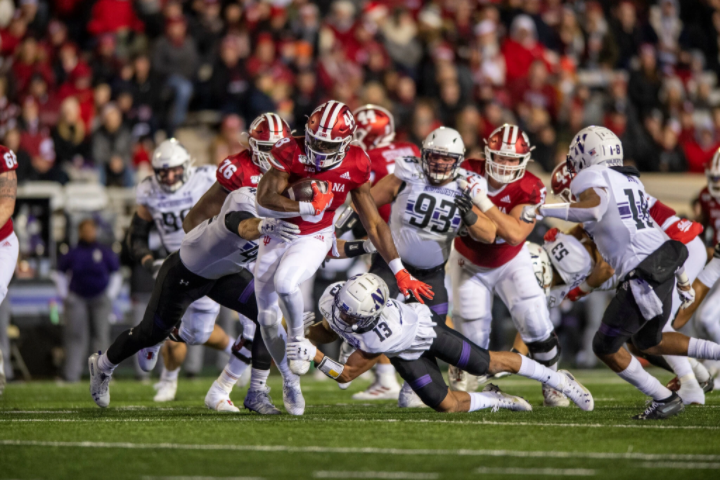
College football brought television networks nearly $1.7 billion in advertising last season, according to the research firm Kantar. Doug Mcschooler/Associated Press
The postponement of much of the college football season could disrupt the flow of more than $1 billion from advertisers to the television networks that count on a slate of game broadcasts every fall.
The return of the college game — a reliable ratings draw — might have helped the TV industry salvage a year of declining revenues resulting from pandemic-related cancellations and production delays. Now that the Big Ten and the Pacific-12 conferences, two of college football’s five powerhouse leagues, have pushed back their seasons amid concerns about the coronavirus, media companies are preparing for more pain.
Many players and school administrators, and even President Trump, had lobbied against the postponement, which could have financial ramifications for teams, campuses and local communities. The punting of the season will also affect the networks that have spent billions to secure broadcast rights, as well as the companies that had planned to spend millions to advertise their products.
“The implications are huge economically,” said Kevin Krim, the chief executive of EDO, a TV ad measurement platform that works with the networks and advertisers. “The cable and broadcast television ecosystem, with advertisers and rights fees and subscriber fees, are heavily anchored to live sports, and the most valuable franchises there are football.”
Last season, college football brought in nearly $1.7 billion in spending on television advertising, according to the research firm Kantar. Companies like Allstate, Chick-fil-A and State Farm each spent more than $30 million to advertise during games, while AT&T spent more than $70 million, Kantar found.
The Walt Disney Company and Fox are among the conglomerates likely to take a hit. More than 27.3 million people watched Louisiana State triumph over Clemson to win the national championship on Jan. 13, a game broadcast by the Disney-owned ESPN. It drew an estimated $91 million in advertising, according to EDO.
For Fox last year, college football was responsible for nearly 6 percent of ad spending and nearly 10 percent of all TV ad impressions, or viewer exposure to ads, according to the ad measurement company iSpot.TV. ESPN drew 9.5 percent of its impressions from the sport. ABC, also owned by Disney, racked up 7.5 percent of its impressions thanks to college football.
ESPN and Fox declined to comment.
The pandemic has left live sports programming “in constant flux, almost on a daily basis,” said Jeremy Carey, the managing director of the sports marketing agency Optimum Sports, and companies and their ad agencies are working to adapt their marketing plans. At risk: more than 300 regular-season national college football broadcasts that would require more than 50 days to watch, Mr. Carey said.
“There’s still a lot of dust in the air, and there may be more left to settle,” he said. “It’s really challenging when you don’t have all the puzzle pieces to paint an exact picture.”
“There’s going to be a domino effect here, because if Advertiser X can’t get their dollars into college football, and if they have a specific time frame for messaging, they’re going to have to find those audiences elsewhere,” Mr. Carey said.
Visa, which advertises on pro football broadcasts but not during college games, is monitoring the situation closely, “as it could be an indicator of how the N.F.L. season progresses,” said Mary Ann Reilly, who heads the company’s marketing in North America.
The company is developing contingency plans if pro football is canceled, delayed or cut short, readying itself for the possibility that it will need to shift its spending to other areas, such as digital platforms, Ms. Reilly said.
Advertisers have already been trying to work around delays resulting from pandemic-related shutdowns of TV shows and the postponement of the Tokyo Olympics this summer, said Rich Greenfield, an analyst with LightShed Partners, a media research firm.
“The problems keep piling up,” he said. “The catastrophe for the media industry at large is that not only are college sports in jeopardy, but also there’s really very limited original entertainment programming. So the TV ecosystem is going to be really starved for content to put ads next to.”
The Big 12 college conference said on Wednesday that it planned to hold games starting on Sept. 26. And Fox still plans to air major-league baseball games and pro wrestling in the fall, in addition to National Football League games.
But Mr. Krim, of EDO, said he was worried that shifting sports schedules would lead to an on-air collision of football and basketball games, either this fall in the pros or next spring for colleges, resulting in “a smashed-up overcrowding that we’ve never seen before.”
Without a certain timeline for college football, the fate of the most lucrative games of the season is unclear.
“Hundreds of millions of dollars of value could just evaporate,” Mr. Krim said.
BEIRUT (Reuters) – Lebanese security officials warned the prime minister and president last month that 2,750 tonnes of ammonium nitrate stored in Beirut’s port posed a security risk and could destroy the capital if it exploded, according to documents seen by Reuters and senior security sources.
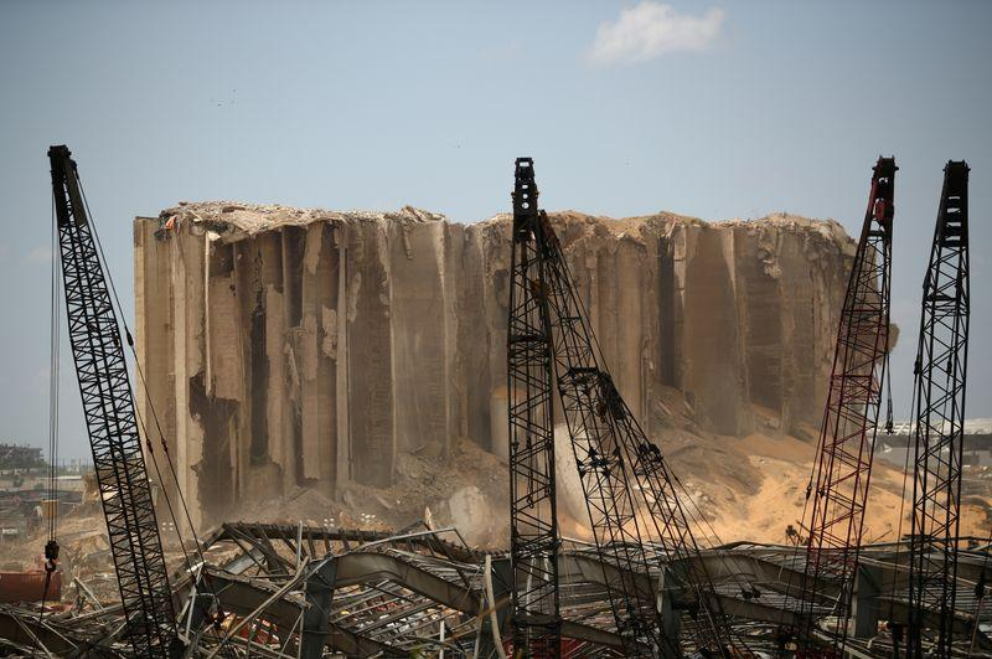
Debris are seen in the port area after a blast in Beirut, Lebanon, August 10, 2020. REUTERS/Hannah McKay TPX IMAGES OF THE DAY
Just over two weeks later, the industrial chemicals exploded in a massive blast that obliterated most of the port, killed at least 163 people, injured 6,000 more and destroyed some 6,000 buildings, according to municipal authorities.
A report by the General Directorate of State Security about events leading up to the explosion included a reference to a private letter sent to President Michel Aoun and Prime Minister Hassan Diab on July 20.
While the content of the letter was not in the report seen by Reuters, a senior security official said it summed up the findings of a judicial investigation launched in January which concluded the chemicals needed to be secured immediately.
The state security report, which confirmed the correspondence to the president and the prime minister, has not previously been reported.
“There was a danger that this material, if stolen, could be used in a terrorist attack,” the official told Reuters.
“At the end of the investigation, Prosecutor General (Ghassan) Oweidat prepared a final report which was sent to the authorities,” he said, referring to the letter sent to the prime minister and president by the General Directorate of State Security, which oversees port security.
“I warned them that this could destroy Beirut if it exploded,” said the official, who was involved in writing the letter and declined to be named.
Reuters could not independently confirm his description of the letter.
The prime minister’s office and the presidency did not respond to requests for comment about the July 20 letter.
The prosecutor general did not respond to requests for comment.
‘DO WHAT IS NECESSARY’
The correspondence could fuel further criticism and public fury that the blast is just the latest, if not most dramatic, example of the government negligence and corruption that has already pushed Lebanon to economic collapse.
As protests over the blast raged in Lebanon on Monday, Diab’s government resigned, though it will remain as a caretaker administration until a new cabinet is formed.
The rebuilding of Beirut alone is expected to cost up to $15 billion, in a country already effectively bankrupt with total banking system losses exceeding $100 billion.
Aoun confirmed last week that he had been informed about the material. He told reporters he had directed the secretary general of the supreme defence council, an umbrella group of Lebanon’s security and military agencies chaired by the president, to “do what is necessary”.
“(The state security service) said it is dangerous. I am not responsible! I don’t know where it was put and I didn’t know how dangerous it was. I have no authority to deal with the port directly. There is a hierarchy and all those who knew should have known their duties to do the necessary,” Aoun said.
Many questions remain over why the shipment of ammonium nitrate docked in Beirut in late 2013. Even more baffling is why such a huge stash of dangerous material, used in bombs and fertilisers, was allowed to remain there for so long.
The letter sent to Lebanon’s president and prime minister followed a string of memos and letters sent to the country’s courts over the previous six years by port, custom and security officials, repeatedly urging judges to order the removal of the ammonium nitrate from its position so close to the city centre.
The General Directorate of State Security’s report seen by Reuters said many requests had been submitted, without giving an exact number. It said the port’s manifest department sent several written requests to the customs directorate up until 2016 asking them to call on a judge to order the material be re-exported immediately.
“But until now, no decision has been issued over this matter. After consulting one of our chemical specialists, the expert confirmed that this material is dangerous and is used to produce explosives,” the General Directorate of State Security report said.
HAZARDOUS MATERIAL
The road to last week’s tragedy began seven years ago, when the Rhosus, a Russian-chartered, Moldovan-flagged vessel carrying ammonium nitrate from Georgia to Mozambique, docked in Beirut to try to take on extra cargo to raise the fees for passage through the Suez Canal, according to the ship’s captain.
Port authorities impounded the Rhosus on December 2013 by judicial order 2013/1031 due to outstanding debts owed to two companies that filed claims in Beirut courts, the state security report showed.
In May 2014, the ship was deemed unseaworthy and its cargo was unloaded in October 2014 and warehoused in what was known as Hangar 12. The ship sank near the port’s breakwater on Feb. 18, 2018, the security report showed.
Moldova lists the owner of the ship as Panama-based Briarwood Corp. Briarwood could not immediately be reached for comment.
In February 2015, Nadim Zwain, a judge from the Summary Affairs Court, which deals with urgent issues, appointed an expert to inspect the cargo, according to the security report.
The report said the expert concluded that the material was hazardous and, through the port authorities, requested it be transferred to the army. Reuters could not independently confirm the expert’s account.
Lebanese army command rejected the request and recommended the chemicals be transferred or sold to the privately-owned Lebanese Explosives Company, the state security report said.
The report did not say why the army had refused to accept the cargo. A security official told Reuters it was because they didn’t need it. The army declined to comment.
The explosive company’s management told Reuters it had not been interested in purchasing confiscated material and that the firm had its own suppliers and government import licences.
From then on, customs and security officials wrote to judges roughly every six months asking for the removal of the material, according to the requests seen by Reuters.
Judges and customs officials contacted by Reuters declined to comment.
A number of customs and port officials have since been detained as part of the investigation into the blast.
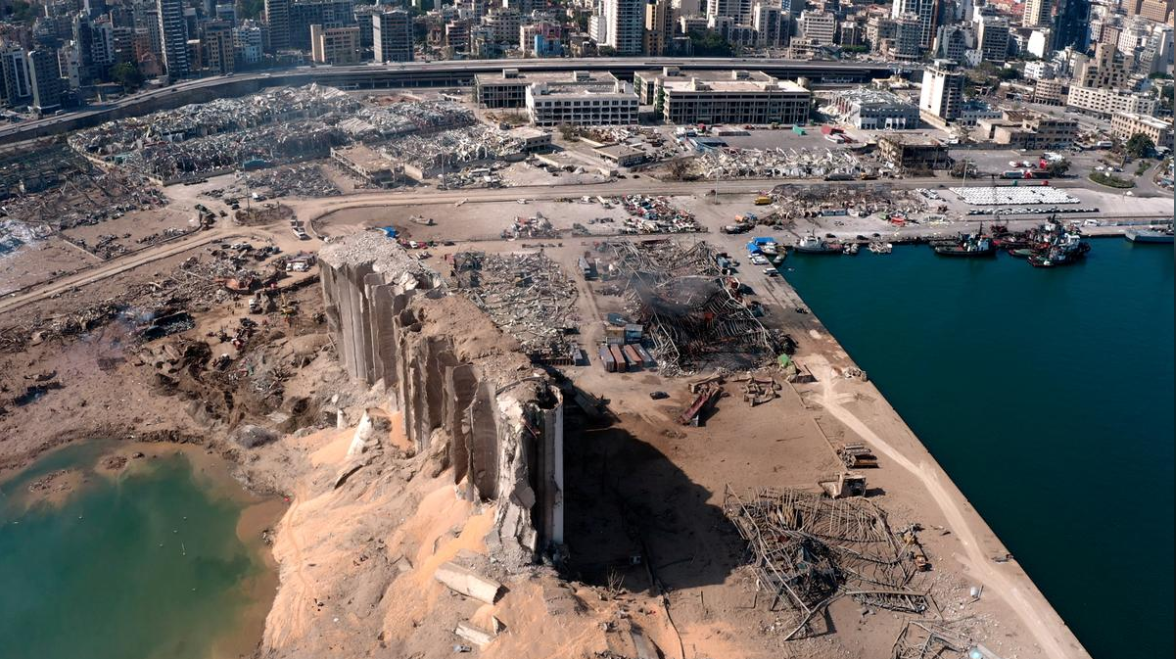
A still image taken from a drone footage shows the damage two days after an explosion in Beirut’s port area, Lebanon August 6, 2020. Reuters TV/via REUTERS
‘BAD STORAGE AND BAD JUDGMENT’
In January 2020, a judge launched an official investigation after it was discovered that Hangar 12 was unguarded, had a hole in its southern wall and one of its doors dislodged, meaning the hazardous material was at risk of being stolen.
In his final report following the investigation, Prosecutor General Oweidat “gave orders immediately” to ensure hangar doors and holes were repaired and security provided, a second high-ranking security official who also requested anonymity said.
On June 4, based on those orders, state security instructed port authorities to provide guards at Hangar 12, appoint a director for the warehouse and secure all the doors and repair the hole in the southern wall, according to the state security report and security officials.
The port authorities did not immediately respond to requests for comment
“The maintenance started and (port authorities) sent a team of Syrian workers (but) there was no one supervising them when they entered to fix the holes,” the security official said.
During the work, sparks from the welding took hold and fire started to spread, the official said.
“Given that there were fireworks stored in the same hangar, after an hour a big fire was set off by the fireworks and that spread to the material that exploded when the temperature exceeded 210 degrees,” the high-ranking security official said.
The official blamed the port authorities for not supervising the repair crew and for storing fireworks alongside a vast deposit of high explosives.
Reuters could not determine what happened to the workers repairing the hangar.
“Only because the hangar faces the sea, the impact of the explosion was reduced. Otherwise all of Beirut would have been destroyed,” he said. “The issue is all about negligence, irresponsibility, bad storage and bad judgment.”
President Donald Trump repeatedly insisted on Monday that any sale of TikTok’s U.S. operations would have to include a substantial payment to the U.S. — but it wasn’t clear under what authority he can extract a payout.
It would be unprecedented, based on recent history, for the U.S. government to collect a cut of a transaction involving companies in which it doesn’t hold a stake. Trump said the money would come from China or an American buyer such as Microsoft Corp.
“The United States should get a very large percentage of that price, because we’re making it possible,” Trump told reporters at a news conference Monday evening. “Whatever the number is, it would come from the sale, which nobody else would be thinking out but me, but that’s the way I think. And I think it’s very fair.”
Earlier in the day, Trump said TikTok will have to close in the U.S. by Sept. 15 — unless there’s a deal to sell the social network’s domestic operations to Microsoft or another American company.
Trump set off a furious scramble over the fate of the Chinese-owned app on Friday, when he said he would ban the company’s operations through an executive action on Saturday. But the weekend passed without any official move from the White House, after the president spoke with Microsoft Chief Executive Officer Satya Nadella about his company’s efforts to purchase the viral video application.
Clock Ticking
Microsoft said in a blog post that it was aiming to complete a deal for TikTok’s operations in the U.S., as well as in Canada, Australia and New Zealand, no later than Sept. 15. The White House had insisted upon that deadline, according to people familiar with the matter. It could prove an uphill climb, with key details for the deal — including price — still not worked out, people familiar with the discussions said.
Microsoft’s blog post also said it’s committed to “providing proper economic benefits to the United States, including the United States Treasury.” That language referred to tax revenue and job creation, according to a person familiar with the matter — rather than some sort of special transaction fee.
Trump compared the arrangement to landlord-tenant dynamics. “Without the lease, the tenant doesn’t have the value,” he said. “Well, we’re sort of in a certain way the lease. We make it possible to have this great success.”
The U.S. assesses fees associated with deals under review by the Committee on Foreign Investment in the United States, or CFIUS, which investigates overseas acquisitions of U.S. businesses. But those charges — set on a sliding scale and going no higher than $300,000 — didn’t fit what Trump described.
CFIUS has been reviewing ByteDance Ltd.’s 2017 purchase of the lip-synching app Musical.ly that was later folded into TikTok.
The White House has said it’s concerned that ByteDance could be compelled to hand over American users’ data to Beijing or use the app to influence the 165 million Americans, and more than 2 billion users globally, who have downloaded it. And Trump has looked to ratchet up pressure on China ahead of November’s election, frustrated by slow implementation of the trade pact inked earlier this year and the spread of the coronavirus for which he blames China.
— With assistance by Josh Wingrove, Liana Baker, and Dina Bass
High school students know that we can’t simply go back to life as usual. NBC News / Courtesy Emanuelle Sippy / Getty Images
I’m sad that I missed the prom last spring. I’m sad that I missed my final day of 11th grade and saying goodbye to my graduating senior friends. I’m even sad that I missed studying for finals and taking AP tests in a crowded gymnasium and experiencing the exhausted feeling of relief that follows.
But that doesn’t mean I think we should have kept schools open. Unhappy as I may feel, I know the momentary joy of a school dance, even one as momentous as prom, was not worth the accompanying danger to public health. I know that school closures and self-quarantines were necessary measures to keep our community healthy and safe.
Though teens are often accused of being irresponsible risk-takers, my peers and I seem to generally agree that these sacrifices were worth it. In addition to the many friends who have told me so, a student-led education advocacy group in Kentucky that I’m a part of, the Prichard Committee Student Voice Team, conducted a survey in May of more than 9,000 students from 119 counties across the state. Some 84 percent agreed with the decision to close schools to prevent the spread of COVID-19.
Students know that our personal desires for a traditional high school experience are outweighed by the common good. We know that to return to school, we need detailed plans to protect students and school employees, ones that follow health recommendations. We know we can’t simply go back to life as usual. So why doesn’t our government?
Over the past weeks, White House officials have called for a return to a pre-pandemic education system. Last week, Trump threatened to withhold federal aid from schools that do not reopen fully, and the Centers for Disease Control and Prevention began recommending that schools return to in-person teaching.
These directives are infuriating. With COVID-19 cases continuing to rise, the administration’s efforts to force me and my peers back into crowded buildings without protection reveal just how little they care for our well-being and for the well-being of our at-risk friends and relatives. I’d rather spend my senior year online than needlessly endanger the lives of my school’s teachers and staff.
It makes me angry that I, a student, have managed to prioritize the guidance of public health officials over my desire for the traditional high school experience when so many government officials struggle to make a similar sacrifice or calculus.
The stereotypical teenage battles with authority have now, quite literally, become a fight for our lives — and contrary to expectations, we’re the ones asking for more rules and restrictions. Instead of arguing with our parents over curfews and social media use, we’re demanding that our policymakers honor our unwillingness to go back to school if we can’t do so safely.
Despite students’ concerns, some states are starting to act on President Donald Trump’s suggestions. In Jefferson, Georgia, for instance, schools are opening in-person without requiring students and teachers wear masks, practically guaranteeing the spread of the coronavirus. They’re doing this notwithstanding vocal complaints from much of the student body and nationwide polls showing Americans are still concerned about reopening schools.
In Florida, teachers unions are suing to block a July 6 emergency order that requires schools to be open five days a week. In South Carolina, Gov. Henry McMaster made similar demands that schools offer in-person instruction.
Other countries are demonstrating that a safe return seems possible. In nations across Asia and Europe, schools have reopened without major outbreaks. But those countries waited until their COVID-19 caseloads were relatively under control before sending students and staff into what would otherwise be hotbeds of infection.
They also took significant precautions before attempting in-person education, precautions I am happy to take myself when my school eventually transitions away from virtual learning. From distancing desks and staggering class schedules to daily temperature checks and mandatory mask policies, there are dozens of measures that can alleviate the risks created by a pandemic that’s still raging.
School systems, however, must also help students in a holistic way. COVID-19 has made it harder for students to access mental health care even as they experience increased feelings of depression and anxiety, while the economic crisis is creating new difficulties for students and families. Schools have historically played a role in providing social services, mental health assistance and nutritious meals, a role that needs to be amplified in the coming months.
In Kentucky, at least, most school administrators seem to recognize the danger facing students, teachers and staff. After exploring a variety of hybrid options, like having only half the student body come to school on a given day, my district recently announced that we would start the semester virtually.
This news was disappointing, to say the least, but also a relief. I’m glad my state has taken the safer, more rational course of action. But the confirmation that I won’t be seeing the vast majority of my friends or teachers this August, that I’ll be spending the foreseeable future mostly confined within the walls of my house, brought on a fresh feeling of loss and dismay.
It also made me wish we had taken more forceful action sooner. It made me wish we hadn’t let our desire to reopen the country at all costs outweigh our respect for undeniable facts.
The inability of our policymakers to grasp a concept that a fifth grader could understand is highlighting something students have known all along: Our voices matter. As the direct recipients of education, we deserve to be included in decisions that impact our everyday lives. The public officials determining what school will look like during a pandemic need to listen more to public health experts — but also to students, who spend over 30 hours a week experiencing firsthand the impacts of their policies.
We won’t go back to a school that’s unconcerned with our health and safety. We won’t listen to the mandates of a school system that won’t listen to us.
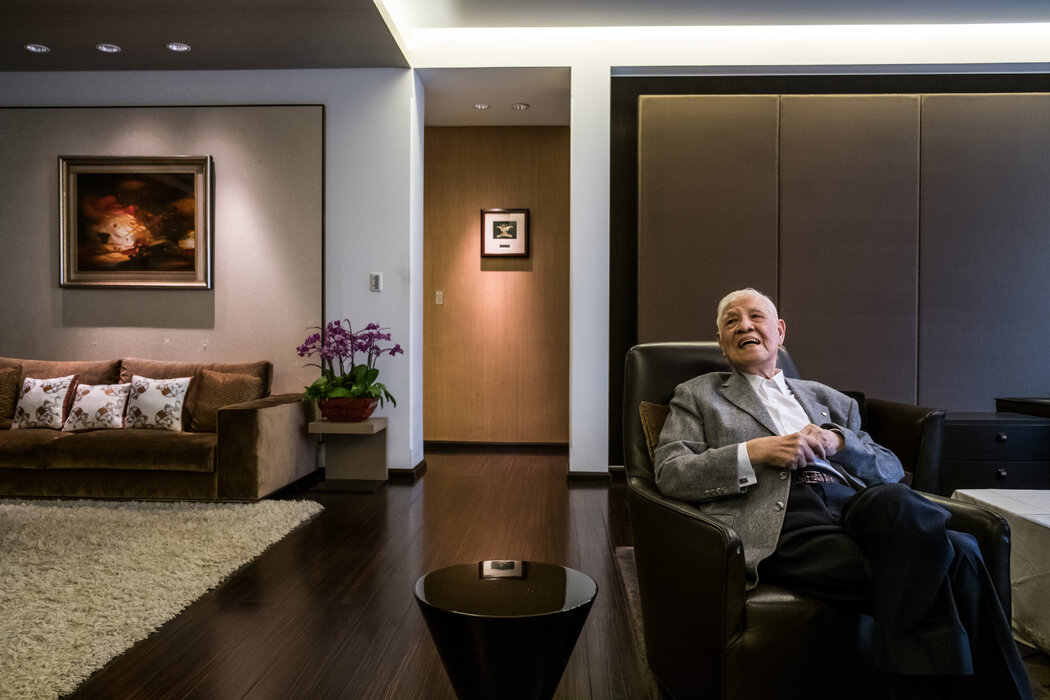
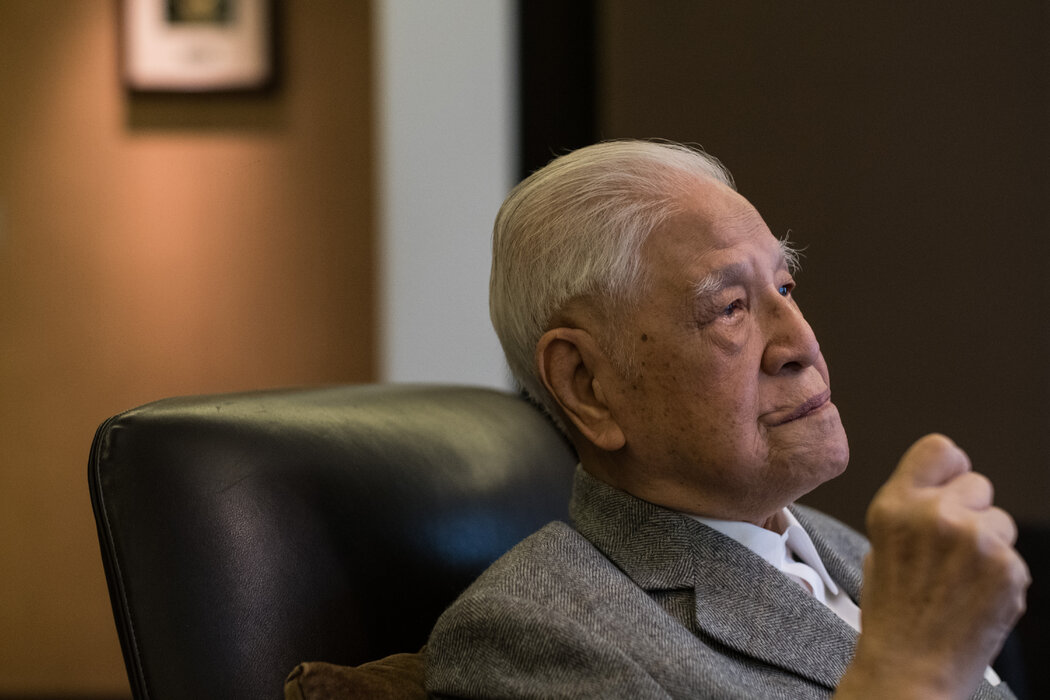
Lee Teng-hui in Taipei in 2018. He succeeded Chiang Ching-kuo to become the first native president of Taiwan and later its first popularly elected leader. Lam Yik Fei for The New York Times
Lee Teng-hui, who as president of Taiwan led its transformation from an island in the grip of authoritarian rule to one of Asia’s most vibrant and prosperous democracies, died on Thursday in Taipei, the capital. He was 97.
The office of Taiwan’s president, Tsai Ing-wen, announced the death, at Taipei Veterans Hospital. News reports said the cause was septic shock and multiple organ failure.
Mr. Lee’s insistence that Taiwan be treated as a sovereign state angered the Chinese government in Beijing, which considered Taiwan part of its territory and pushed for its unification with the mainland under Communist rule. His stance posed a political quandary for the United States as it sought to improve relations with Beijing while dissuading it from taking military action to press its claims over the island.
As president from 1988 to 2000 — the first to be elected by popular vote in Taiwan — Mr. Lee never backed down from disputes with the mainland, and he continued to be a thorn in its side well into his later years. In 2018 he called, unsuccessfully, for a referendum on declaring the country’s name to be Taiwan, not the Republic of China, as it is formally known — a move that would have paved the way for sovereignty.
“China’s goal regarding Taiwan has never changed,” he told The New York Times in a rare interview at a time when the Chinese government was trying to further isolate the island from the international community. “That goal is to swallow up Taiwan’s sovereignty, exterminate Taiwanese democracy and achieve ultimate unification.”
President Tsai’s office praised Mr. Lee’s achievements, saying in a statement, “The president believes that former President Lee’s contribution to Taiwan’s democratic journey is irreplaceable and his death is a great loss to the country.”
Mr. Lee entered Taiwan’s politics during the dictatorial Nationalist Party regimes of Chiang Kai-shek and his son Chiang Ching-kuo, who assumed power after his father’s death in 1975. The Nationalists ruled with brutality, which reached a peak in 1947 with what became known as the February 28 incident, in which up to 28,000 Taiwanese were massacred by Chiang Kai-shek’s troops in response to street protests. The Nationalists imposed martial law two years later, and it was not lifted until 1987 by Chiang Ching-kuo.
Born in Taiwan, Mr. Lee joined the Nationalist Party, known as the Kuomintang or KMT, in 1971 and became an agricultural minister. He was later mayor of Taipei and governor of Taiwan Province before being tapped as vice president in 1984.
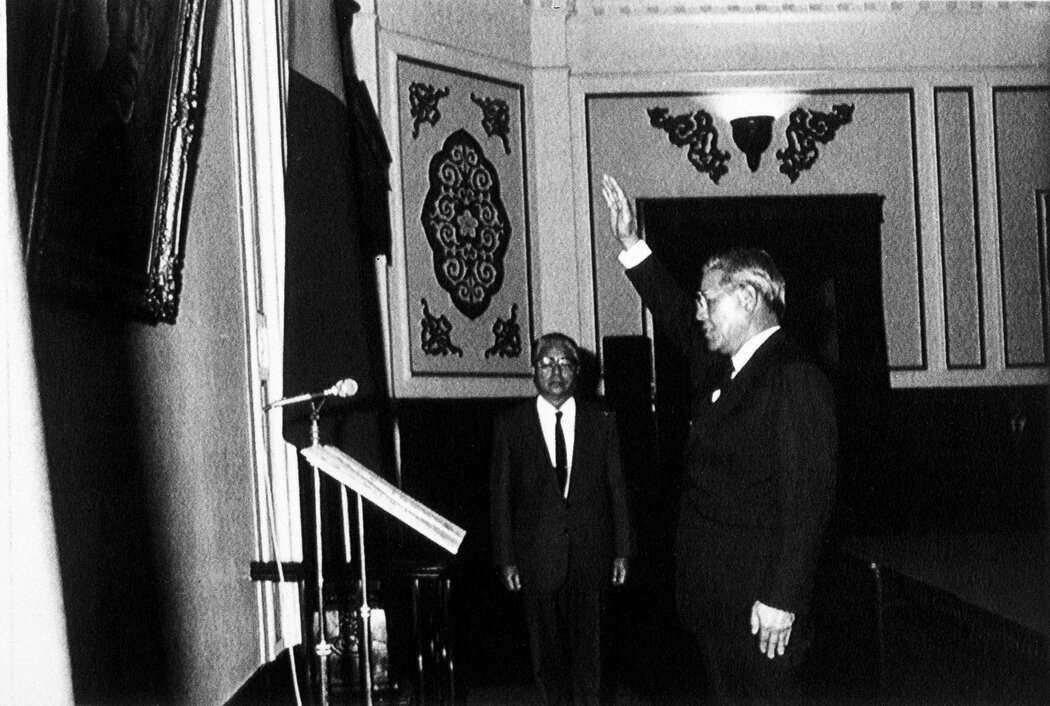
When Chiang Ching-kuo died of a heart attack in 1988, Mr. Lee succeeded him, becoming the first native Taiwanese president.
Mr. Lee being sworn in as president in January 1988 after the death of President Chiang Ching-kuo. Mr. Lee had been vice president, chosen by Mr. Chiang.Credit…Associated Press
Mr. Lee dismantled the dictatorship and worked to end the animosity between those born on the mainland and the native Taiwanese. He pushed the concept of “New Taiwanese,” a term suggesting that the islanders, no matter their backgrounds, were forging a common identity based on a democratic political system and growing prosperity.
He pursued a deliberately ambiguous policy with mainland China, shifting between rigid hostility, tentative conciliation and defiant independence. His attempts to demonstrate Taiwan’s international sovereignty sometimes provoked the mainland into saber-rattling military exercises.
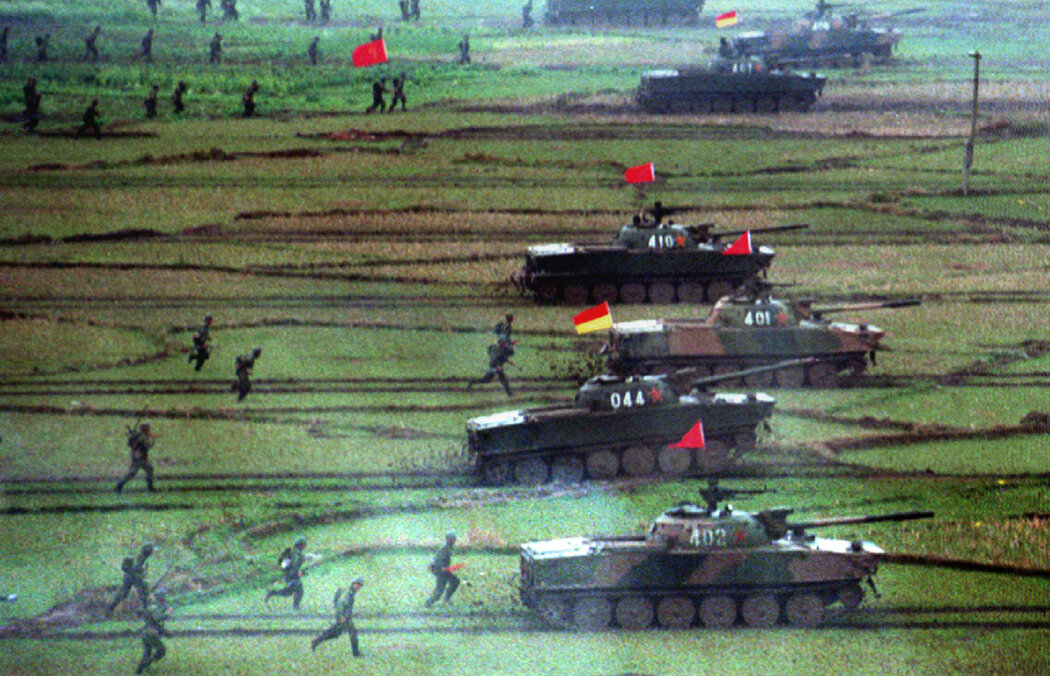
One such episode occurred after a trip by Mr. Lee to the United States in 1995, ostensibly to visit Cornell University, his alma mater. China accused the United States and Taiwan of colluding to raise the island’s diplomatic status. In a demonstration of Beijing’s ire, Chinese military forces fired test missiles into the Taiwan Strait, which separates the island from the mainland. Washington countered by positioning warships off the Taiwan coast. The affair strained relations between Washington and Beijing for months.
Mr. Lee again infuriated Beijing in a German television interview in 1999 by suggesting that relations between Taiwan and China should be conducted on a “special state-to-state” basis. That provoked tirades in the official Chinese media. The People’s Liberation Army Daily denounced Mr. Lee as “the No. 1 scum in the nation.” The Xinhua News Agency called him a “deformed test-tube baby cultivated in the political laboratory of hostile anti-China forces.”
A picture released by China’s state-run Xinhua news agency showed People’s Liberation Army military exercises in 1996 during Taiwan’s first open presidential election, which Mr. Lee won. Xinhua, via Reuters
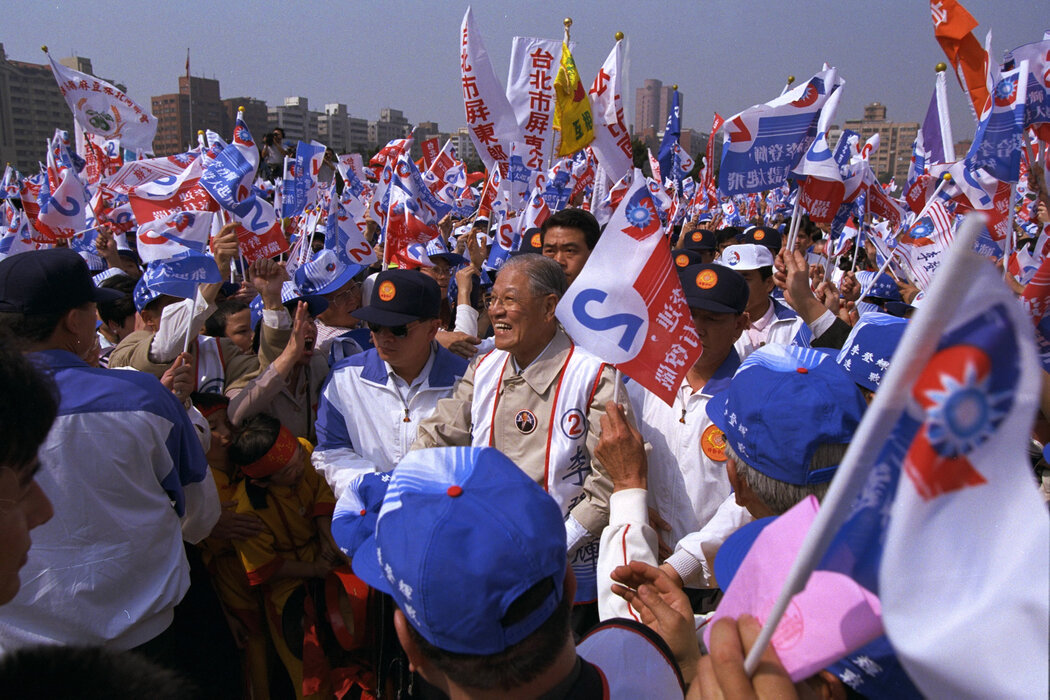
But such attacks made Mr. Lee only more popular in Taiwan. A tall, silver-haired, tough-minded campaigner with a dazzling smile, he used his charisma to rally support. He spoke the slang of the ports and factories, rode bullhorn trucks with local candidates and set off firecrackers to please the deities of local temples.
“The people like Lee Teng-hui because he stands up for them in the face of China’s dictators,” Chen Shui-bian, the mayor of Taipei at the time, said in 1996,
Lee Teng-hui was born on Jan. 15, 1923, in Sanzhi, a village on the outskirts of Taipei. His father was a police detective in the employ of the Japanese authorities that ruled Taiwan as a colony from 1895 to 1945. Mr. Lee studied agronomy in Japan at the Kyoto Imperial University and served as a second lieutenant in the Imperial Japanese Army during World War II, though he never saw action.
He returned to Taiwan after the war and secretly joined the Communist Party of China while completing his undergraduate work at the National Taiwan University. “I read everything I could get my hands on by Karl Marx and Friedrich Engels,” he wrote in his 1999 memoirs, “The Road to Democracy.”
He joined the protests in the February 28 incident in 1947, but he soon renounced Marxism and joined the KMT. The party later destroyed his Communist Party records when he became politically prominent.
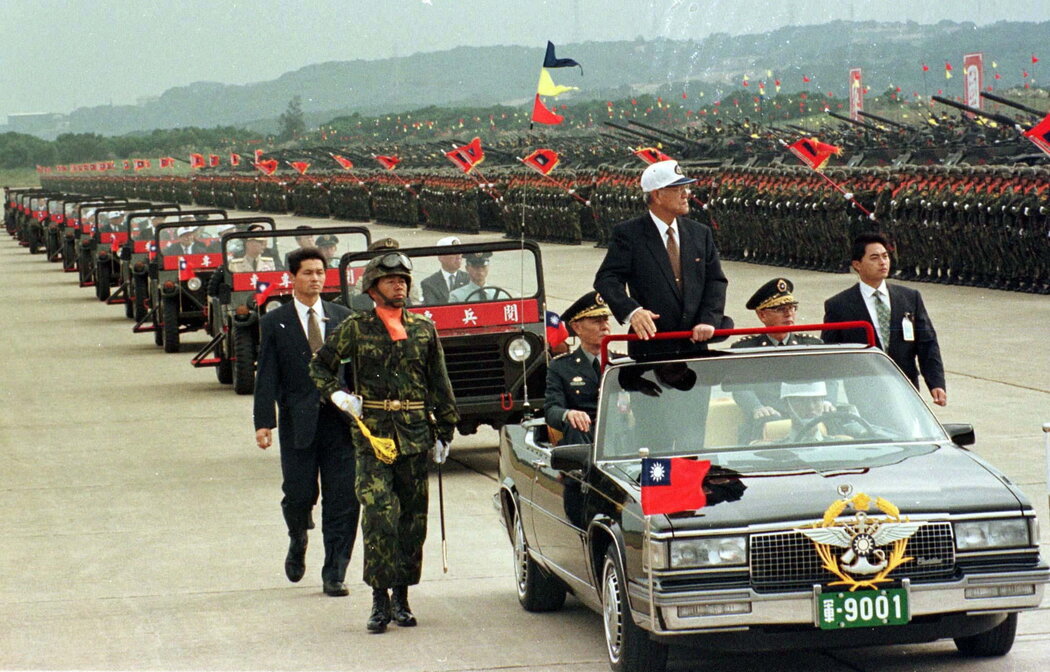
Mr. Lee inspecting troops in 1997. Once in office he ended decades of state-of-emergency measures on Taiwan. Reuters
Mr. Lee married Tseng Wen-fui, the daughter of a prosperous landholding family, in 1949, and both became devoted Presbyterians. They had two daughters, Anna and Annie; their only son, Hsien-wen, died of cancer. He is survived by his wife and daughters as well as a granddaughter and a grandson.
Taiwan became a separate political entity in 1949 after the civil war in China brought Mao’s Communists to power, forcing Chiang’s defeated government to flee to the island, some 100 miles from the mainland.
For the next 30 years, Taiwan, with American support, maintained the fiction that it was the seat of China’s legitimate government in exile. Washington finally recognized the Communist government in Beijing in 1979 and severed its formal diplomatic relations with Taiwan. But it continued to guarantee Taiwan’s security against a mainland invasion and backed negotiations between both sides aimed at reunification.
Mr. Lee cultivated ties with the United States during two academic stays, receiving a master’s degree in agricultural economics from Iowa State University in 1953 and a Ph.D. from Cornell in 1968. In between, he taught in Taiwanese universities, gaining recognition as an agricultural economics scholar and attracting the attention of Chiang Ching-kuo, then a deputy prime minister under his father. On the younger Chiang’s recommendation, Mr. Lee was appointed minister without portfolio. He distinguished himself by promoting programs that raised health standards and farm incomes.
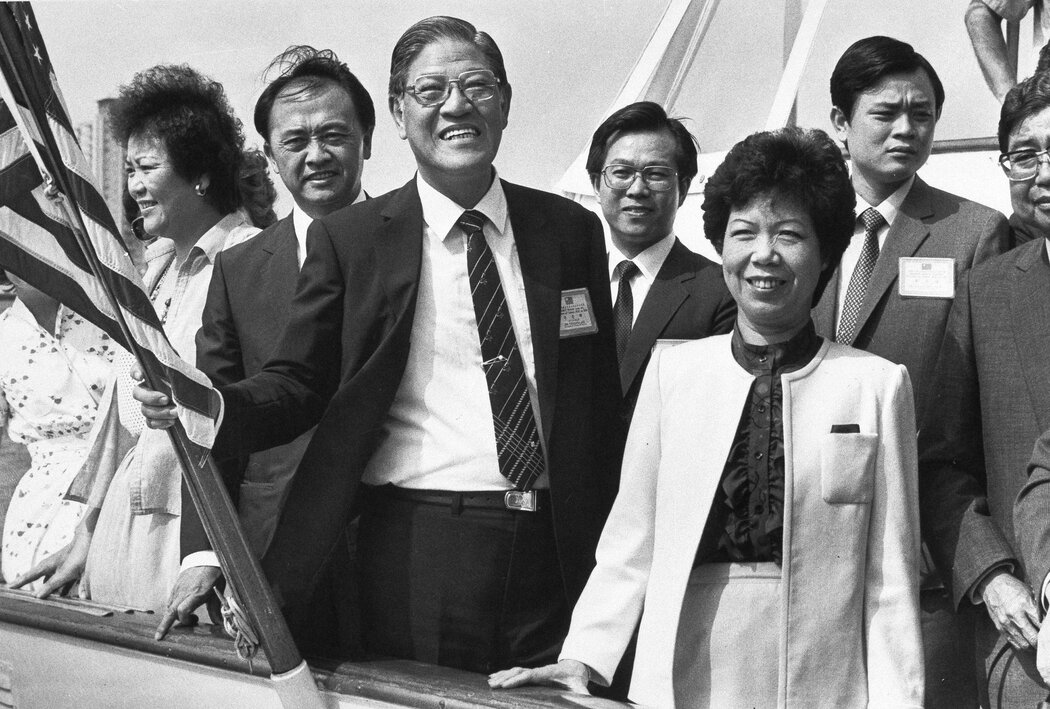
Mr. Lee, center, and his wife, Tsang Wen-hui, foreground, on a goodwill visit to the United States in 1983, when he was governor of Taiwan Province. He was named vice president the next year. Associated Press
With Chiang Ching-kuo installed as president, Mr. Lee was appointed mayor of Taipei in 1978 and set about modernizing the capital’s road and sewer systems. As governor of Taiwan Province, from 1981 to 1984, he pushed agrarian reforms that helped achieve a balanced growth between urban and rural areas, still a hallmark of Taiwan.
Mr. Chiang selected Mr. Lee as his vice president in 1984. It was a dramatic departure from the usual practice of appointing only former mainland Chinese to top government posts. His selection was viewed as a gesture toward the native Taiwanese, who had been politically powerless despite accounting for 85 percent of the population.
When Mr. Lee became president in 1988 on Mr. Chiang’s death, he moved to break with the Chiang family’s autocratic system, publicly deploring the February 28 massacres. He ended decades of state-of-emergency measures, allowed citizens to send mail to mainland relatives and visit them, dropped bans on street demonstrations, eased press restrictions, promoted a multiparty system and decreed open elections for the National Assembly.
The KMT easily retained control of the legislature, but more than three-fourths of the seats went to Taiwanese natives.
“What had been a tight police state under Chiang Kai-shek and his son Chiang Ching-kuo is now the most democratic society in the Chinese-speaking world,” The Times declared in a 1992 editorial.
Mr. Lee campaigning in Taipei in 1996. After succeeding to the office as vice president, he became Taiwan’s first popularly elected president. The Asahi Shimbun, via Getty Images
Mr. Lee was elected outright in 1996, in Taiwan’s first open presidential contest. Seeking to begin a dialogue with Beijing, he supported a policy of “one China, two equal governments.” But he insisted that Taiwan would rejoin the mainland only if China became a democratic, capitalist society. In the meantime he again called for “state to state” relations between Taipei and Beijing, a policy that the mainland rejected. Instead, Chinese officials tried to persuade other countries to cut all ties with Taiwan, asserting that any improvement in relations would come only after Mr. Lee had retired.
Mr. Lee was succeeded in 2000 by Chen Shui-bian, the Democratic Progressive Party candidate whose election ended KMT rule. In his two terms, Mr. Chen presided over a huge expansion of Taiwan’s trade and investment in China, a process that had already been underway during the Lee presidency. But like his predecessor, Mr. Chen frustrated Beijing’s attempts to get Taipei to acknowledge the mainland’s sovereignty and embrace a timetable for unification.
Mr. Lee came out of retirement in 2018 to help create the Formosa Alliance, a new party calling for the formal independence of Taiwan from China. But the party did not go ahead with a promised referendum on independence.
Late in life, Mr. Lee endured the ignominy of corruption charges. In June 2011, he was indicted, along with a financier, Liu Tai-ying, on charges of embezzling almost $8 million in public funds during his presidency. Mr. Lee was acquitted in 2013.
He took solace in proclaiming that he had helped his island of 23 million inhabitants serve as a beacon for the 1.4 billion people on the mainland. Or, as he wrote in his memoirs, “We have developed the economy and have embraced democracy, becoming the model for a future reunified China.”
Mr. Lee in 2018. He came out of retirement that year to help create the Formosa Alliance, a new party calling for the formal independence of Taiwan from China. Lam Yik Fei for The New York Times
LONDON — Britain will no longer offer immunity from criminal prosecution to the families of the American staff at a military base near where a teenager was killed by a car driven by the wife of an American diplomat.
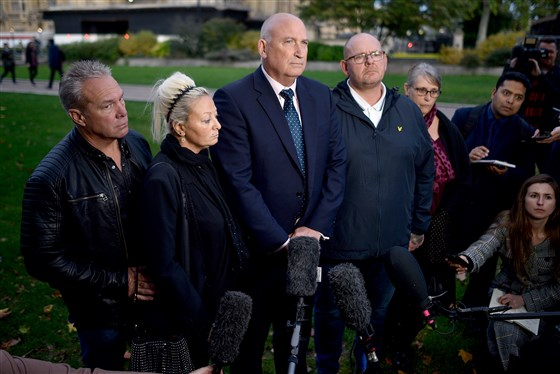
The change, announced by Foreign Minister Dominic Raab on Wednesday, comes after intense lobbying by the family of Harry Dunn, 19, who died in August 2019 after his motorcycle was struck by Anne Sacoolas, an American, near the base at Croughton Annex — a British installation used by the United States.
Harry Dunn.Courtesy of the Dunn Family
The United Kingdom’s decision comes a day after Dunn’s death was raised in a meeting between Prime Minister Boris Johnson — who has previously called for Sacoolas to return to the country — and Secretary of State Mike Pompeo who was making a brief trip to London.
“The U.S. waiver of immunity from criminal jurisdiction is now expressly extended to the family members of U.S. staff at the Croughton Annex,” Raab said in a statement. “Permitting the criminal prosecution of the family members of those staff, should these tragic circumstances ever arise again.”
Raab said the changes took effect Monday, implying they would not be retroactive.
Dunn’s mother, Charlotte Charles, welcomed the decision as a “huge step forward” and said it would ensure a similar tragedy would “never happen to another family,” she told Britain’s PA News Agency.
She said her son would be “proud” but vowed to continue to campaign for Sacoolas to return to the U.K.
The case sparked a transatlantic dispute between Washington and London about whether Sacoolas had diplomatic immunity from prosecution.
Her lawyer has said previously that Sacoolas will not return voluntarily to potentially face jail for “a terrible but unintentional accident.”
The State Department also said Sacoolas was covered by diplomatic immunity and could not be extradited, in a move that caused friction with London. NBC News has yet to receive comment from the State Department on the latest U.K. rule change.
Family spokesman Radd Seiger speaks on behalf of father of Harry Dunn, Tim Dunn, center right, and mother Charlotte Charles, center left, after meeting with Foreign Secretary Dominic Raab in 2019. Peter Summers / Getty Images
In October, Dunn’s family met with President Donald Trump at the White House to petition him to extradite Sacoolas. During the meeting, Trump dropped a “bombshell” according to Dunn’s mother, revealing that Sacoolas was waiting to meet the family in the room next door. The family declined to meet her.
“We have the deepest sympathy for Harry Dunn’s family. No family should have to experience what they have gone through and I recognize that these changes will not bring Harry back,” Raab said.
He said he hoped the change in rules would at least bring “some small measure of comfort” to the Dunn family.
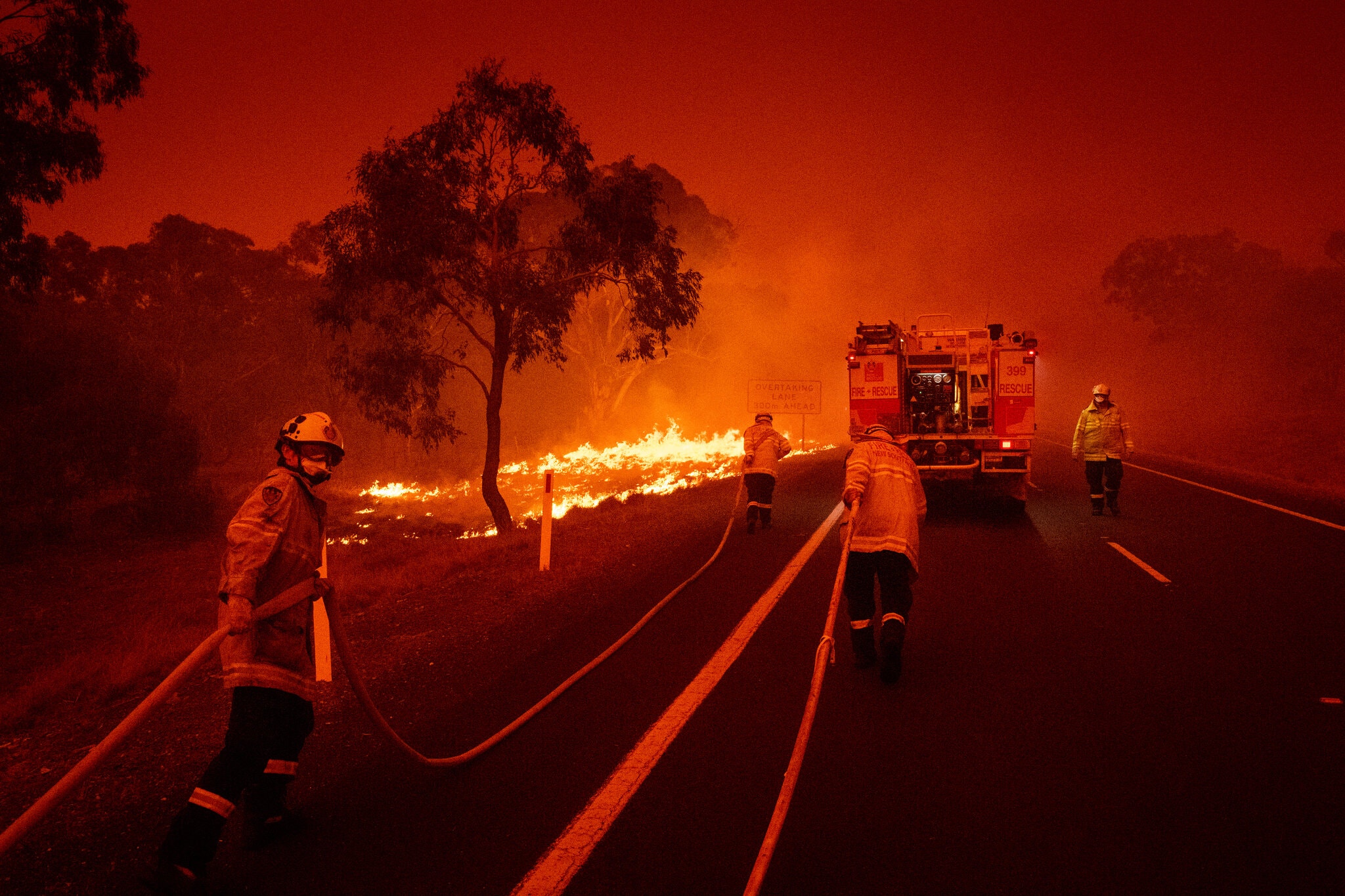
Firefighters on the outskirts of Bredbo, New South Wales, Australia, in February, when wildfires devastated vast stretches of the state. Matthew Abbott for The New York Times
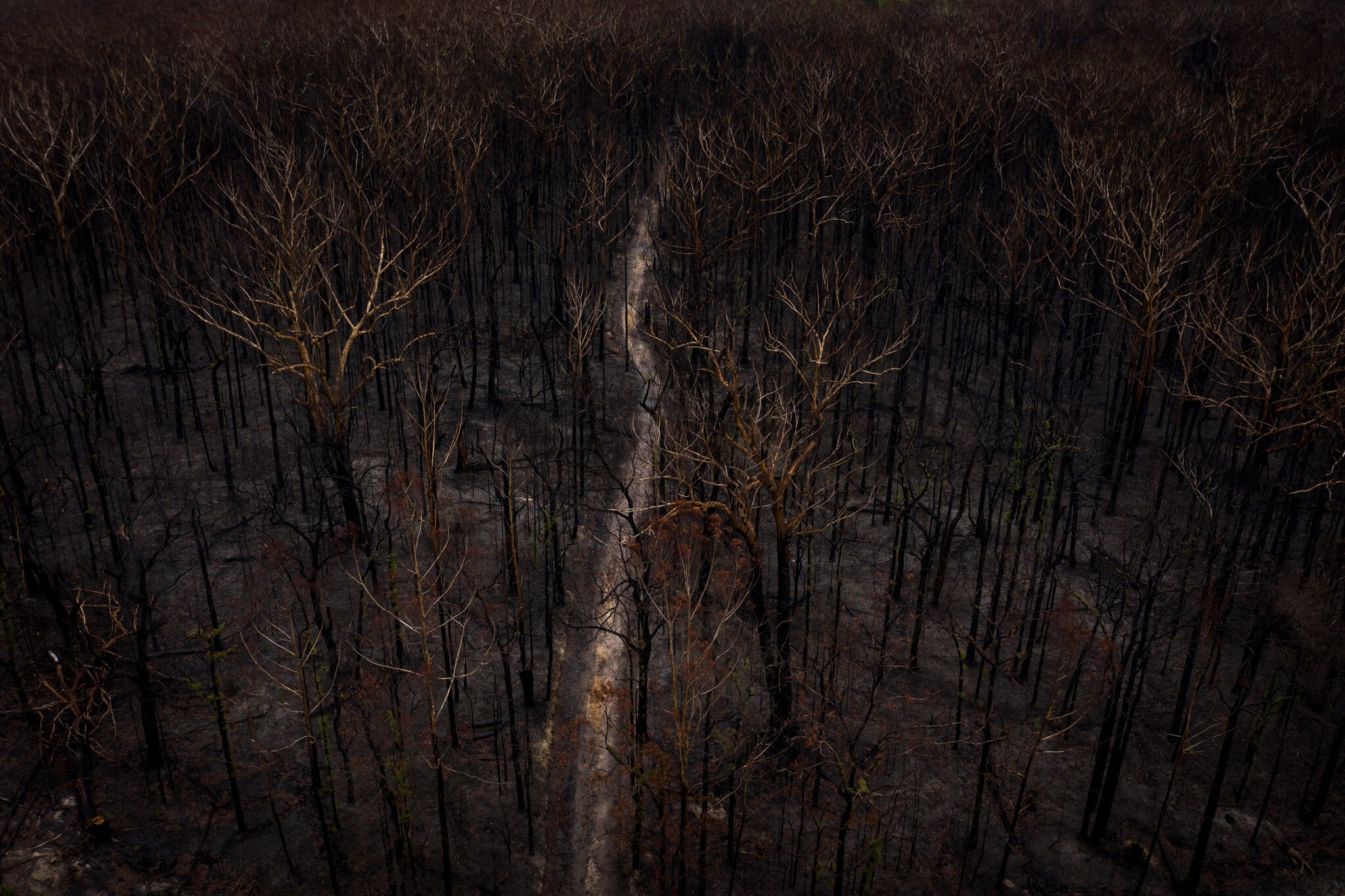
SYDNEY, Australia — Katta O’Donnell grew up with a fear of fire. As a child, she remembers burning bark falling from the air because of wildfires. This year, she worried that the blazes sweeping across regional Australia, fueled by climate change, could destroy her home outside Melbourne, the same way they had turned thousands of acres into ash.
Now, Ms. O’Donnell, 23, is leading a class-action lawsuit filed on Wednesday that accuses the Australian government of failing to disclose the material risks of climate change to those investing in government bonds. The suit accuses the government and the treasury of breaching its duty by not disclosing the risks of global warming and their material impact on investors.
It is the first time, experts say, that such a climate change case has been brought against a sovereign nation.
Ms. O’Donnell is joining a wave of young climate activists who have stepped on to the world stage in recent years. The Swedish teenager Greta Thunberg, for example, has spurred a global protest movement, testified before the United States Congress and the European Parliament, scolded world leaders in a fiery speech at the United Nations for not doing enough and sounded that alarm at the World Economic Forum in Davos, declaring, “Our house is still on fire.”
But Ms. O’Donnell’s case takes a unique tack by focusing on government bonds and the investment environment, said Jacqueline Peel, a law professor at University of Melbourne.
“My personal experience with climate change makes everything I read about climate change more tangible,” Ms. O’Donnell, a fifth-year law student at La Trobe University in Melbourne, said in a recent interview. “I want my government acting with honesty and telling the truth about climate risks.”
Simply put: Any risks to the country’s economic growth, value of its currency or international relations, to name a few factors, might change the value of her investment, her suit states.
Ms. O’Donnell, backed by a team including two prominent lawyers, is not asking for damages, but wants the government to step up on its climate change policies. The suit seeks an injunction stopping the government from further marketing bonds until they add those disclosures.
Katta O’Donnell, who is leading a class-action lawsuit against the Australian government. Photo: Molly Townsend
“The claim asks for disclosure of risks — it doesn’t tell the government what to do or how to act,” said David Barnden, one of three lawyers representing Ms. O’Donnell. All took her case free, they said.
But experts say that the case’s strategy is interesting given that the government has the power to legislate on climate change and control, in part, that risk.
The Australian government has not publicly responded to the lawsuit. Reached for comment, a spokeswoman for the Treasury Department said in a statement that it did not comment on current court proceedings.
Australia is physically vulnerable to climate change, which has helped drive drought, broken temperature records and led to the bleaching of the Great Barrier reef, so the financial risks of investing in the country have raised concerns. In 2019, Sweden’s central bank said it was letting go of Western Australian and Queensland government bonds in part because the greenhouse emissions from both were too high.
In recent years, the country’s financial and corporate regulator have pressured financial institutions that issue bonds to disclose their plans to measure and mitigate the risks related to climate change.
“One of the major issuers of securities on the global financial markets is not leading from the front,” Rob Henderson, the former chief economist for National Australia Bank, said of the government’s lack of disclosure.
Ms. O’Donnell’s case builds on an emerging trend of climate litigation, with calls for private companies to take responsibility for their part in the growing threat to the planet.
A Peruvian man chose to sue Germany’s largest energy company because, he said, melting glaciers exacerbated by climate change are threatening his home. Other nations, including the Pacific island of Vanuatu, which are facing a threat to their very existences because of climate change, have said they are considering taking legal action against the world’s biggest fossil-fuel companies.
In all, 1,587 climate litigation cases have been brought worldwide since 1986 and May this year, with Australia second only to the United States, according to the Grantham Institute of Research on Climate Change and the Environment. The cases have been filed “as a way of either advancing or delaying effective action on climate change,” the institute says.
It is unclear if Ms. O’Donnell will be successful. But with many private corporations measuring — and promising to mitigate — their contributions to climate change, there is “strong acceptance of the simple argument that climate change poses material and financial risks,” said Anita Foerster, a senior lecturer in business law at Monash University.
Ms. O’ Donnell, who bought her first government-issued bonds this year, says her interest in climate law and its effect on investors began when she heard Mr. Barnden, now her lawyer, speak at a lecture last year. She said she chose her legal strategy because she wanted to educate herself and others who bought such bonds of the potential financial risks of climate change.
A forest near Lake Conjola in New South Wales, Australia, where a fire swept through on Dec. 31. Matthew Abbott for The New York Times
“All routes are crucial, and we will need to unite.” she said. “But investment and the economies and the climate are all so closely linked, and that really needs to be highlighted.”
“The government knows about the problem,” she added. “They know the solutions, and they know what they need to do but they’re not doing it.”
Mr. Henderson said he expected the case to prompt those in other nations to follow suit: “Other people will be saying, hang on what about our government?”



 “蒂芙尼T代言人”易烊千玺佩戴Tiffany T1系列18K黄金及白金新作,演绎无可T代的摩登魅力