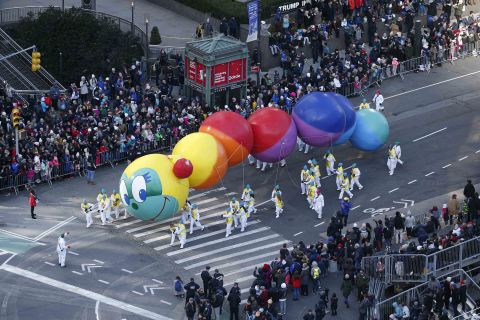
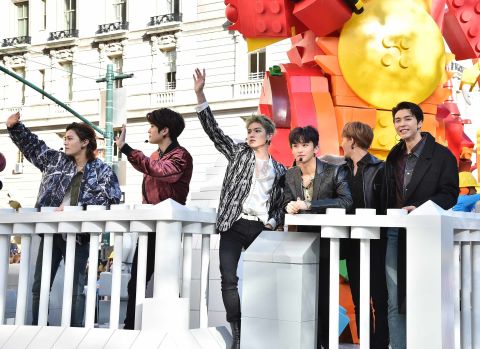
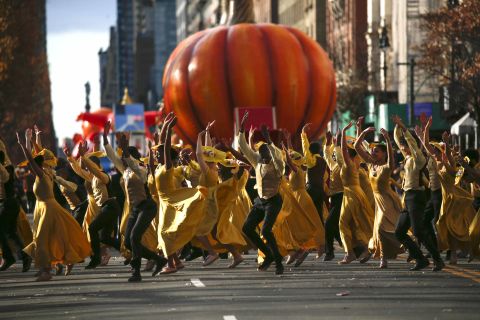
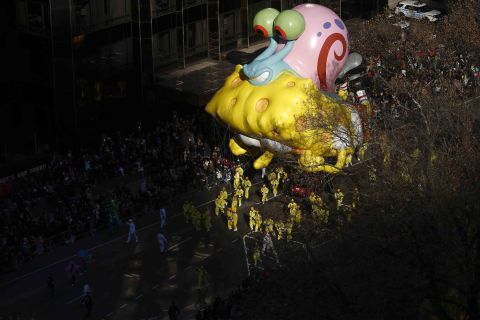
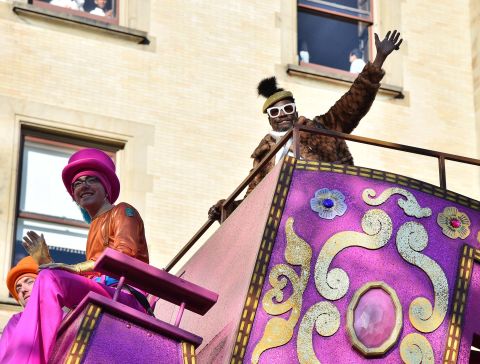
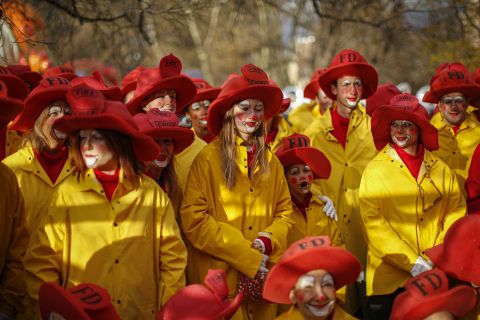
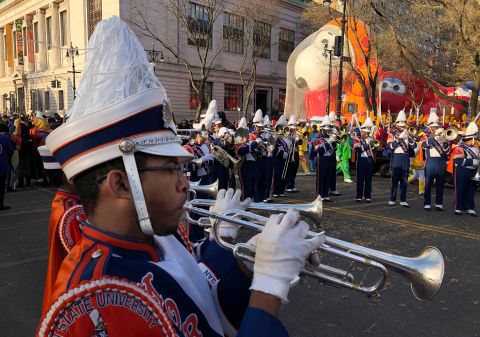
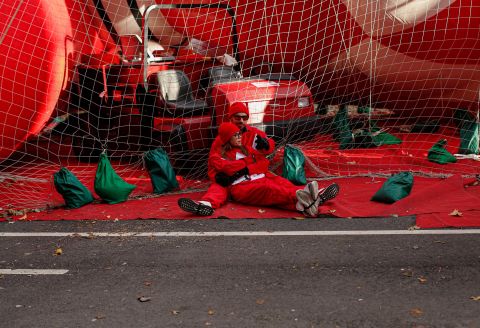
In photos: Macy’s Thanksgiving Day Parade 2019

From CNN

The Macy’s Thanksgiving Day Parade has been a holiday tradition for nearly 100 years.

The annual parade in New York City started in 1924. Balloons first appeared in 1927, replacing live animals from the Central Park Zoo.

This year’s balloons were nearly grounded due to windy weather conditions.

‘If I’m not in on Friday, I might be dead’: chilling facts about UK femicide

One woman is killed by a man every three days in the UK – a figure unchanged in a decade. A new census analyses this epidemic of male violence

From theguardian/ By /Nov.22

In 2013, Sasha Marsden, a 16-year-old student, went to a Blackpool hotel for what she thought was an interview for a part-time cleaning job. The man she met, David Minto, 23, had lured her there on false pretences. He then sexually assaulted her and stabbed her 58 times. Sasha could only be identified by DNA taken from her toothbrush. Minto was sentenced to 35 years in prison, but for Sasha’s family, their grief has no time limit.

Gemma Aitchison, Sasha’s sister, set up YES Matters UK in response to the killing. “I wanted to know why this happened to Sasha and what I could do about it,” she explains. Part of what her organisation does is to talk to young people about consent, body image, pornography and media influence. “What I know now is that as long as women are treated as objects and not people, we will continue to be disposable.”

This Wednesday is International Day for the Elimination of Violence Against Women, which will see the start of 16 days of activism against gender violence globally. That same day also sees the publication in the UK of a groundbreaking report, Femicide Census, which, for the first time in Britain, analyses the shocking killings of women and girls, from the age of 14 to 100, at the hands of men, over a 10-year period, 2009-2018. The census defines “femicide’” as “men’s fatal violence against women”, and reveals that, on average, a woman was murdered every three days – a horrifying statistic, unchanged over the decade. This is in spite of greater public awareness, increased research, changes in the law and improved training for the police. “Patterns of male violence are persistent and enduring,” the report states.

Gemma Aitchison

Gemma Aitchison at home in Westhoughton, Bolton, where she runs the YES Matters UK programme, set up after the rape and murder of her younger sister, Sasha Marsden, in 2013. Photograph: Christopher Thomond/The Observer

The scandalous lack of progress in reducing femicide in the UK is, in part, because each killing, is treated by various agencies as “an isolated incident” and “giving no cause for wider public concern”. As a result, the report says, information received from the police via, for instance, Freedom of Information requests, can be “sparse, inaccurate or incomplete”; coroners’ reports often fail to reference a history of male violence, while it is difficult to access official documents such as Independent Office for Police Conduct reports and domestic homicide reviews, all of which, along with media coverage, feed into the database of the census.

“To solve a problem, you need to be able to say what it is,” says Karen Ingala Smith, chief executive of Nia, a sexual and domestic violence charity. She and Clarissa O’Callaghan, a former solicitor and now restauranteur, published the first Femicide Census, a six-year review 2009-15, in 2016. Three annual reports have since followed with the help of a small team of part-time researchers and pro bono support from Freshfields Bruckhouse Deringer, an international law firm, and consultants Deloitte.

Now, with a decade of deaths to look back on, the census draws some damning conclusions about patterns of abuse and violence, and what could have been – or should have been – spotted by the authorities.

Karen Ingala Smith

Karen Ingala Smith, chief executive of the sexual and domestic violence charity Nia, and co-founder of the Femicide Census. Photograph: Sophia Evans/The Observer

Of the 1,425 victims, almost half were killed by “a sharp instrument”, sometimes with additional brutal violence (classed as an “overkilling”). “The most common form of femicide is stabbing,” Ingala Smith says. “Yet most knife-crime strategies focus on teenagers and gang crime. Strangulation was the second method. Non-fatal strangulation is often part of a pattern of abuse that is not sufficiently recognised and investigated. Ingala Smith and O’Callaghan support the campaign by the Centre for Women’s Justice to add an amendment to the domestic abuse bill, due to become law next year, to include a new offence of non-fatal strangulation.

Sixty-two per cent of the dead women (888) were killed by a current or former partner, most in their own homes. Four in 10 of these women were preparing to leave or had already separated – a crucial period, and an opportunity missed for police and others on the frontline, such as GPs and mental health advocates, to prevent a killing. “‘Home is where the heart is’ is a bitter lie for many women,” the report says.

A history of abuse was evident in at least 611 cases (59%), including coercive control, stalking, harassment and physical, financial and emotional mistreatment. A third of the women had reported their abuse to the police. They still died.

20-year-old Kirsty Treloar who was murdered in 2012.

Kirsty Treloar was murdered by her boyfriend in 2012, when she was 20.

The Femicide Census originally came about because of Kirsty Treloar, a 20-year-old nursery nurse, who had asked for help. Police had referred her to Nia, Ingala Smith’s organisation. On 2 January 2012, Treloar was stabbed 29 times by her abusive boyfriend, Myles Williams, aged 19. “I googled Kirsty because we were told so little about her death,” Ingala Smith explains. “That’s when I saw the shocking number of reports of deaths already that year.”

Eight women were killed in the first three days of 2012. Ingala Smith created a website, Counting Dead Women (CDW), now replicated across the world. While CDW records every killing, the census team researches and include only cases in which, “it can be legally said: a man has killed this woman”.

“It can’t be the case that we are the only ones collecting data like this,” says Ingala Smith. “But we are. From the outset, it was essential to include all thecircumstances in which men kill women, not just husbands, partner and family femicides.” O’Callaghan adds: “The state is failing to protect women, failing to implement policies, failing to take on board recommendations. You can spend time training but if, on the ground, you don’t implement the tools that are available – including injunctions, non-molestation orders and bail conditions – you are failing to save women’s lives, and that’s a human rights issue. “

Over the decade, sexual motivation ended the lives of 57 women (4%). One perpetrator raped and killed a 50-year-old on their first meeting. She had internal injuries and bite marks. Thirty-two murdered women had been involved in the sex industry. Sixteen per cent of victims were born outside the UK, yet police recorded ethnicity in only a fifth of cases. The domestic abuse bill’s provisions excludes migrant women. “If services are not alert to the reality that violence against women occurs across all backgrounds, then they are less likely to identify those at risk,” the census points out.

Ingala Smith and O’Callaghan say the state’s response is also dangerously gender blind. Globally, while homicide figures are declining, femicide is on the rise. “We have a domestic abuse bill, not an end violence against women and girls bill,” Ingala Smith says. “That minimises sex differences. Men who kill do so within a context of endemic sex discrimination in a society that normalises male predatory behaviour from an early age and is too eager to blame victims.”

The census points out that the UK remains one of few countries in Europe that has not ratified the Istanbul Convention, which draws on the Convention on the Elimination of All Forms of Discrimination against Women (CEDAW). “It recognises that men’s violence against women and girls will not be eradicated without fundamentally addressing sex inequality and the beliefs, attitudes and institutions that underpin it,” the census points out.

Eleven women were killed by their grandsons. “If you focus only on partner violence, you are missing a whole spectrum of violence that may also be generational,” the report says. Excluded from the census are “hidden homicides”. In one case, for instance, it was decided a woman had stabbed herself, even though a witness said otherwise. “There should be more professional curiosity when a sudden death occurs in the context of domestic abuse,” criminologist Dr Jane Monckton Smith says in the report.

Clarissa O’Callaghan

Clarissa O’Callaghan, co-founder of the Femicide Census. Photograph: Gary Calton/The Observer

The subheading of the Femicide Census is, “If I’m Not In On Friday, I Might Be Dead”. These are the words of Judith Nibbs, mother of five, who was beheaded by her husband of 30 years, Dempsey Nibbs. The report is dedicated to her memory and to every victim of femicide over the decade, each name listed. “People say, ‘It’s only a few women a week that die’,” Gemma Aitchison says. “But it’s been a few women a week ever since I was born, and I’m 34. It’s a huge systemic problem. The census says these women matter. ”

The Femicide Census concludes with a series of recommendations, including the thorough collection of sex-desegregated data, ratification of the Istanbul Convention, and improved funding. Domestic abuse costs society over £66bn a year. A report last year calculated that £393m a year is needed to provide safety and support, yet funding is a fraction of that. In lockdown, femicide has escalated.

“If this government is really committed to ending male violence against women, it needs cross-party support for a long-term woman-centred approach that recognises sex inequality is intrinsic to a patriarchal society,” Ingala Smith says. “A start could be made if state institutions did their jobs properly.”

The census is a unique benchmark of accountability. However, it’s future is in doubt. “We are dependent on donations and pro bono support,” Ingala Smith says. “I wish we could say we will be here for the next 10 years but we can’t. If we don’t do this work, who else will?”

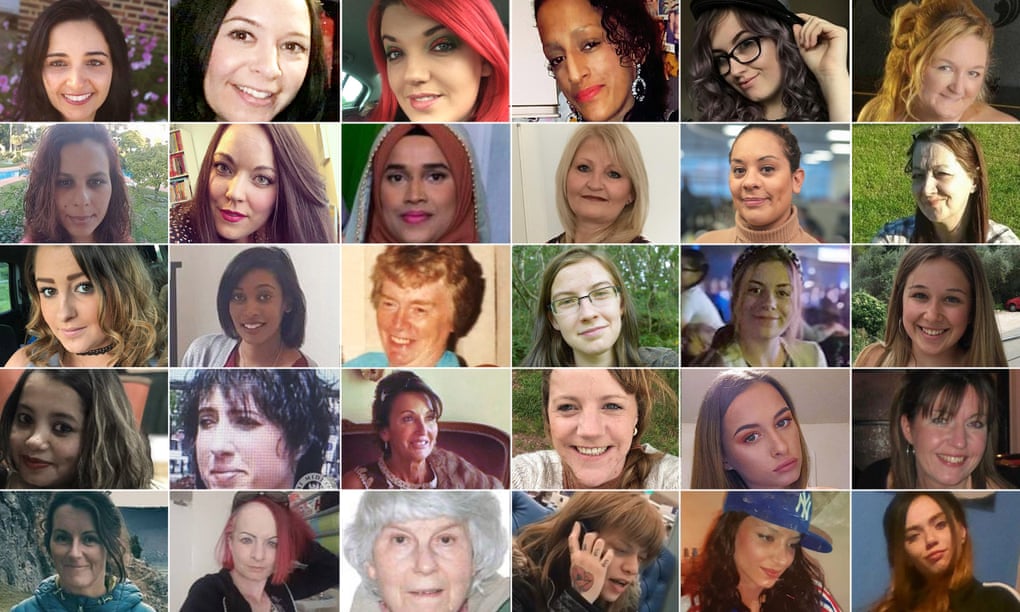
Femicide victims from 2019 (main image, at the top of this feature):
Top row, from left: Aliny Mendes, 39; Sarah Henshaw, 40; Rosie Darbyshire, 27; Charlotte Huggins, 33; Jodie Chesney, 17; Leanne Unsworth, 40.
Second row, from left: Sarah Fuller, 35; Amy Parsons, 35; Asma Begum, 31; Elize Stevens, 50; Laureline Garcia-Bertaux, 34; Antoinette Donnegan, 52.
Third row, from left: Lucy Rushton, 30; Kelly Fauvrelle, 26; Dorothy Woolmer, 89; Bethany Fields, 21; Megan Newton, 18; Ellie Gould, 17.
Fourth row, from left: Suvekshya Burathoki, 32; Julia Rawson, 42; Diane Dyer, 61; Kayleigh Hanks, 29; Keeley Bunker, 20; Joanne Hamer, 48.
Bottom row, from left: Sarah Hassall, 38; Nicola Stevenson, 39; Angela Tarver, 86; Leah Fray, 27; Mihrican Mustafa, 38; Sammy-Lee Lodwig, 22.


When love is not enough

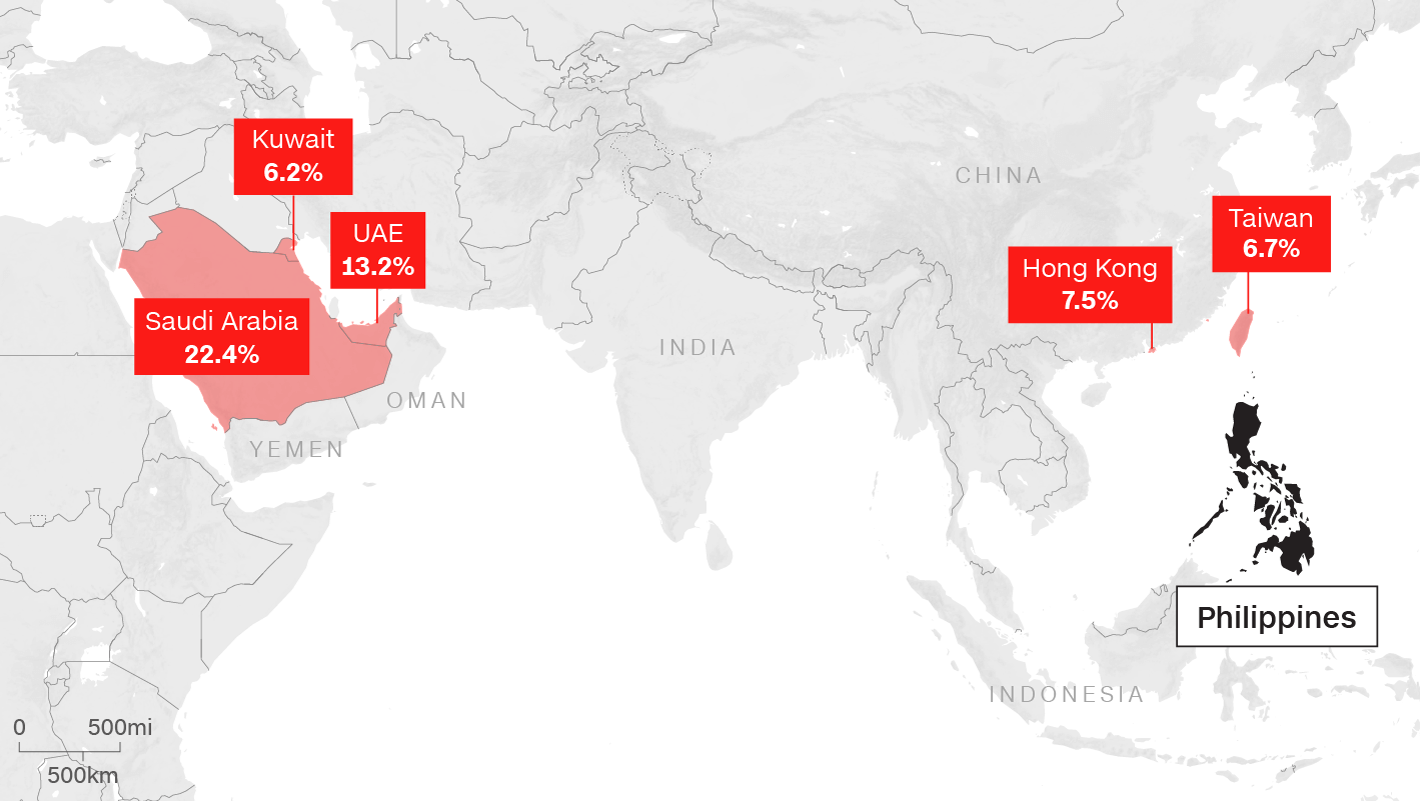
No mother wants to leave her child — but in the Philippines, it can feel like there’s no other choice. Unable to earn enough money at home, an estimated 2.2 million Filipinos worked overseas last year, according to the Philippine Statistics Authority. The majority were women, many hoping to give their child a better future.

They work as nurses, hospitality staff, nannies and cleaners. Last year, they sent $33.5 billion back to the Philippines in personal remittances — a record high, according to the country’s central bank.

More than 2.2 million Filipinos worked overseas in 2019The top five destinations were in Asia and the Middle East


优雅运动 经典传续 帝舵启承碧湾型 41

近十年来,帝舵表在市场上取得了巨大的成功。这其中的关键因素,或者说最令钟表爱好者们为之着迷的,便是帝舵表通过发掘自身历史宝库创造出的启承碧湾(Heritage Black Bay)系列腕表。

享誉国际的瑞士高级腕表品牌帝舵表,虽然不算制表行业中历史最悠久的,但在对产品质量的把控以及风格的连贯性方面却鲜有品牌能及。

帝舵表的商标(“The Tudor” )最初是由劳力士创始人汉斯·威尔斯多夫(Hans Wilsdorf)于1926 年注册,他后来在1946年正式创立了Montres Tudor SA公司。从那时起,帝舵表便牢牢定位在以普通人易于接受的价格提供与劳力士同样值得信赖的产品上,且几十年来从未发生过改变。其生产的机械腕表精致优雅,品质卓越,风格鲜明,一直是深受消费者青睐的物超所值之选。同时,帝舵表也凭借着精确可靠的性能,赢得了全球水、陆、冰(严寒地带)三大领域探险家们的肯定。

启承碧湾 演绎经典

2010年,基于对自身丰富历史资源的发掘,帝舵表推出了全新的Heritage——启承系列腕表。该系列并非单纯复刻经典表款,而是将传统的美学特色和设计元素藉由当代的制表工艺进行重新演绎。

如2010年首发的帝舵启承计时腕表(Heritage Chrono),便重新演绎了1970年面世的首款帝舵计时腕表。随后的启承响闹腕表(Heritage Advisor)和启承碧湾潜水表(Heritage Black Bay),同样让帝舵表在历史上的杰作以崭新姿态在启承系列中重生。

它们以一种似旧还新的方式,有条不紊地呈现出了原款腕表的经典细节,同时在制作工艺和美学方面一丝不苟——这种既怀旧又时尚,既忠于经典又与时俱进的风格,正是启承系列的魅力所在。

启承系列中最具代表性的作品当属启承碧湾(Heritage Black Bay)系列,它是从上世纪五十年代以来的帝舵潜水腕表中汲取的设计灵感。

在钟表收藏家眼中,帝舵潜水腕表无疑是一座取之不竭的宝藏。它蕴藏着清晰的产品发展脉络,一系列在古董表市场上赫赫有名的型号,以及众多脍炙人口的设计元素和细节。例如第一代防水深度达200米(660 英尺)的帝舵潜水表的”大表冠”,其旋入式表冠直径高达8毫米,故得名“Big Crown”。再比如1969年开始为法国海军批量生产的表款,采用了钟表爱好者们耳熟能详的、名为“雪花”的棱角形夜光指针——它是唯帝舵潜水表所独有的特征。
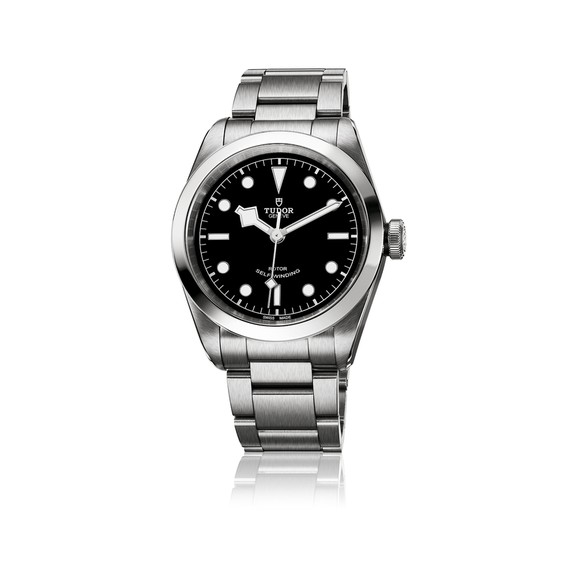
碧湾型41 动静相宜

正因如此,重新演绎的启承碧湾(Heritage Black Bay)系列腕表也拥有着异常丰富的设计元素的组成,包括经典的潜水表单向旋转外圈、圆拱形的仿合成树脂表镜等等,并由此构成了多个热门的款式。

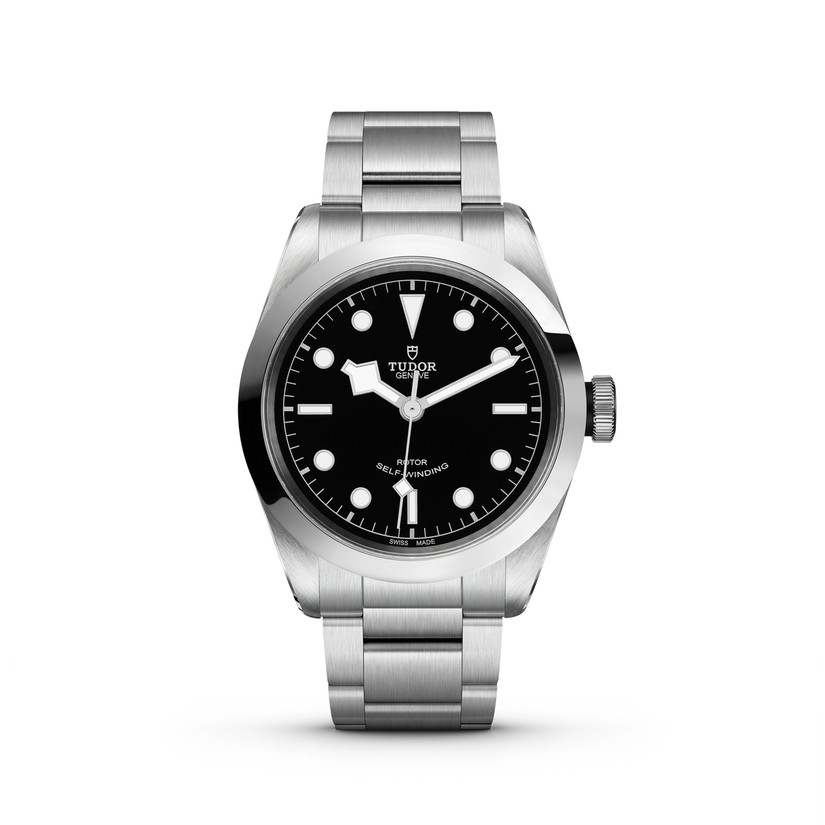
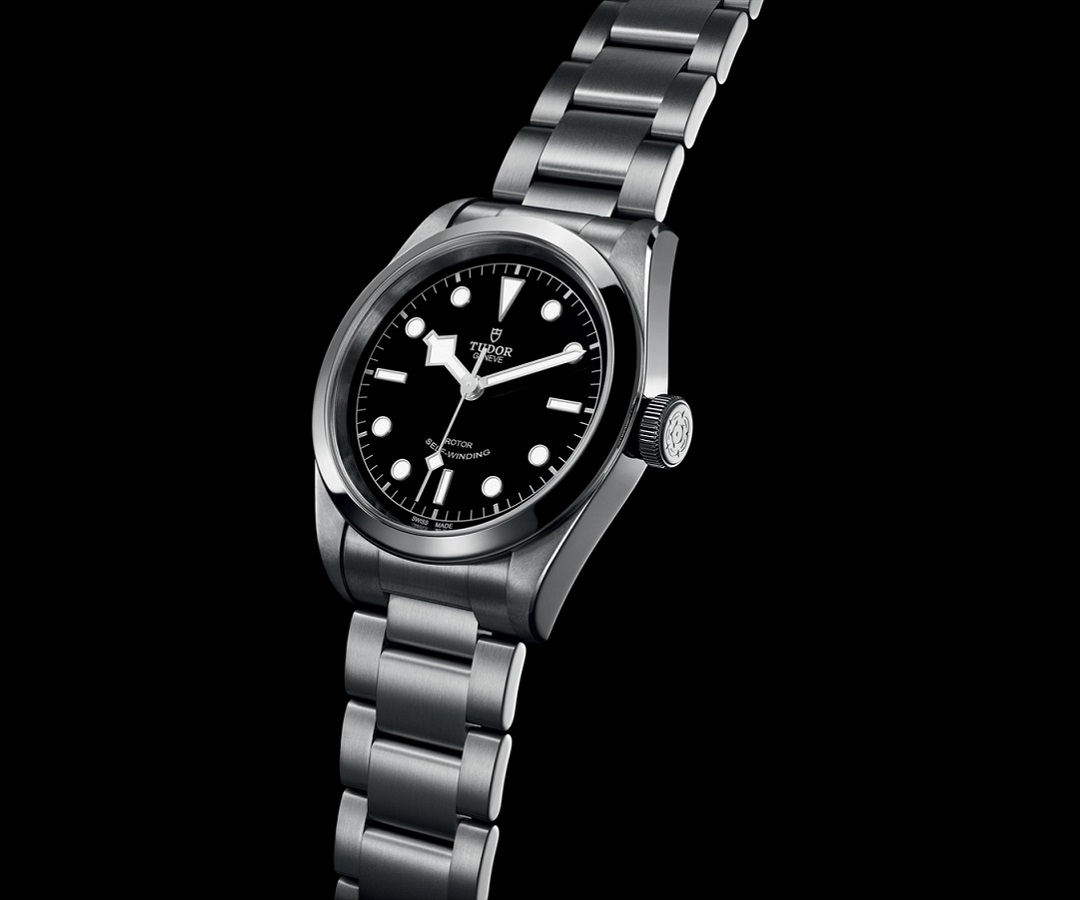
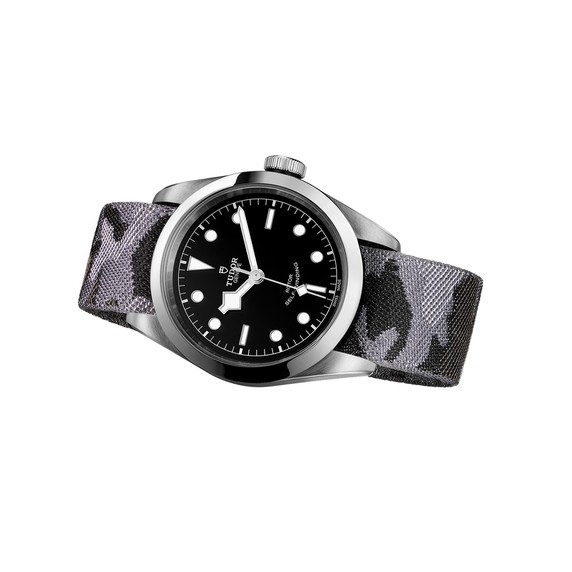
而启承碧湾型 41(Heritage Black Bay 41)算是其中比较“另类”的一款作品。它是为了满足现代都市生活中不同场合的穿戴需求而打造,一方面保留了启承碧湾系列的整体造型和经典特征,尤其是覆有夜光涂层的“雪花”指针和“大表冠”这两个最具代表性的特征。

另一方面,碧湾型 41的设计风格更偏优雅简约,以磨光的钢制外圈取代了潜水表专属的单向旋转外圈,以平面蓝水晶表镜取代了复古的圆拱形表镜。经过重新打造的中层表壳也变得更加纤薄,使腕表得以轻松收入衬衫袖口。

由此而生的启承碧湾型 41兼具优雅气质和运动气息,41毫米的尺寸搭配优雅的黑色漆面表盘,可以在商务、休闲等不同的场合及着装风格间自由切换。腕表内部装配2824 型自动上链机芯,防水深度达150米,足以胜任日常佩戴的需求。

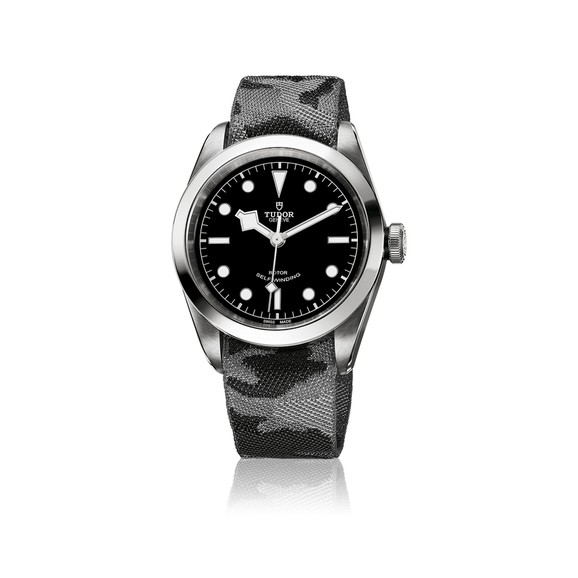
帝舵表还特为碧湾型 41提供了钢制表带和皮表带供选择,并额外附送一条都市迷彩风格织纹表带。该织纹表带采用法国圣艾蒂安(St-Etienne)地区传统提花工艺制作,表带上的迷彩图案并印制,而是以不同颜色的丝线编织而成,且兼具佩戴的舒适性与任性,亦体现出了帝舵表在工艺方面的一丝不苟。

LIFE IN COLOR: THROWBACK PHOTOS SHOWING WHAT IT WAS LIKE TO GROW UP IN THE 50S, 60S, AND 70S

From BBC

Remember the days before modern technology, endless Netflix streaming, and social distancing? Our pace of life used to be very different from how it is today, and we wanted to take a look at how it was in the age before smartphones. This photo series shows the rare and behind the scenes moments of everyday life in the ’50s, ’60s, and ’70s.

We take a peek inside the workplaces, public spaces, and nightlife hot zones that memories were made of. Take a look at our handpicked selection of the best color photos that capture those forgotten moments. Just try not to lose yourself in the past!

An Old School Inkjet

Back in the ’60s, modern workspaces looked very different from what they do today. Believe it or not, this is actually a Recordak reader printer! The operator in the picture is inserting film into the left side slot, where it will be automatically loaded. Depending on the model, the film would load in a 3M type cartridge or the reel would be held in a clip.

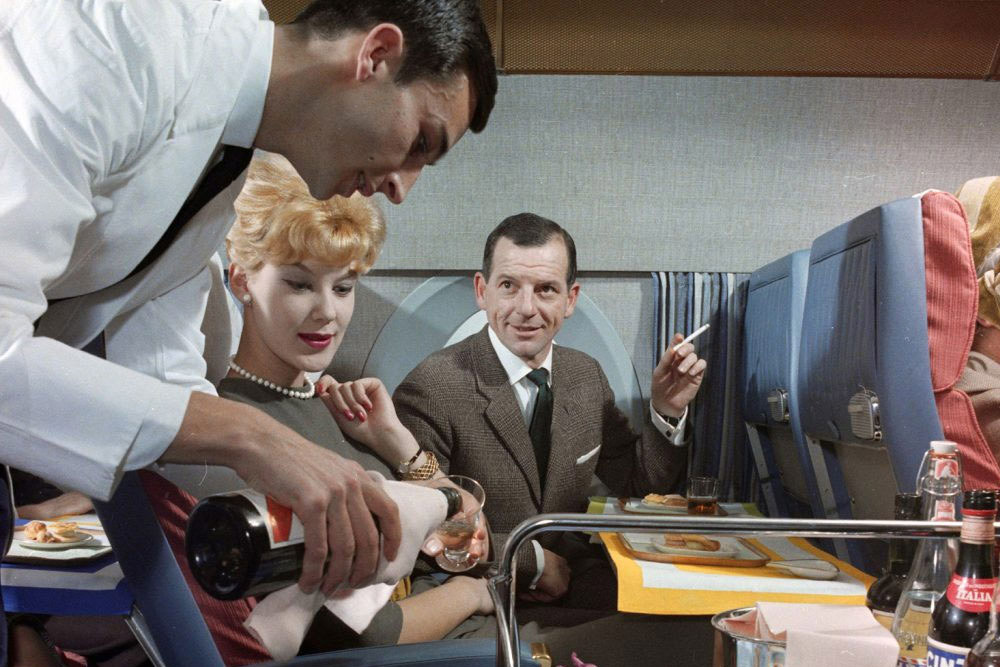
Either way, the film was loaded with no extra handling needed from the operator. Luxury certainly looked a lot different back in the day. Even in terms of dress sense. Imagine having to get that dressed up every day, a full face of makeup and everything!

Can I Take This Book Out?

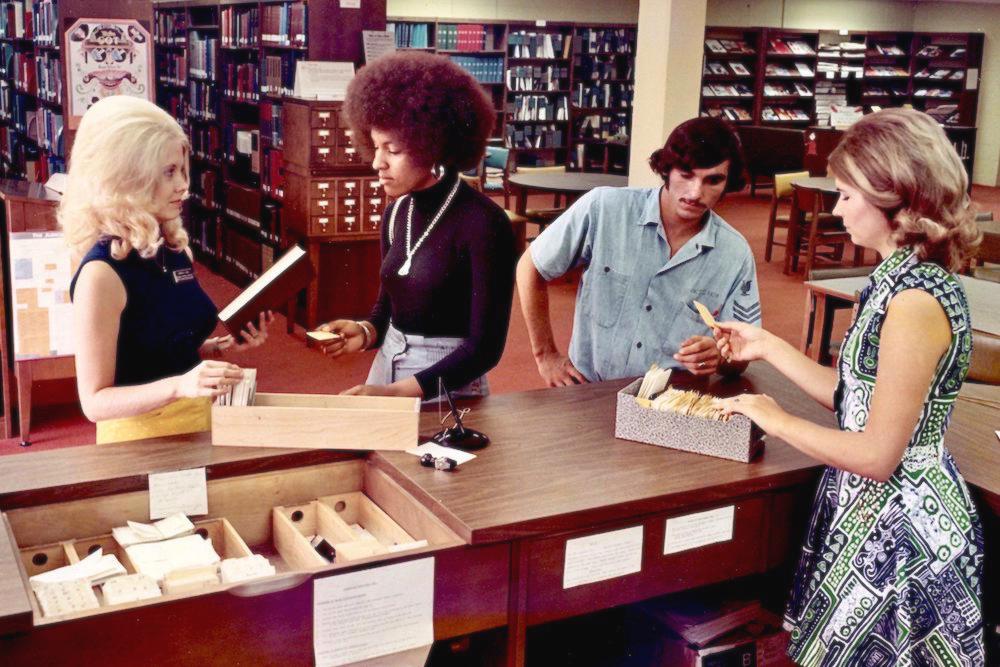
This one’s a real nostalgic throwback to the public libraries of the ’70s. In this image, students are seen speaking with the public library staff back when things weren’t digital. If you wanted to find out if a book was available, or speak to someone about your account, you had to wade through mountains of paper files.

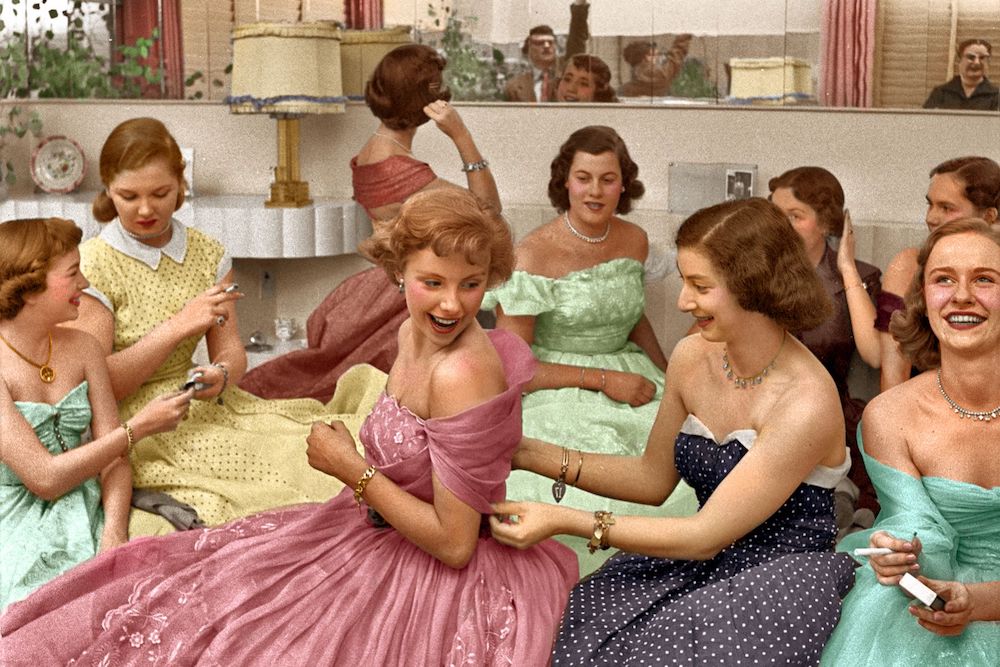
This colorized photo from the ’50s shows a group of young, debutant women at a cocktail party. They are absolutely glowing in their minimal makeup and glorious ball gowns. This was the sought after style of the decade.

There’s something about these gorgeous fashions that just makes us want to play dress up. In those days, women wanted to wear dresses that cinched in their waist and cascaded down to their ankles. They came in all kinds of beautiful designs, bright colors, and decorative patterns.

Flying in Style

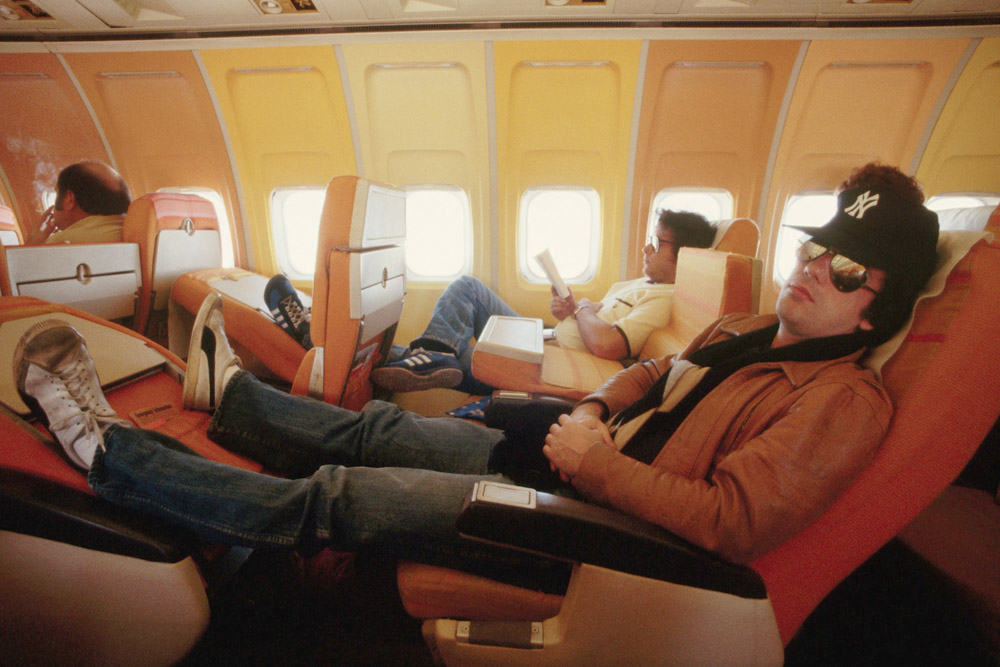
Take it all in: piano man Billy Joel reclines in his first-class airline seat in 1978. He was traveling from Austin to Dallas during a tour that promoted his 52nd Street album, but clearly the job had a few perks. He looks ever the singing and songwriting superstar in his big shades and baseball cap.

With that much legroom on a plane, we’re not surprised Billy’s feeling relaxed. And the way they’ve decorated could have only been pulled off in the ’70s. The designers opted for a gradient of sunset colors and, incredibly, matching plane seats. It looks more like a kids funhouse than it does a commercial aircraft.

One Way to Keep the Kids Hydrated

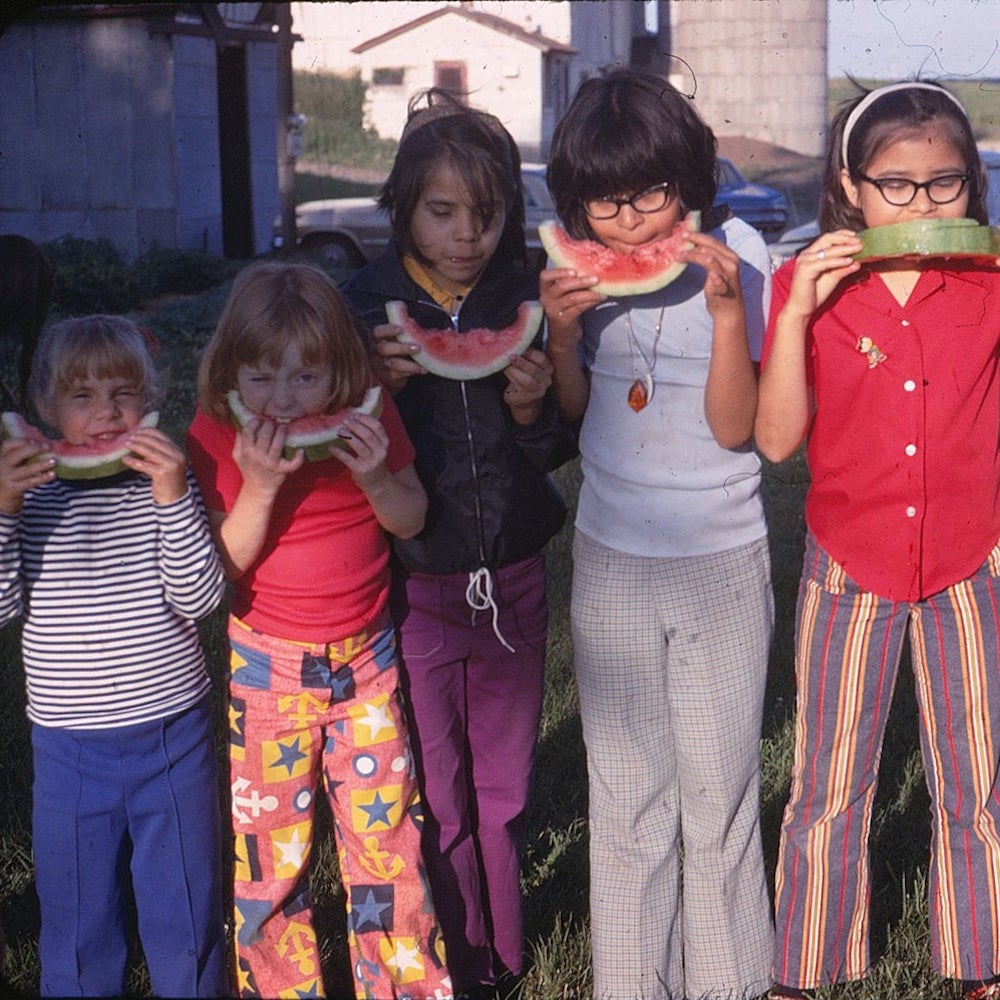
Who remembers being reminded to have a snack and a drink when we were busy playing games with other kids? This parent came up with the best solution; watermelon. t’s both one of your five fruits and vegetables a day and a thirst-quencher.

These local neighborhood kids are taking a rest from running around to enjoy the fresh watermelon while it lasts. And we’re loving the style on show. Flares, bright colors, and geometric patterns weren’t reserved for the adults alone. These kids are well-kitted out with the fashion of the decade.

A Problematic Carseat

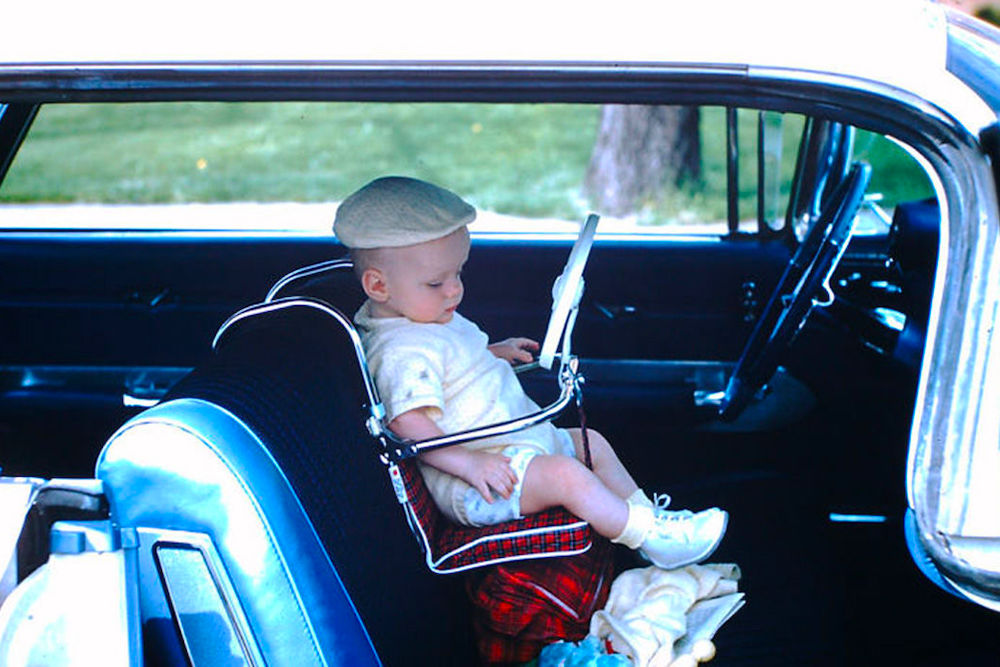
This baby from the ’50s looks super cute in his old-man flat cap and all-white ensemble and has a surprisingly stylish car seat to match. We had no idea that parents back then could get their hands on a sleek, minimal, and chrome-finished seat for their little ones.

Of course, it looks considerably less safe. This was back in the days where there were far fewer road rules and regulations, and babies could ride in the front seat without being strapped in! It’s a scary thought, and an interesting image to see just how far we’ve come since then.

Catching Rays at Any Age

 This photo depicts two different generations sitting on a London bench in the famous uptown Chelsea neighborhood. A young woman takes a break in the sun and enjoys her ice cream, while another woman watches on. We don’t know about you but we find this image of two worlds sat next to each other very endearing.


The Retrofuturistic Aesthetic

Take a look at retrofuturism at its finest. In the ’60s, fantasizing and imagining what kind of future awaits us was the big thing, encouraged by the strides made in space travel and Commander Neil Armstrong landing on the moon.

These two costumed actors at Disneyland are a perfect example of what attracted so many to the idea of a technologically advanced future. People anticipated the styles that will come, the sleek and streamlined looks, and the advancements in science and technology. It was irresistible to people’s imaginations.

Car Culture in the ’50s

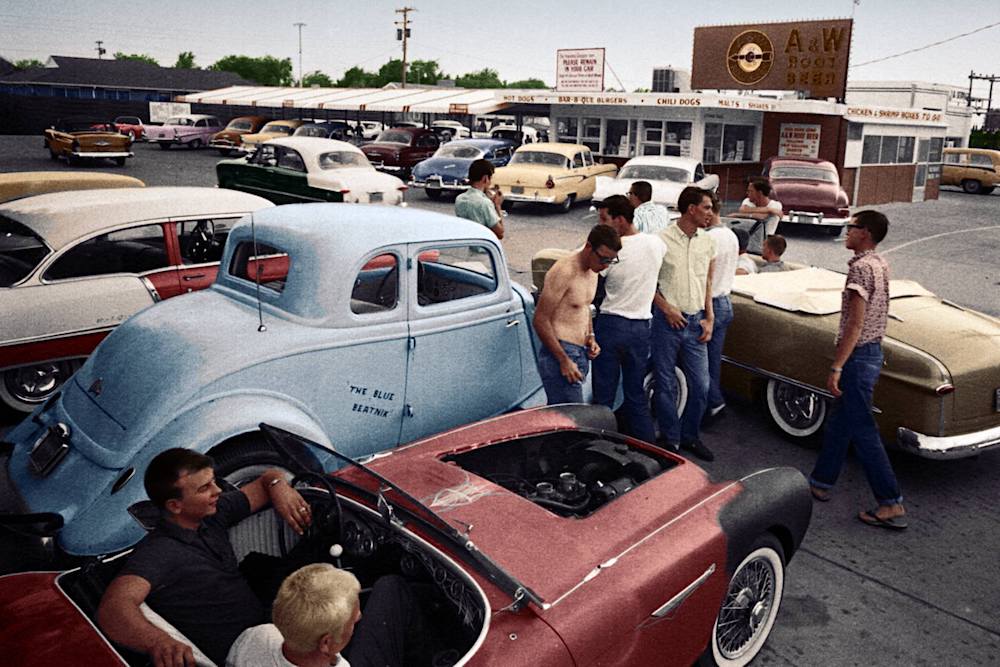
A fascination with antique cars was around even in the ’50s. Check out the parking garage of this drive-through, where a bunch of young men loiters about next to the blue car of a bygone era. The irony is that all of their cars are, by today’s standards, considered classic cars.

In the ’50s, drive-throughs were a regular social hangout for young people, and this photo captures that perfectly. They could get fast food at a low price and linger around each other cars, coming and going as they please. One step up was the drive-in theater when many young couples would have their dates.

The Fast-Food Boom

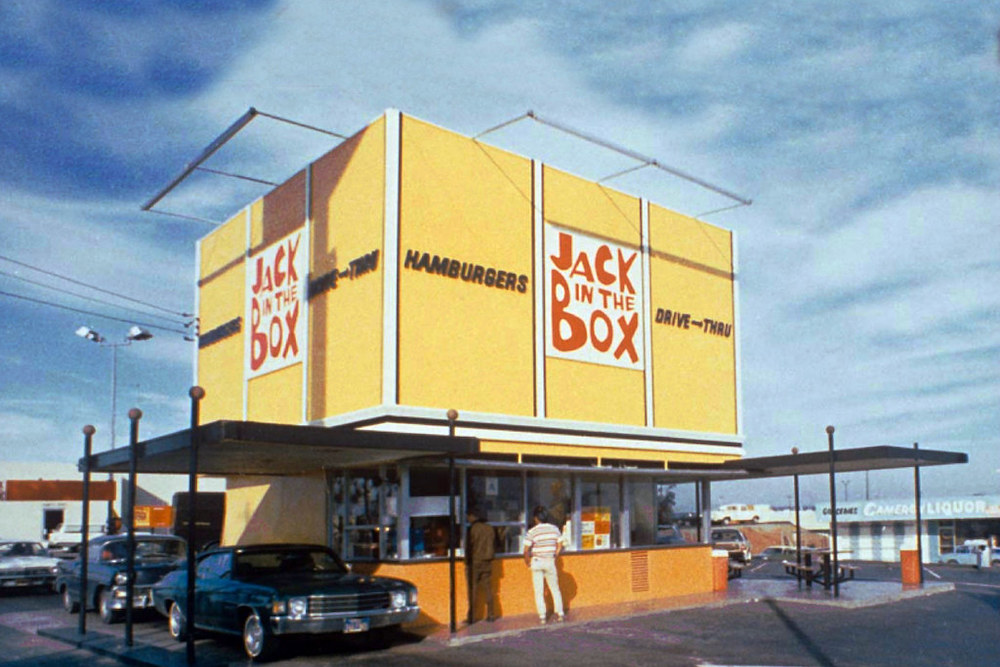
A fast-food chain that’s still alive and well today is Jack in the Box, the drive-through that specialized in hamburgers. Many of the fast-food chains were born in the ’50s such as Wendy’s and McDonald’s, and it’s pretty fascinating to see what they looked like in their early days. We can see that Jack in the Box went for a playful company design even back then.

ack in the Box was founded in 1951, first opening in San Diego. They had an intercom system connected to their tiny restaurant space and offered the passing traffic hamburgers for only 18 cents. In 1954, they successfully expanded their business in Texas. Fast forward almost 70 years, and they have over 2,000 restaurants now in the US.

What a Real Seventies Wedding Looked Like

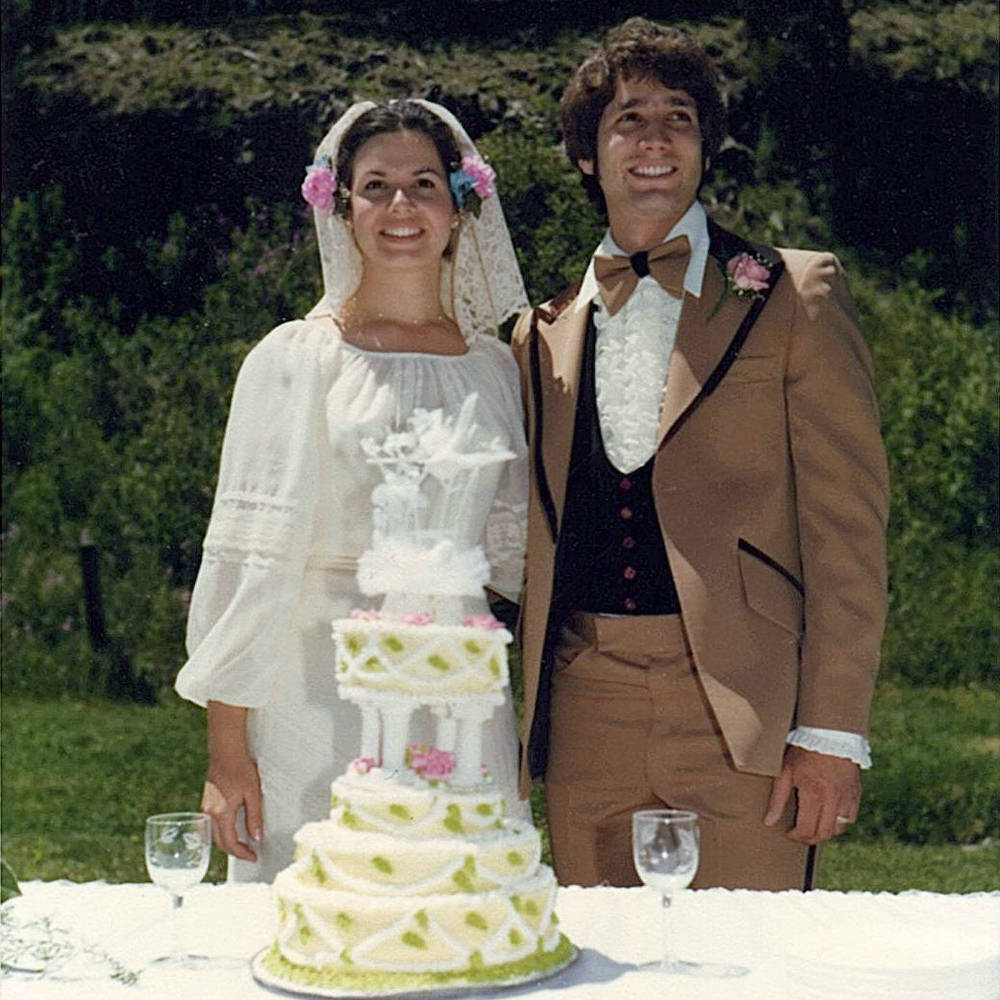
One Reddit user just had to share this image of their parents looking, as they put it, “magazine shoot ready at their wedding.” It was the late ’70s and boy, was fashion different back then. It was a hot summer day in South Dakota and they had made their day a family-only affair.

You might have noticed that their cake is leaning a little more on one side. The person who posted it admitted that since it was so low-key, the cake was handmade. We’re just loving the vibe of this couple either way. From the bride’s peasant-style gown to the groom’s brown tuxedo and ruffled shirt, you couldn’t get more ’70s than that.

The Happiest Sound of Our Childhood

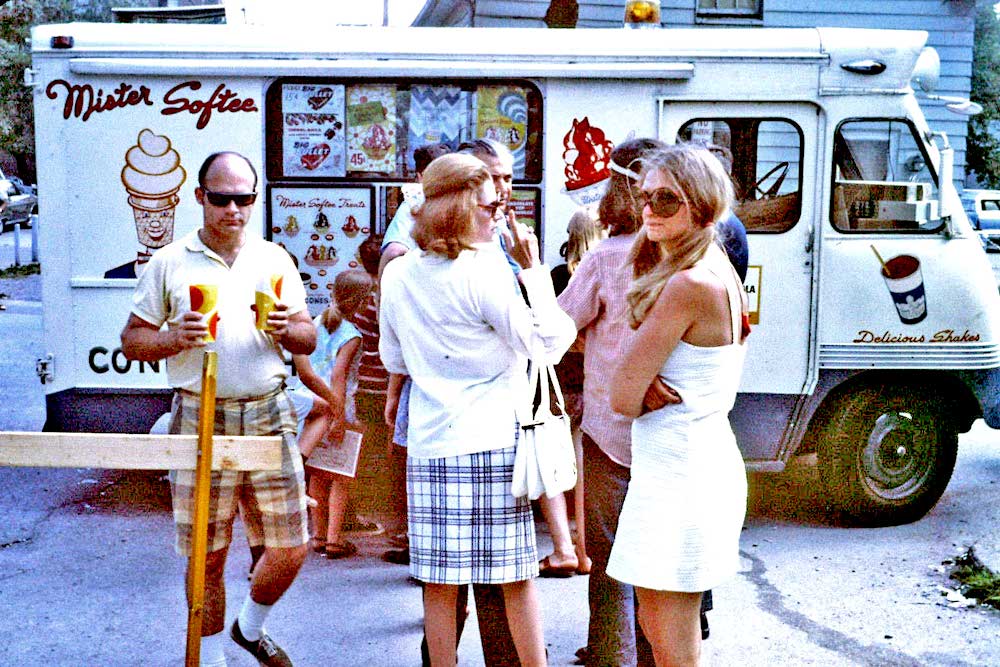
There’s nothing that brought more joy to our young ears than hearing that the local ice cream truck had finally come to our part of town. That being said, it’s not just for kids – adults would also hurry to get a frozen treat whether they like to admit it or not. Take a look at this ’70s throwback of a line of people waiting to be served by Mister Softee.

It’s interesting to see that in almost 50 years, hardly anything has changed. Ice cream vans still advertise their delicious treats in posters along the side of the vehicle, and they still drive through neighborhoods playing music. We guess it comes down to the old saying: if it ain’t broke, don’t fix it!

A Picnic With the Gals

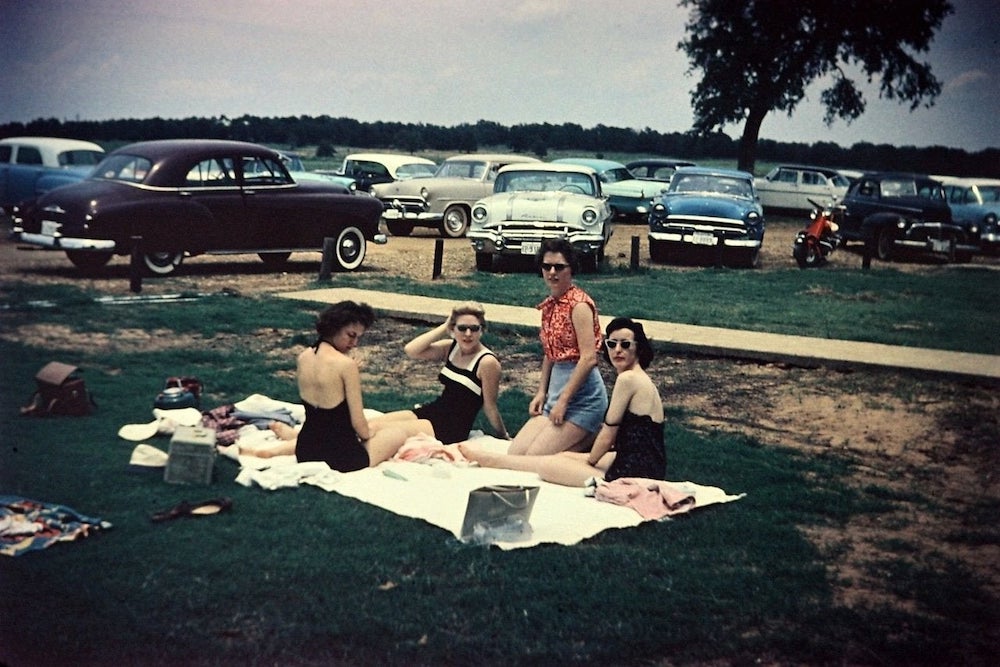
It may not have the popularity that it has today but even in the ’50s, some people took to bathing in the sun, hoping for a tan. As is the case for these four young women, three of them have dressed down to their bathing suits to get the best possible results (while still remaining modest!)

These ladies are doing what people still do to this day. They meet up and hang out outside in a park looking to get the most out of the good weather. We love seeing that these young women chose to picnic out in the open with not a care in the world about onlookers.

Limitless Advertising

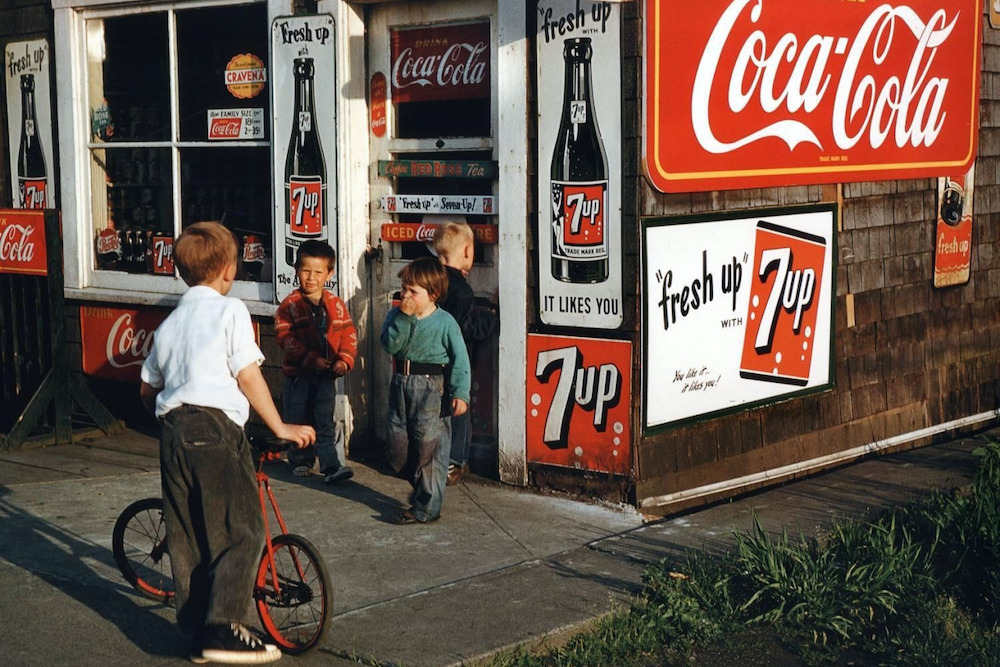
We didn’t realize that advertising was quite so forceful back in 1960. Take a look at this corner shop that’s been plastered with Coca Cola ads on every square inch. No wonder it’s such a staple household drink – even for these young kids, with all that signage, buying a refreshing cola seems hard to resist.

Taken by photographer Fred Herzog, he took this color image in 1960, when color photography still wasn’t taken as seriously as the classic black and white. He persisted, favoring bold colors in particular. He loved to capture the complexities of street life, and in the end, it paid off. This photo is worth up to $5,000 today.

Vintage Groceries

Supermarkets in the south have a reputation for being large and selling products in bulk-sized quantities. This image proves that it was also the case back in the ’50s, where we can see two friends bump into each other during their regular household shop.

If we’re trying to see the evolution of supermarkets this photo doesn’t really help! As we can see, the aisles look pretty much the same as they do today – filled to the edge with packaged items. The only notable difference we can see is that the labels were far less descriptive or attention-grabbing. No $0.99 here!

The OG Supermodel

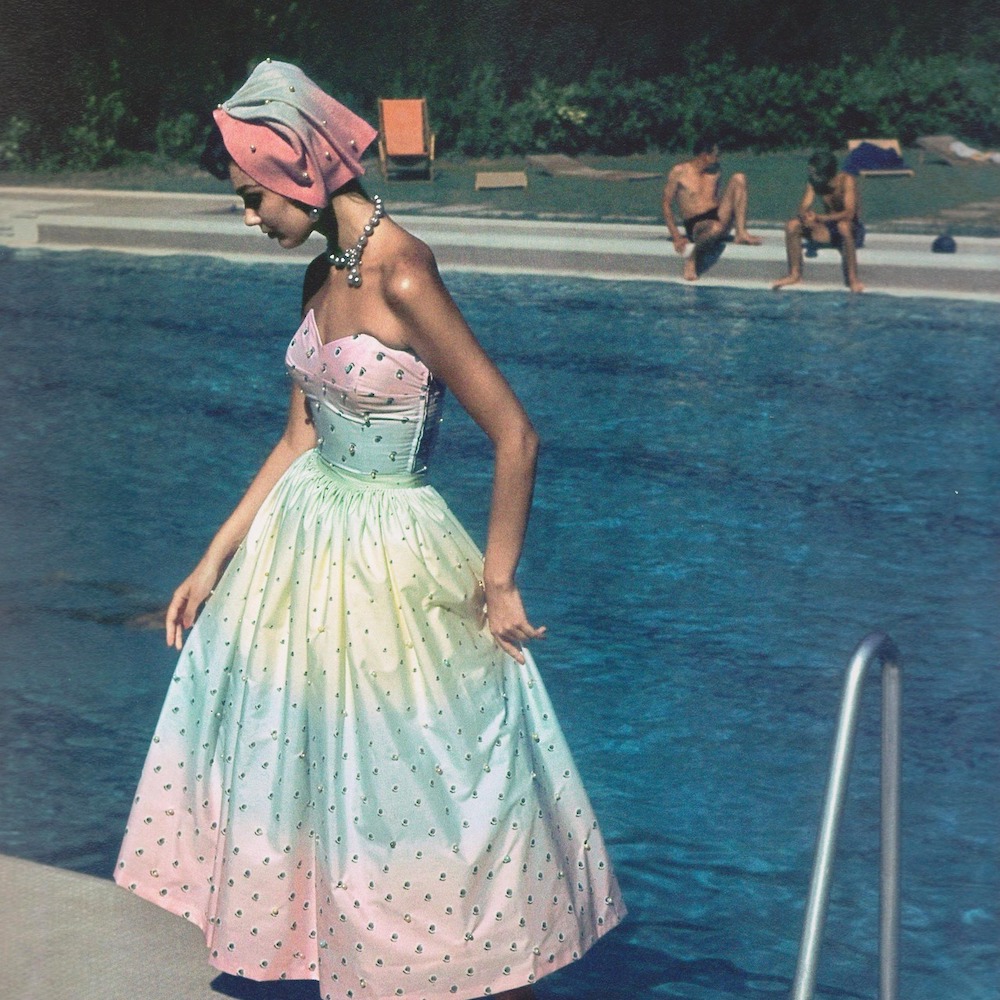
Before Kate Moss and Bella Hadid, there was fashion model Anne Sainte-Marie. She was one of the most popular models in the fifties, appearing in tons of publications and magazines. On numerous occasions, she graced the cover of Vogue. Here she is in 1959, by a pool in New York City.

Well-connected, she was a so-called “it girl” of her day, attending society parties and rubbing shoulders with the rich and famous. Here, she models a stunning pastel-colored gown that featured intricate beading and a matching headpiece. To us, she looks reminiscent of Audrey Hepburn.

The City of Dreams

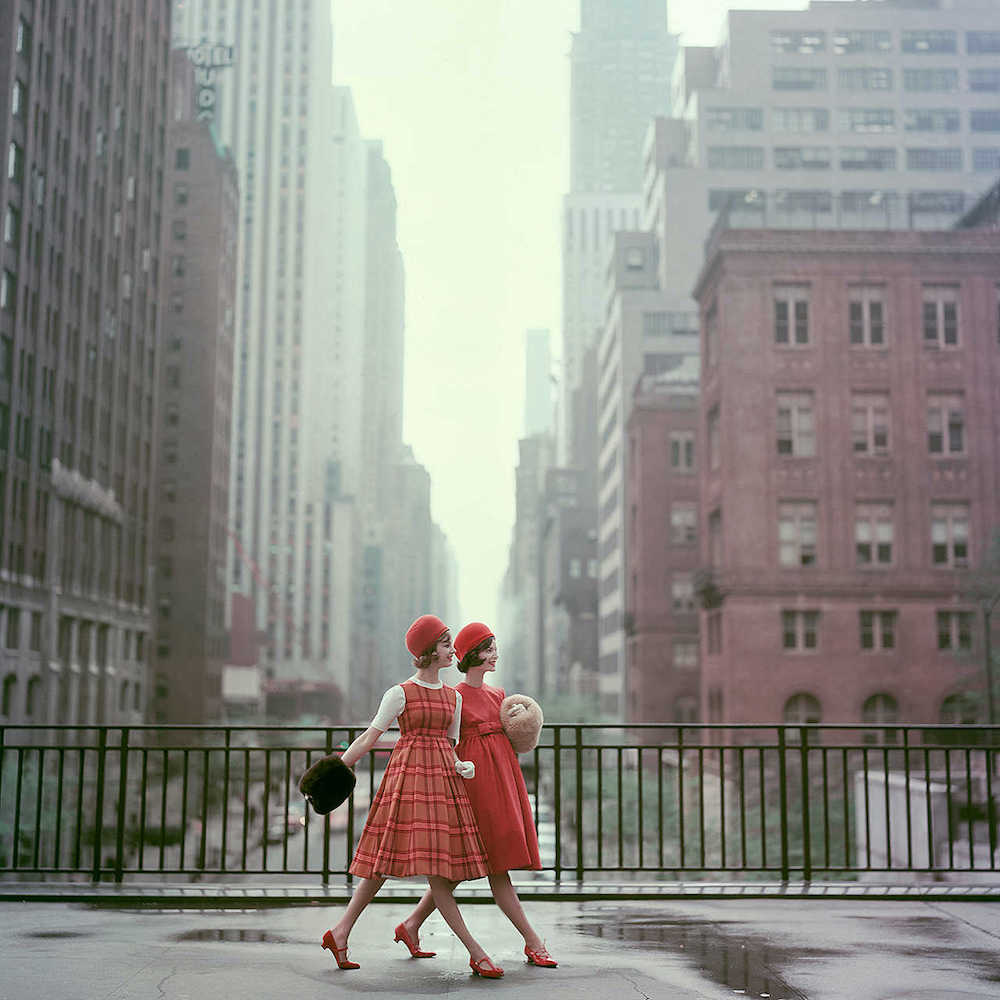
This stunning editorial picture from 1958 features two fashion models in New York City. Their style of dress appealed to the targeted readers of Vogue, who were wealthy high-society women. It was taken by the famous fashion photographer Sante Forlano and remains to be one of his best-known photographs.

This stunning editorial picture from 1958 features two fashion models in New York City. Their style of dress appealed to the targeted readers of Vogue, who were wealthy high-society women. It was taken by the famous fashion photographer Sante Forlano and remains to be one of his best-known photographs.

But Rie Yoshihara, 33, who works dressing tourists in kimonos, still feels unable to show her father her full back tattoo.

IMAGE COPYRIGHTKIM KYUNG-HOON / REUTERS
image captionRie at home in Warabi, Saitama
1px transparent line
IMAGE COPYRIGHTKIM KYUNG-HOON / REUTERS
image captionShodai tattoos Rie

Her tattooist, Shodai Horiren, says: “Your house gets old.

“Your parents die.

“You break up with a lover.

“Kids grow and go.

“But a tattoo is with you until you’re cremated and in your grave.

“That’s the appeal.”

IMAGE COPYRIGHTKIM KYUNG-HOON / REUTERS
image captionRie

Bookkeeper Mina Yoshimura, 40, says of her husband, Hiroshi: “If I had tattoos and he didn’t, he’d be able to go places that I couldn’t.

IMAGE COPYRIGHTKIM KYUNG-HOON / REUTERS
image captionMina touches her husband’s latest tattoo, at home, in Tokyo

“But since we’re both the same, we can go anywhere together.

“I think that’s nice.”

Mari Okasaka, 48, had her first tattoo 20 years ago.

Now, her son, Tenji, 24, is working towards having his whole body covered in colour.

IMAGE COPYRIGHTKIM KYUNG-HOON / REUTERS
image captionMari and Tenji at home, in Niiza, Saitama

“Some people get tattoos for deep reasons,” she says.

“But I do it because they’re cute, the same way I might buy a nice blouse.”

But when Mari leaves the house, she wears long sleeves so her neighbours won’t talk.

Tenji says: “Some people probably look at me funny.

“But I don’t pay attention to it anymore.IMAGE COPYRIGHTKIM KYUNG-HOON / REUTERS

image captionTenji

“Yes, there are times when people think I’m part of a gang.

“But I don’t worry about it that much.

“I’ll keep on going until I don’t have any skin uncoloured.”

Office worker Hideyuki Togashi, 48, whose leg was amputated in March 2019, says: “I think that because of the tattoos, part of me became stronger psychologically.

IMAGE COPYRIGHTKIM KYUNG-HOON / REUTERS
image captionHideyuki at a park near his house, in Tokyo

“And because I was so strong, I was able to recover quickly.”

Photos are subject to copyright.

Japan: Breaking the taboo of tattoos

From BBC/Nov.14

A growing number of Japanese enthusiasts are trying to tackle a 400-year-old taboo associating tattoos with organised-crime gangs such as the yakuza.

IMAGE COPYRIGHTKIM KYUNG-HOON / REUTERS
image captionHiroki at the Irezumi Aikokai

Their tattoos often feature characters from traditional legends.

IMAGE COPYRIGHTKIM KYUNG-HOON / REUTERS
image captionScrapyard worker Hiroyuki Nemoto, 48, and his one year-old daughter, Tsumugi, at home, in Hitachinaka, Ibaraki

And, although some spas, pools, beaches and gyms ban body tattoos, photographer Kim Kyung-Hoon met some of them at a public bath in Tokyo.

IMAGE COPYRIGHTKIM KYUNG-HOON / REUTERS
image captionAsakusa Horikazu with men he and his father have tattooed
1px transparent line
IMAGE COPYRIGHTKIM KYUNG-HOON / REUTERS
image captionConstruction worker Hiraku Sasaki, 48
1px transparent line
IMAGE COPYRIGHTKIM KYUNG-HOON / REUTERS
image captionRestaurant owner Hiroshi Sugiyama, 38

The annual gathering of the Irezumi Aikokai (Tattoo Lovers Association), in Tokyo, in February, “is important because usually we hide our tattoos from society”, its head, Hiroyuki Nemoto, says.

“But just once a year, we can proudly show off our tattoos and show each other what new tattoos we’ve gotten.”

IMAGE COPYRIGHTKIM KYUNG-HOON / REUTERS
image captionThe Irezumi Aikokai
1px transparent line
IMAGE COPYRIGHTKIM KYUNG-HOON / REUTERS
image captionThe Irezumi Aikokai

Attendee author Hiroki Takamura, 62, says: “In the 2000s, tattoo magazines began to increase.

“And even women began to get more tattoos.

“I thought there was hope that tattoos would finally be accepted the way they are in Europe.”

But Rie Yoshihara, 33, who works dressing tourists in kimonos, still feels unable to show her father her full back tattoo.

IMAGE COPYRIGHTKIM KYUNG-HOON / REUTERS
image captionRie at home in Warabi, Saitama
1px transparent line
IMAGE COPYRIGHTKIM KYUNG-HOON / REUTERS
image captionShodai tattoos Rie

Her tattooist, Shodai Horiren, says: “Your house gets old.

“Your parents die.

“You break up with a lover.

“Kids grow and go.

“But a tattoo is with you until you’re cremated and in your grave.

“That’s the appeal.”

IMAGE COPYRIGHTKIM KYUNG-HOON / REUTERS
image captionRie

Bookkeeper Mina Yoshimura, 40, says of her husband, Hiroshi: “If I had tattoos and he didn’t, he’d be able to go places that I couldn’t.

IMAGE COPYRIGHTKIM KYUNG-HOON / REUTERS
image captionMina touches her husband’s latest tattoo, at home, in Tokyo

“But since we’re both the same, we can go anywhere together.

“I think that’s nice.”

Mari Okasaka, 48, had her first tattoo 20 years ago.

Now, her son, Tenji, 24, is working towards having his whole body covered in colour.

IMAGE COPYRIGHTKIM KYUNG-HOON / REUTERS
image captionMari and Tenji at home, in Niiza, Saitama

“Some people get tattoos for deep reasons,” she says.

“But I do it because they’re cute, the same way I might buy a nice blouse.”

But when Mari leaves the house, she wears long sleeves so her neighbours won’t talk.

Tenji says: “Some people probably look at me funny.

“But I don’t pay attention to it anymore.IMAGE COPYRIGHTKIM KYUNG-HOON / REUTERS

image captionTenji

“Yes, there are times when people think I’m part of a gang.

“But I don’t worry about it that much.

“I’ll keep on going until I don’t have any skin uncoloured.”

Office worker Hideyuki Togashi, 48, whose leg was amputated in March 2019, says: “I think that because of the tattoos, part of me became stronger psychologically.

IMAGE COPYRIGHTKIM KYUNG-HOON / REUTERS
image captionHideyuki at a park near his house, in Tokyo

“And because I was so strong, I was able to recover quickly.”

Photos are subject to copyright.

The weaponization of a first lady’s image

From CNN/Written by Fiona Sinclair Scott/Updated 27th October 2020
Many a first lady has felt the warm glow of public adoration, only to have it quickly flicker out when it is decided that she does not fit the image created for her.
The role of first lady of the United States is one of the most visible public positions in the world. From the moment votes are counted, and often during campaigning in the preceding months, the spouse of a newly elected president is thrust into the spotlight, where she remains for the duration of his term.
Throughout history, we’ve witnessed the breadth and depth of scrutiny withstood by the women who have so far held the position. From her mannerisms, to her physical attributes, to the way she chooses to dress, the first lady is thoroughly examined by the public, the media and those surrounding her on the political stage. And this is even before people begin assessing the work she is expected to carry out as an unpaid, unofficial public servant.
Many a first lady has felt the warm glow of public adoration, only to have it quickly flicker out when it is decided that she does not fit the image created for her.
Image, in this case, isn’t just about clothing and looks, but also a more nuanced notion of the impression she’s thought to give off. It’s an air around her that is made of both physical and personal traits. And a number of first ladies have fallen victim to aspects of their image that have been both celebrated and weaponized, depending on the onlooking crowd.
In “First Ladies,” a documentary series now airing on CNN, we see this paradox play out during six presidencies. The stories offer an ongoing reminder that a woman’s public image is inextricably linked to her success and the level of respect she receives from the outside world.
“As a black woman, too, I knew I’d be criticized if I was perceived as being showy and high end, and I’d be criticized also if I was too casual.”
MICHELLE OBAMA
So, why do critical voices repeatedly pass such undeserved judgment on these women? Leah Wright Rigueur, a professor at the Harvard Kennedy School, offers her answer early in an episode about Michelle Obama: First ladies are meant to be the “representation of American’s better selves.”
When Americans elected their first Black president in 2008, the country’s first Black first lady Michelle Obama was, to many adoring fans, a symbol of hope, opportunity and change. Girls and women around the world looked up to this smart, determined woman from Chicago’s South Side who now lived in America’s most famous house.
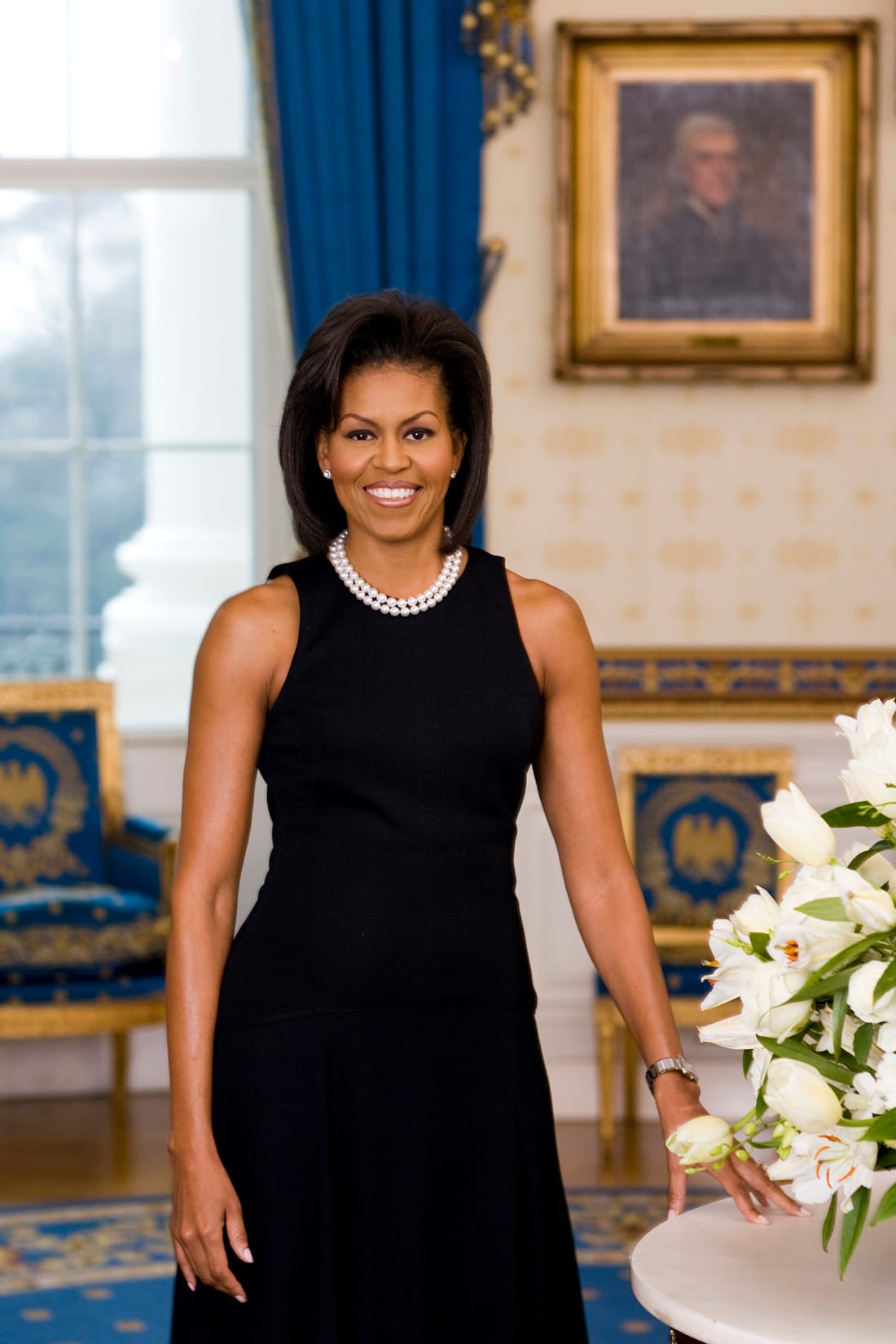
Michelle Obama poses for her official portrait in the Blue Room of the White House in February 2009.

Michelle Obama poses for her official portrait in the Blue Room of the White House in February 2009. Credit: Joyce N. Boghosian/The White House/Getty Images
But her critics had a different take on her conviction and strength of character, and they were not afraid to make their often racist and sexist ideas known. On the campaign trail she was labeled “angry,” and her love and loyalty for America was questioned.
During the first few months of the Obama presidency her preference for sleeveless looks also drew extraordinary criticism. It was a phenomenon recalled by Robin Givhan, a Pulitzer Prize-winning fashion editor and critic-at-large for the Washington Post, during an interview for “First Ladies.”
“People zeroed in on her arms because they were not the arms of a fragile damsel who was White,” she said in the episode about Obama. “Non-White Americans have for years looked at a White first lady and were still able to say that she represented them. But I think it becomes a much more challenging thing for some White Americans to look at a Black first lady and see themselves in her. Instead, they simply saw her as an alien.”
By way of contrast, Jackie Kennedy had been mostly idolized for her beauty and style. While she did face flak from critics on the campaign trail for her expensive taste, from the moment she took to the stage on inauguration day in her now-iconic pillbox hat, Kennedy became the First Lady of Fashion. At age 31 — young enough to be the daughter of the departing Mamie Eisenhower — she was also seen as a symbol of youthful rejuvenation. She appeared on Capitol Hill for her husband’s inauguration like “the gorgeous petal in a dowdy bouquet of fur,” wrote historian Thurston Clarke in his 2004 book “Ask Not.”
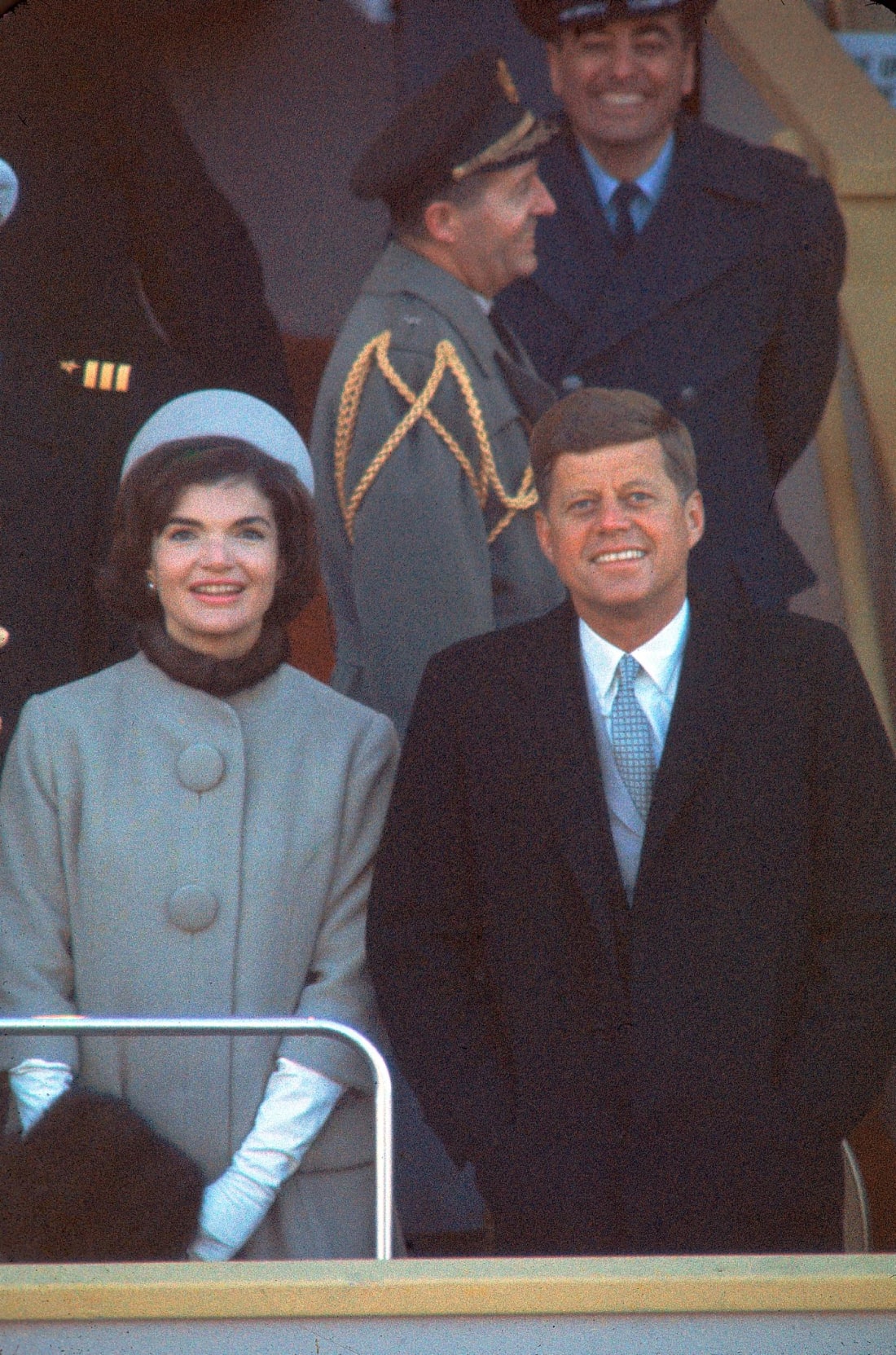
Jackie Kennedy on inauguration day in 1961.

Jackie Kennedy on inauguration day in 1961. Credit: Leonard McCombe/The LIFE Picture Collection/Getty Images
And as journalist Evan Thomas notes during an interview for the CNN series, she “was the perfect prize of the WASP establishment.”
“She also knew that the Kennedy family was using her,” Thomas added. “She once said, ‘the family treats me like, like a thing. Like an asset. Like Rhode Island.'”
If history had played out differently, Jackie Kennedy’s legacy might have been reduced to the story of a pretty object with a flair for interior design (she dedicated much of her time in the White House to renovating the official residence). Tragically, however, she had the opportunity to show the world what she was made of on the day of her husband’s assassination. Hours after President Kennedy was shot beside her, she made a powerful decision: to face the public again in the same blood-stained pink dress she had worn during the attack, famously telling her staff, “I want them to see what they’ve done to Jack.”
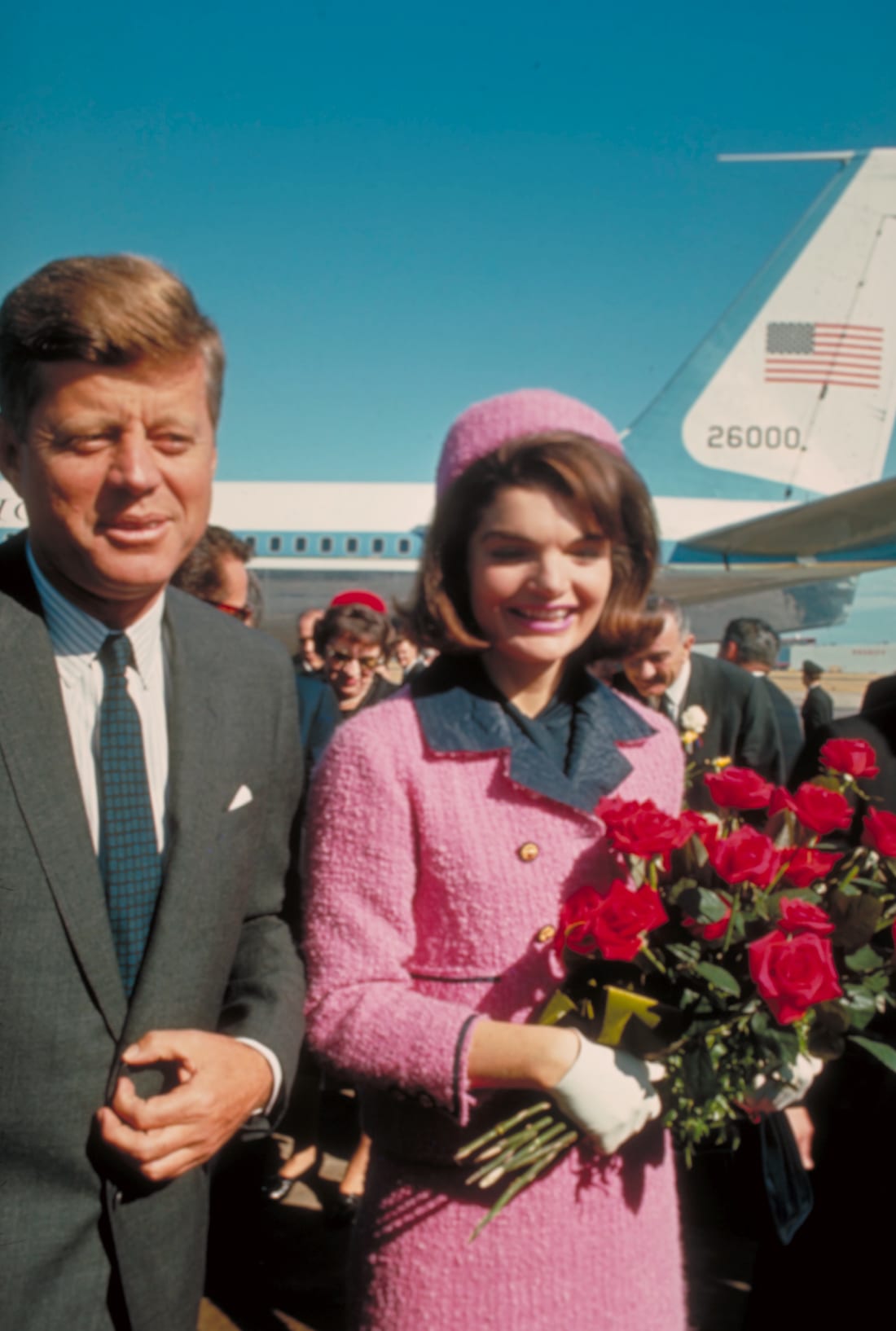
President John F. Kennedy and his wife Jackie on November 22, 1963,  just after their arrival at the airport for the fateful drive through Dallas.

President John F. Kennedy and his wife Jackie on November 22, 1963, just after their arrival at the airport for the fateful drive through Dallas. Credit: Art Rickerby/The LIFE Picture Collection/Getty Images
It was a catastrophic moment in American history. And it was also a devastating example of the power of clothing: A dress can send a message.
In Michelle Obama’s memoir “Becoming,” the former first lady reveals the lengths she went to when styling herself for public appearances, finding it impossible not to look across the room at her husband: “I sighed sometimes, watching Barack pull the same dark suit out of his closet and head off to work without even needing a comb,” she wrote. “His biggest fashion consideration for a public moment was whether to have his suit jacket on or off. Tie or no tie?”
She also discussed the particular challenges she faced as an African American. “As a black woman, too, I knew I’d be criticized if I was perceived as being showy and high end, and I’d be criticized also if I was too casual. So I mixed it up. I’d match a high-end Michael Kors skirt with a T-shirt from Gap. I wore something from Target one day and Diane von Furstenberg the next.”
She knew society wouldn’t bend for her. So, in a move that was at once inspiring and saddening, she bent to fit society.
But Michelle Obama won in the end. Her layered legacy, which will be defined by her work around issues of health, education and race, also acknowledges how graciously she used her platform to celebrate young, diverse fashion designers alongside the more established set. She wore Jason Wu, Prabal Gurung and Tracy Reese, offering them a moment in her limelight and helping their careers as a result.
“For me, my choices were simply a way to use my curious relationship with the public gaze to boost a diverse set of up-and-comers,” she wrote.
“As a woman running for President, I liked the visual cue that I was different from the men but also familiar. ”
HILLARY CLINTON
Like Jackie Kennedy, Michelle Obama took the fact that she was being scrutinized and itemized for everything she wore and used it to her advantage. This, arguably limited power remains one of the ways that women in politics can make a statement without saying a word.
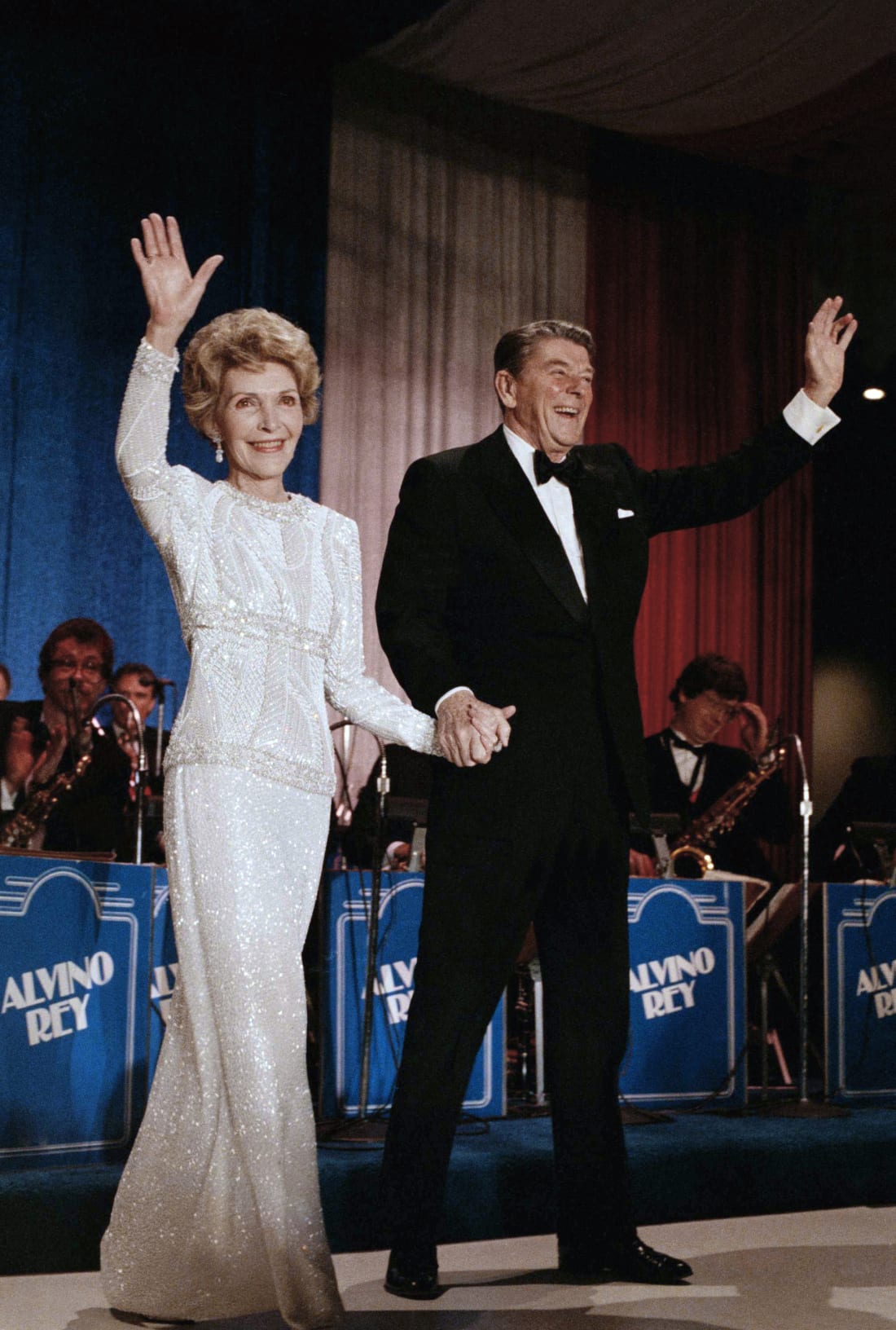
Nancy Reagan was seen as a relic of old Hollywood when she entered the White House. The inauguration celebrations in 1981 were, by all accounts, lavish and glitzy affairs. Around 700 private jets flew into the city that weekend, and Reagan’s gown — a white beaded one-shouldered sheath of lace over silk satin, made by high-society couturier James Galanos — was a show-stopper.
She and her husband, President Ronald Reagan, were both former actors who had met in Los Angeles in the 1940s, and their love for each other was like that of the silver screen. Her critics initially mocked the adoring way she looked at her husband, calling it “the gaze,” and she was seen as too wifely, too 1950s, too concerned with frills and the finer things in life, which seemed at odds with a country plunging into recession.
Nancy and Ronald Reagan arrive at the inaugural ball in the Washington Hilton on January 21, 1985.

 Nancy and Ronald Reagan arrive at the inaugural ball in the Washington Hilton on January 21, 1985. Credit: Ira Schwarz/AP
But, through the course of her husband’s eight-year presidency she proved herself to be more than the outdated embodiment of a wealthy suburban wife. According to their son, Ron Reagan, who features in the documentary series, she wanted the President “to be the frontman, and she wanted to be the producer/director behind the scenes.”
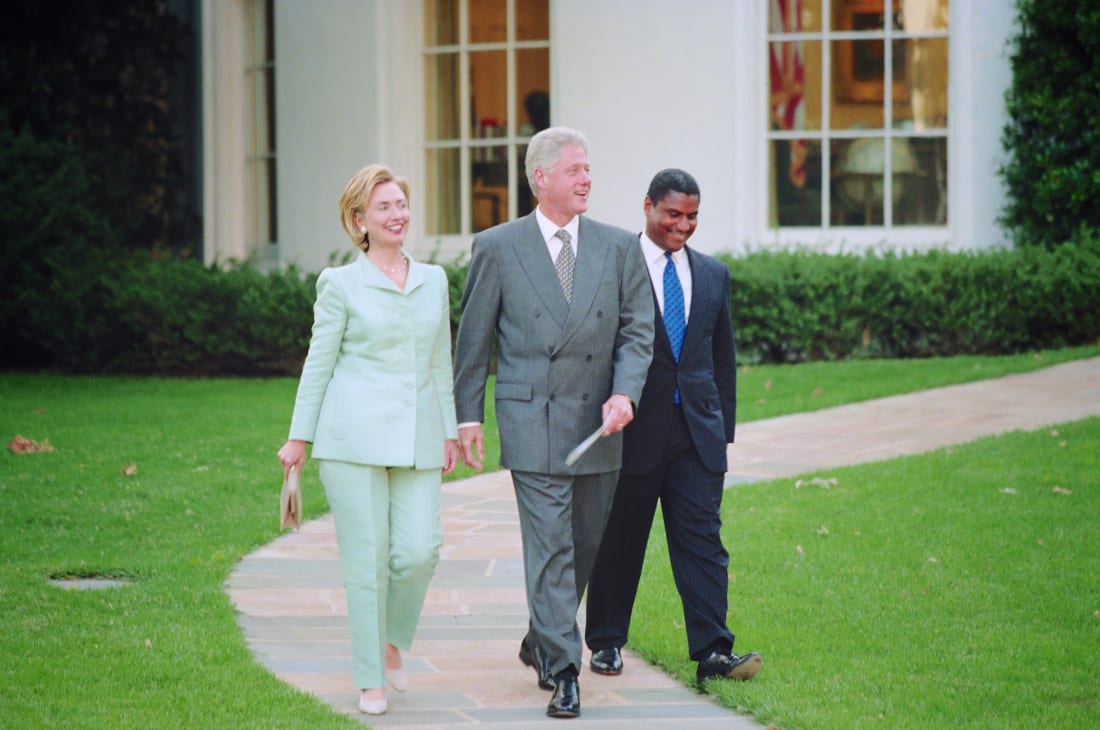
It was, perhaps, a precursor to the Clintons half-jokingly campaigning under the slogan “buy one get one free.” Indeed, it’s well-documented that Hillary Clinton often felt the scorn of the American public, due in part to her career-woman image. Ironically, while Reagan was criticized for being a 1950s housewife, Clinton was told she wasn’t domesticated enough.
Hillary and Bill Clinton leave the White House after the Democratic Business Leaders event in September 1998.

 Hillary and Bill Clinton leave the White House after the Democratic Business Leaders event in September 1998. Credit: David Hume Kennerly/Archive Photos/Getty Images
Her aggressors painted her as being too strong to stand back and let her politician husband call the shots and too weak to walk away when he was unfaithful.
For the most part, she rallied against these judgments.
Clinton’s pantsuits became her emblem — her way of reminding people that she was a first lady with a law degree, an independent career and, ultimately, her own agenda, which she proved when she left the White House as Senator of New York, not effectively jobless like her husband. So, when her official portrait was released in 2004, Clinton was of course depicted wearing her signature black pantsuit, another first for a first lady.
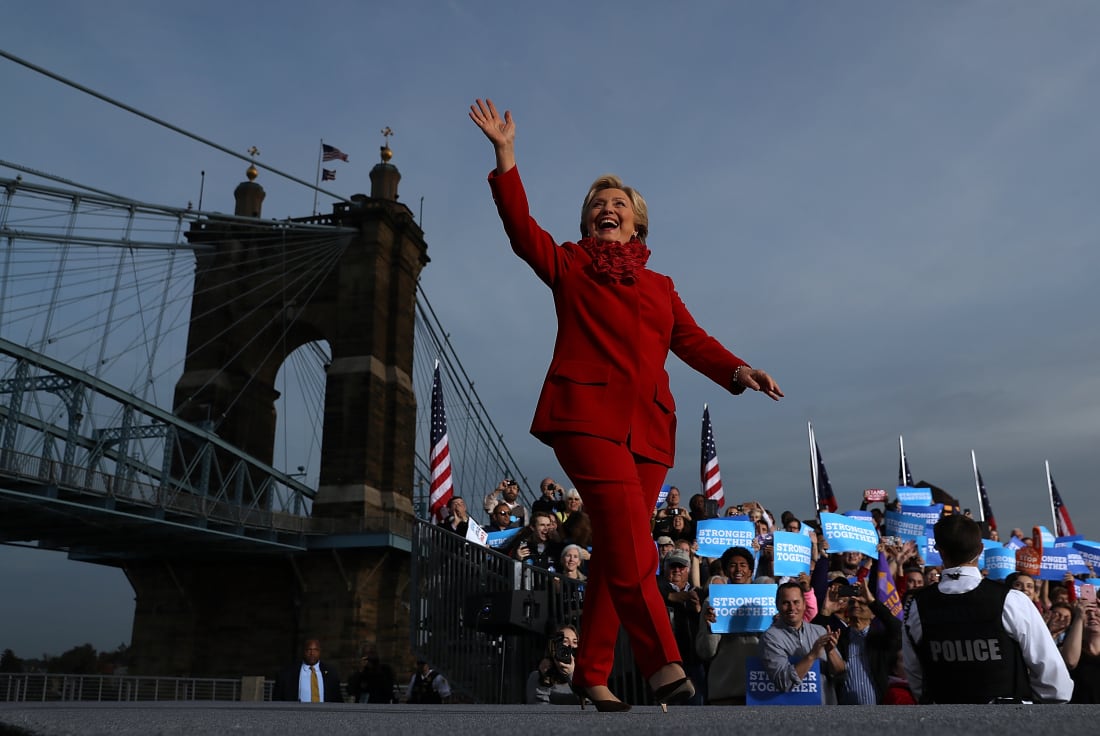
Hillary Clinton greets supporters during a rally in Cincinnati, Ohio, for her 2016 presidential run.

 Hillary Clinton greets supporters during a rally in Cincinnati, Ohio, for her 2016 presidential run. Credit: Justin Sullivan/Getty Images
She took her signature look on the road again during her 2016 presidential campaign. In her book “What Happened” she explained: “As a woman running for President, I liked the visual cue that I was different from the men but also familiar.”
The tactic didn’t pay off. Throughout one of the ugliest elections in US history, Clinton would come under repeated fire. This time she wasn’t charismatic enough, she was shady, she was “a liar.”
But was the biggest issue, actually, the same one as always? Once again, her image didn’t fit the mold — because the president was supposed to be a man.

Bruno Barbey’s Color of China

Jean Loh reflects upon how the photographer’s decades of work in China have created a vivid portrait of a country forever on the move

 From Magnumphotos /By Bruno Barbey / Nov.18

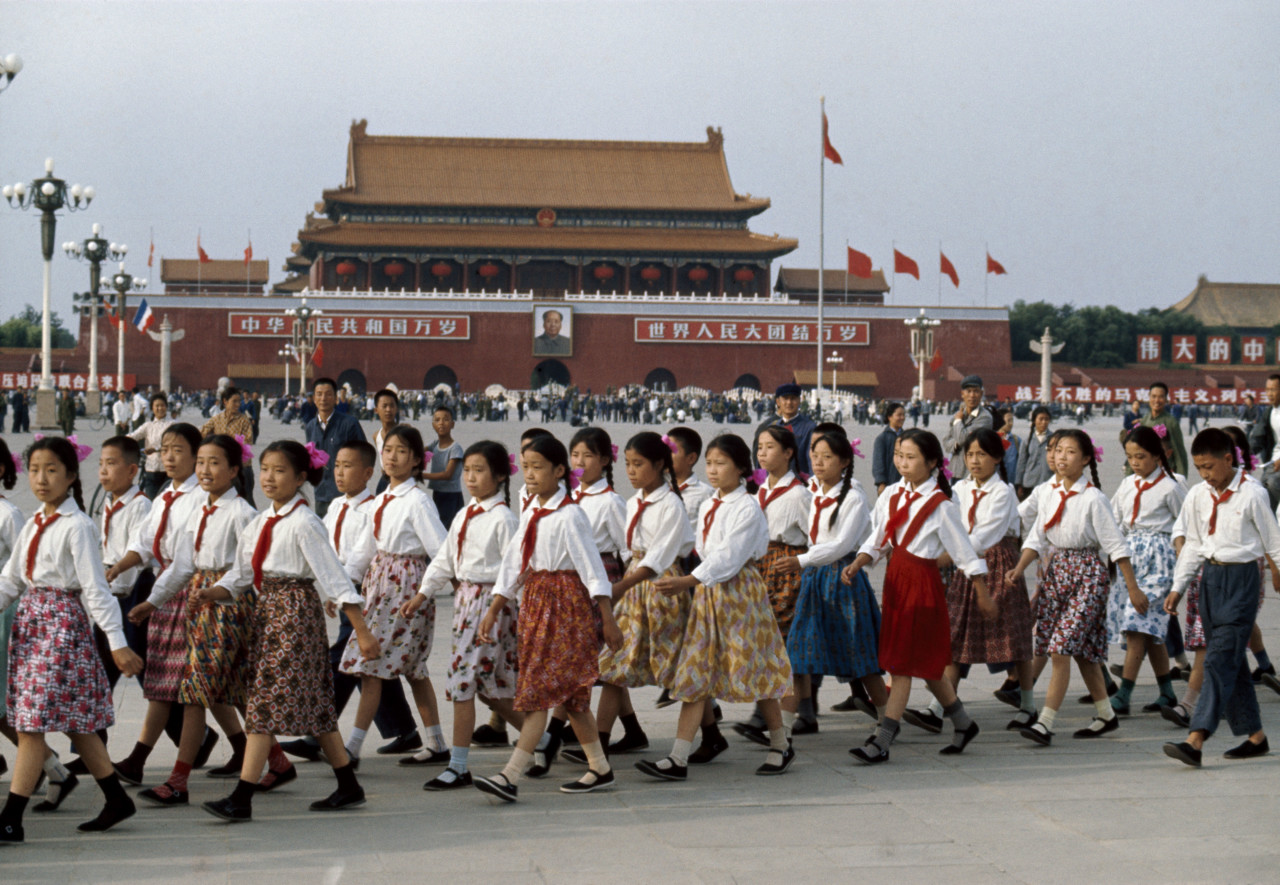
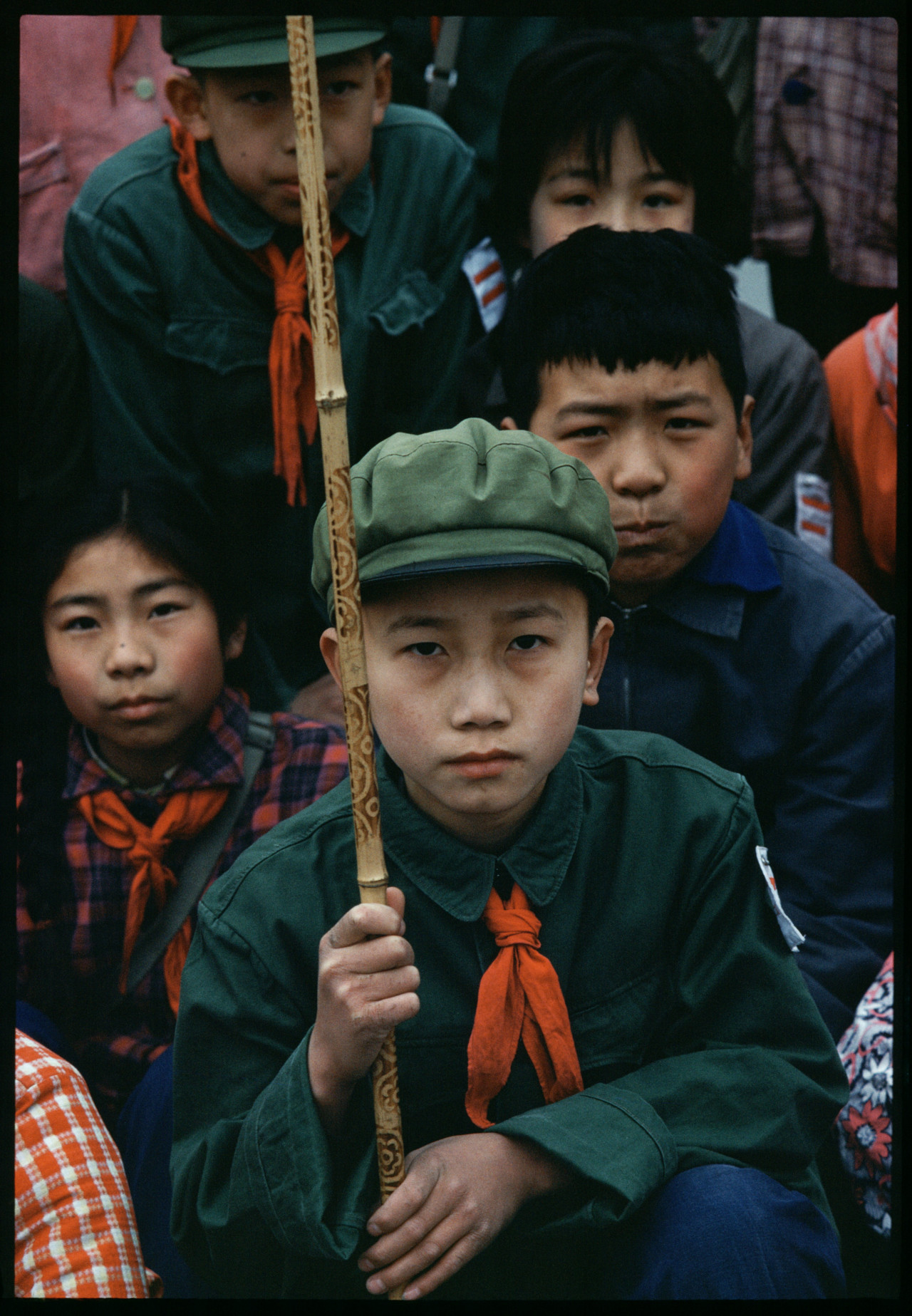
Bruno Barbey School girls prepare for the reception of French president Georges Pompidou. In the background: Mao portrait and slogans “Long live the People’s Republic of China. Long live the Union of the people 

The first Chinese-language publication of Bruno Barbey’s monograph on the country is now available. Jean Loh – a photography curator and publisher as well as author of the book’s foreword – reflects here upon the French photographer’s work in the country,  his revolutionary use of color, and the portrait of an ever-changing nation which he has created. The new edition – a product of decades of work in China – designed and edited by Barbey’s wife, Caroline Theinot-Barbey, was published in April, 2019, by Beijing United Publishing Co., Ltd & Post Wave Publishing. 69 images from Barbey’s work in the country have been acquired by The National Art Museum of China (NAMOC).

The book, Color of China, by Bruno Barbey – a collection of images which he took in China from 1973 to 2018 – will finally be released by the Beijing publisher Post Wave at the end of April 2019, coinciding with the 70th anniversary of the founding of the People’s Republic of China. Of the Western photographers who came to China, few really got to the heart of the country as Barbey did.

Let’s first pay tribute to his elders at Magnum, those like Robert Capa, who documented the Sino-Japanese war in 1938, or Henri Cartier-Bresson who covered regime change in Beijing and Shanghai between December 1948 and 1949, and Marc Riboud, who arrived in 1957 in the middle of the Hundred Flowers Campaign, and would return in 1965 and 1971 during the Cultural Revolution.

The big difference between their work and Barbey’s is the surprise, tinged with a sense of nostalgia, aroused in members of the Chinese public who saw Barbey’s photos for the first time. Much of the visual memory of the People’s China from the first three decades of its history was marked by images made in black and white, while the China which Bruno shows is entirely in color! We even get the sense sometimes that it’s “yesterday’s China.”

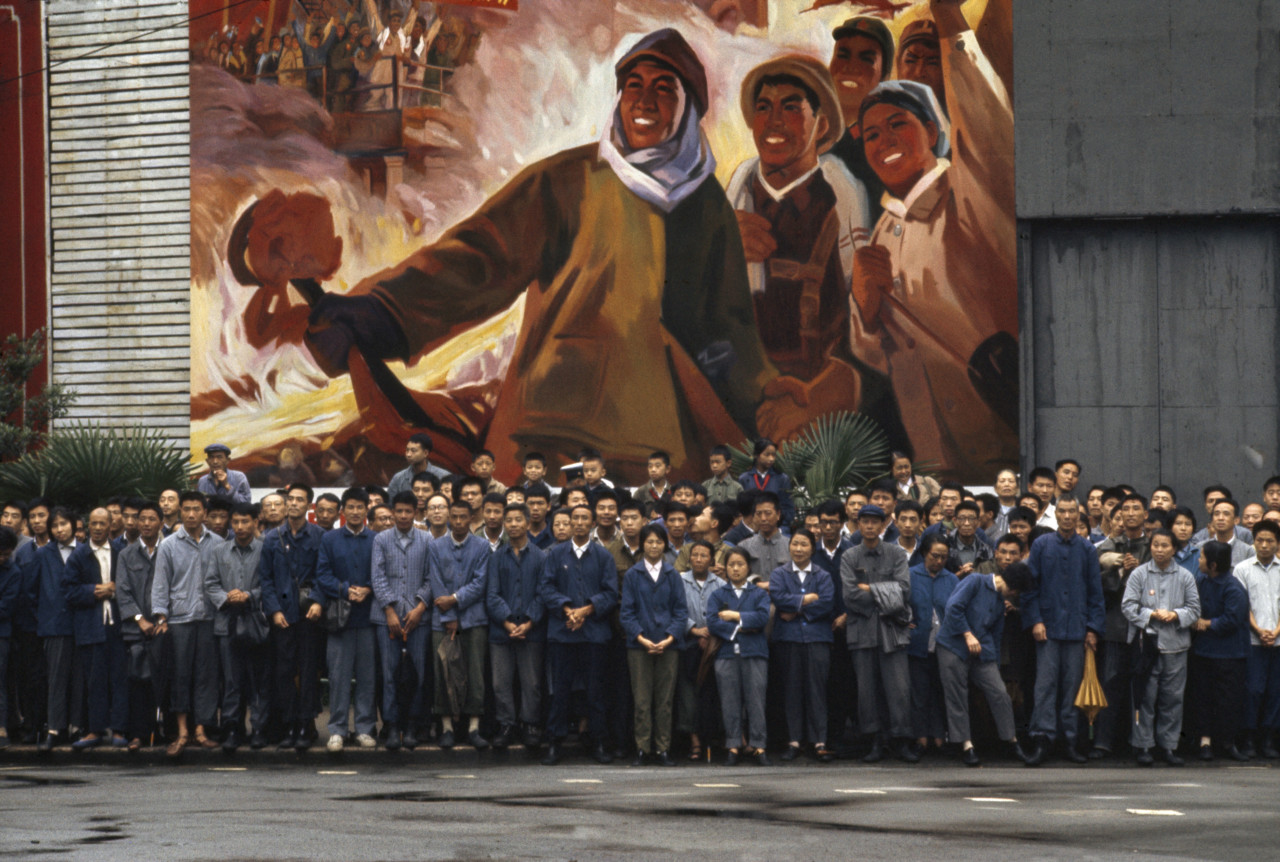
Bruno Barbey Mural painting of cultural revolution’s trinity the worker, the farmer and the soldier. Shanghai. China. 1973. © Bruno Barbey | Magnum Photos

Dong Qiang, in the preface of this book, recalls that “Those who love photography will always recall the beginning of Roland Barthes’ Camera Lucida: “One day, quite some time ago, I happened on a photograph of Napoleon’s youngest brother, Jerome, taken in 1852. And I realized then, with an amazement I have not been able to lessen since: ‘I am looking at eyes that looked at the Emperor.’”

When I met Bruno Barbey, it was the same amazement seeing the eyes of someone who had seen Zhou Enlai and Madame Mao. What’s more, he fixed them with a camera, and was able to let me see them in turn.

Barbey’s great contribution to the world of photography is his bold use of color at a time when everybody, or almost everybody, was working in black and white. We know that is why he spared no forces of energy, time, or means in an era when the processes of transmission were still very traditional – almost archaic – to ensure that his film would not discolor or get damaged.

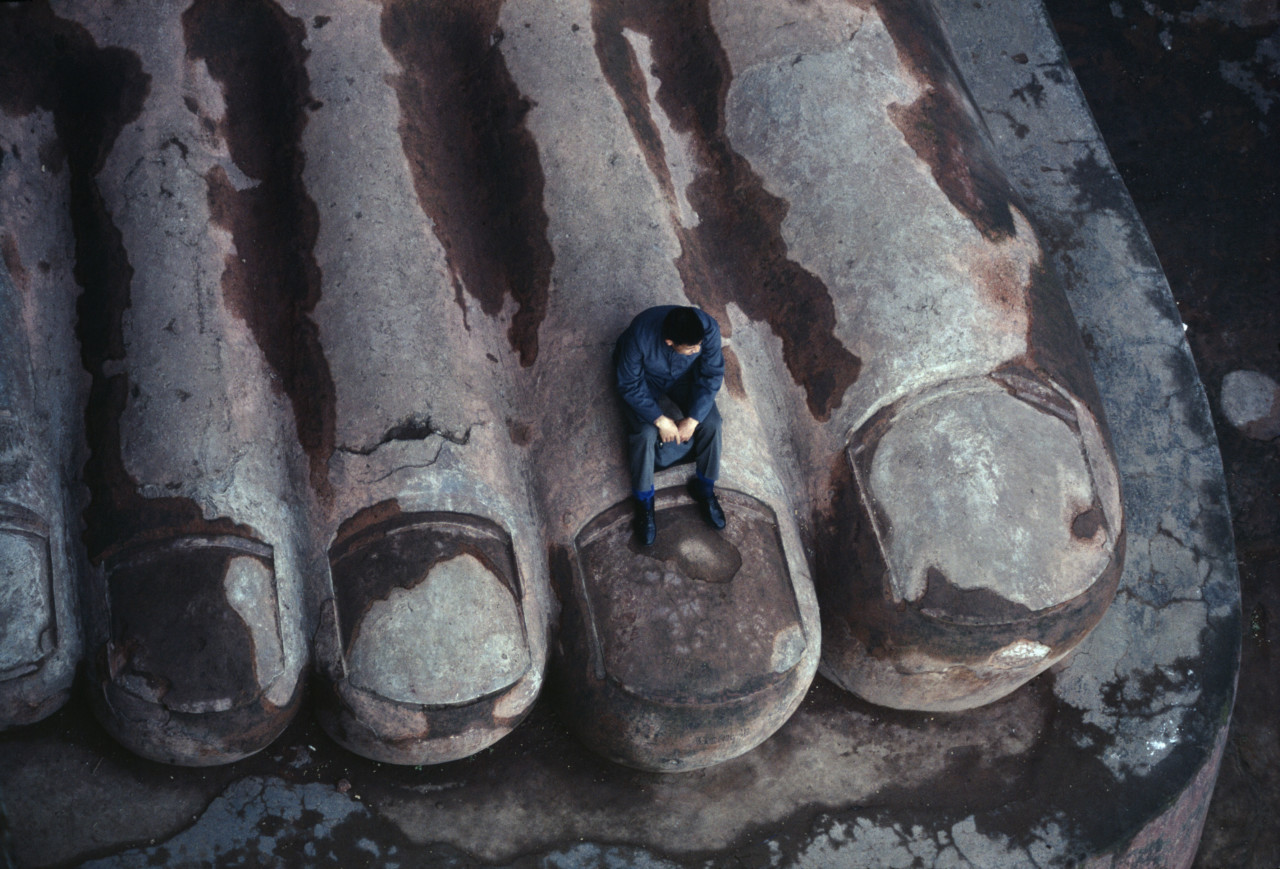
CHINA. Sichuan province. Loshan. The foot of a Buddhist statue. 1980.
Bruno Barbey The foot of a Buddhist statue, built in the 8th century from a rock cliff (72 meters high). Loshan. Sichuan province. China. 1980. © Bruno Barbey | Magnum Photos

This major difference means that Bruno Barbey’s China does not look like traditional photoreportage, his approach is rather more like the search for a Chinese identity, or an idea of China. What is China? he seems to wonder, like the man sitting at the feet of the Giant Buddha of Leshan (Sichuan, 1980). The China of 1973 and 1980 seems obsessed with the idea of catching up with the world outside.

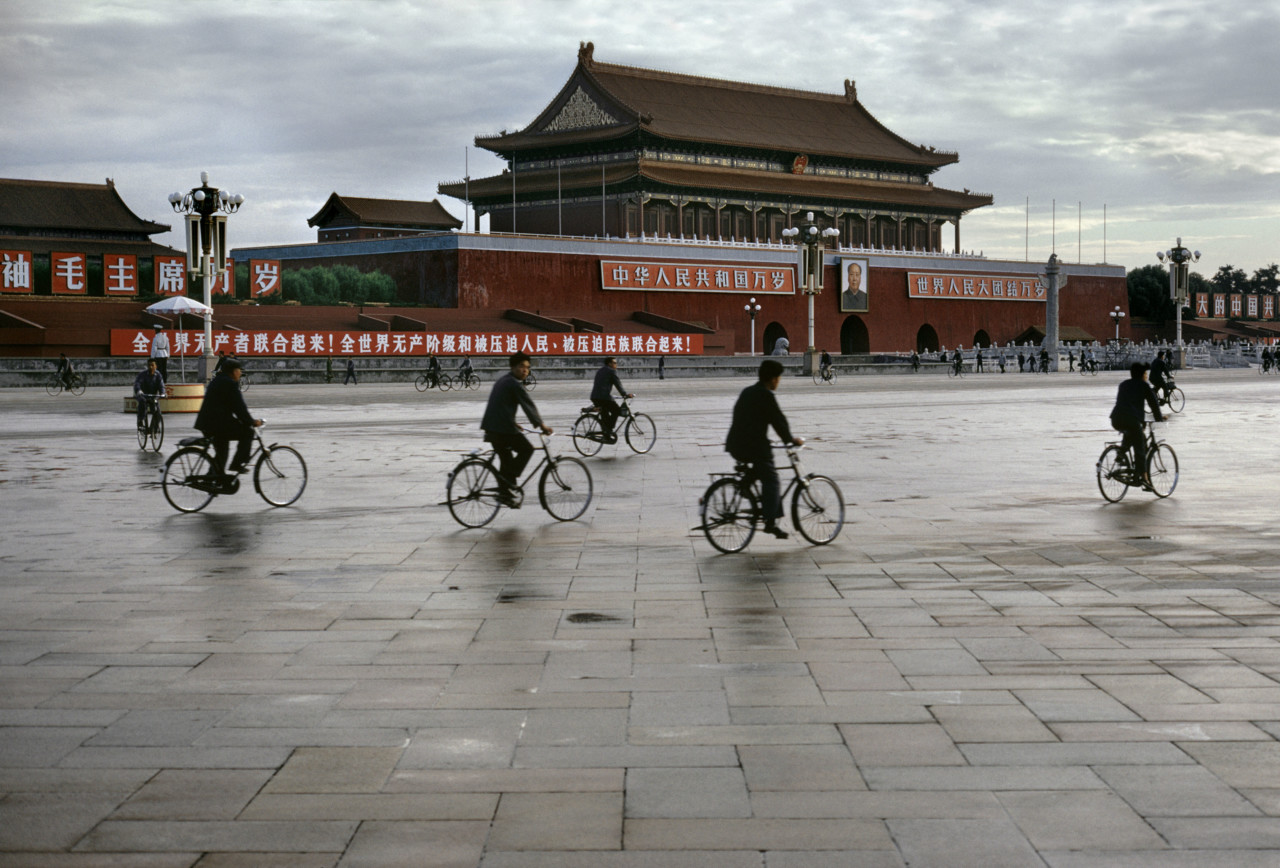
Bruno Barbey chose to see and to show us in turn China’s reality. Beijing, Shanghai, the provinces of Sichuan and Guanxi are in his eyes so different and distinct from one another that we wonder if they are even part of the same country. His Kodachrome film in 1973 and 1980 faithfully captured the ochre red of the imperial palace of the Forbidden City and the morning blue of the Shanghai Bund.

Bruno Barbey China 1973. © Bruno Barbey | Magnum Photos

“His Kodachrome film in 1973 and 1980 faithfully captured the ochre red of the imperial palace of the Forbidden City and the morning blue of the Shanghai Bund”


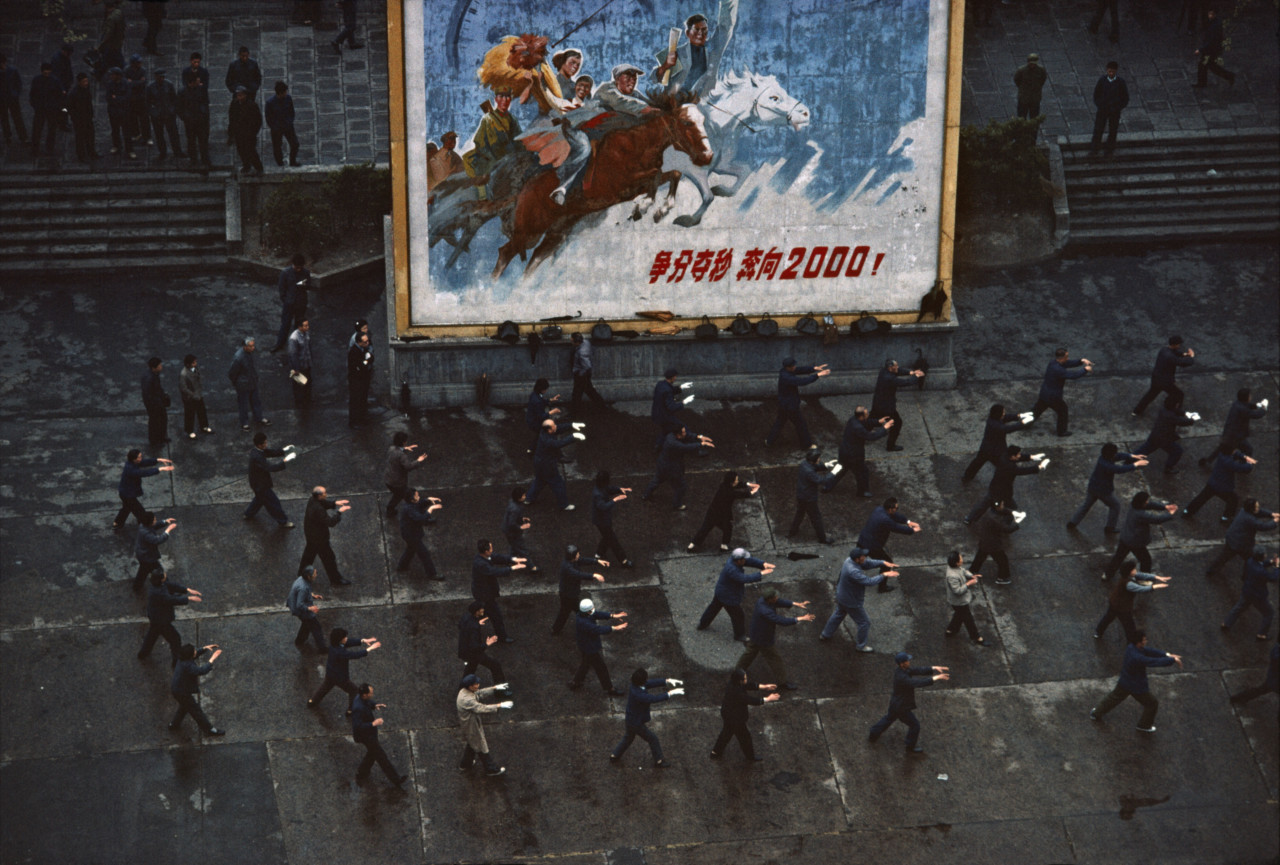
Bruno Barbey The traditional exercise Tai Ji Quan is widely practiced in the streets of Shanghai. © Bruno Barbey | Magnum Photos

At the same time, Barbey translates the meaning of the images through the displayed slogans, which involuntarily contain some irony: the image of the calm morning of the deserted red Tiananmen Square, disrupted only by a couple of cyclists, while the long red banner making the call: “Workers of the World and Oppressed Peoples, Unite!” The big poster behind a group of tai-chi practitioners on the Shanghai Bund depicting horsemen launched into a race, spells out the slogan: “Without wasting a second, propel yourself towards the year 2000 at the opposite extreme of the slowness of this shadowboxing. Just seven years apart, these two slogans announce the deep upheavals that came to dramatically change China.

 Bruno Barbey China. 1980. © Bruno Barbey | Magnum Photos

“Despite his aptitude for seeing, only matched by his curiosity for all things Chinese, Barbey nonetheless remains faithful to his position of impartiality and objectivity”

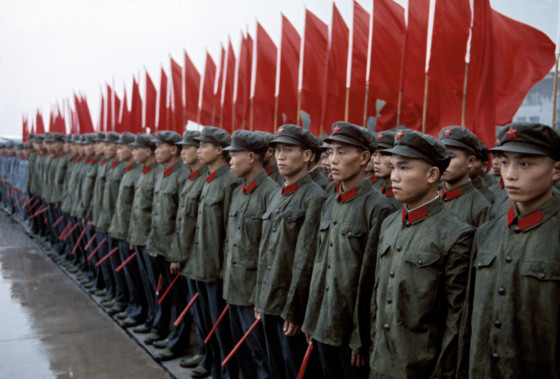
Bruno Barbey The Guard of Honor of the Popular Army of Liberation. Airport. Shanghai. China. 1973. © Bruno Barbey | Magnum Photos
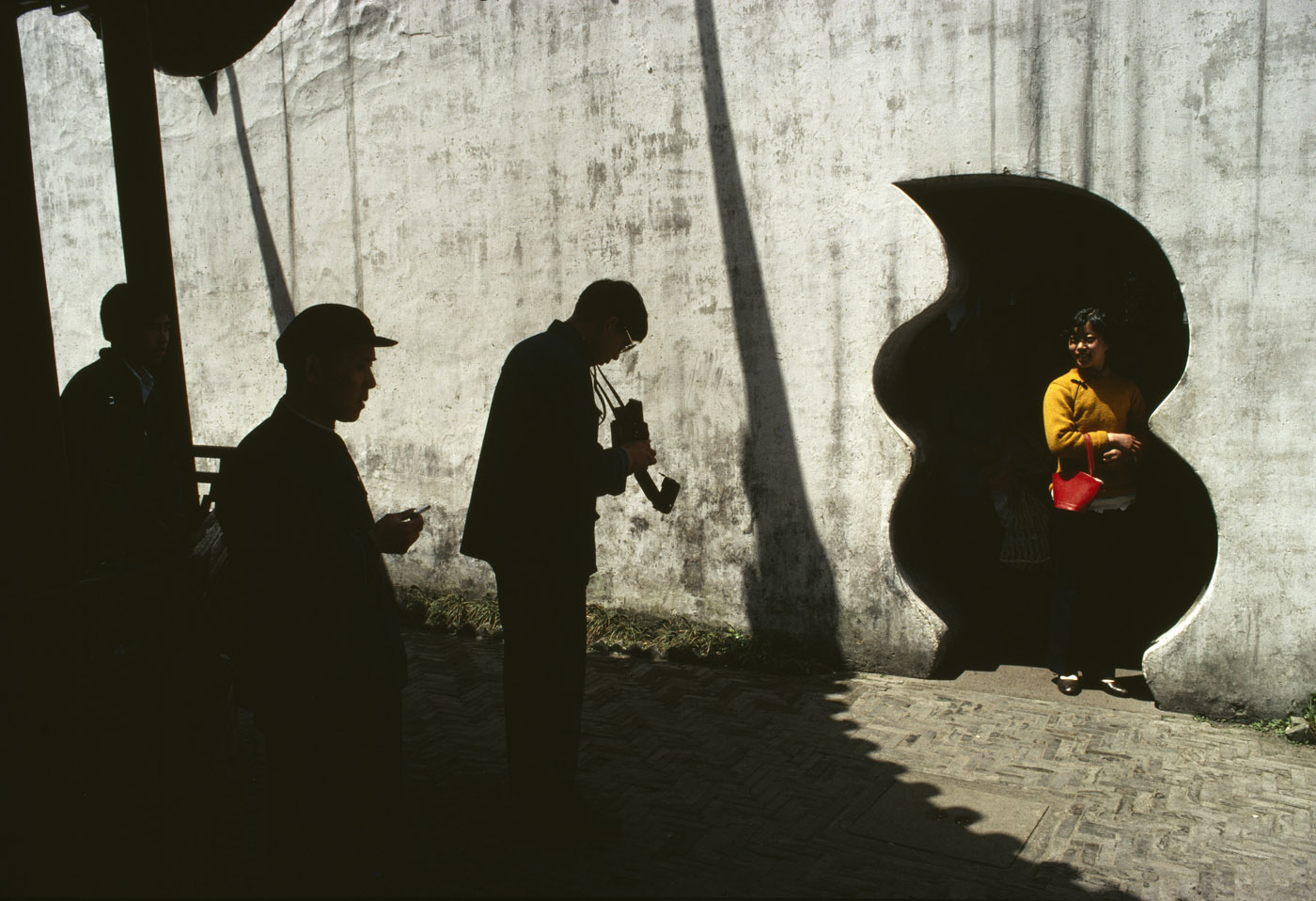
Bruno Barbey Huxingting tea house in the gardens of Yu Yuan. Shanghai. China. 1980. © Bruno Barbey | Magnum Photos

Despite his aptitude for seeing, only matched by his curiosity for all things Chinese, Barbey nonetheless remains faithful to his position of impartiality and objectivity, which is why Jean-Monterosso considers his gaze “fair.” Barbey approaches China without preconceived notions or prejudices; his preparations consisted of a few study sessions spent at the Documentation Française in Paris. Unlike Victor Segalen, the sinologist, archeologist, poet and photographer who travelled to China three times between 1909-1917, the author of Journey to the Land of the Real (French: L’équipée: Voyage au Pays du Réel) who was fed by the excess of an imaginary China [qui était nourri d’un trop plein d’une Chine imaginaire], Bruno Barbey observes the “real” with this fair distance.

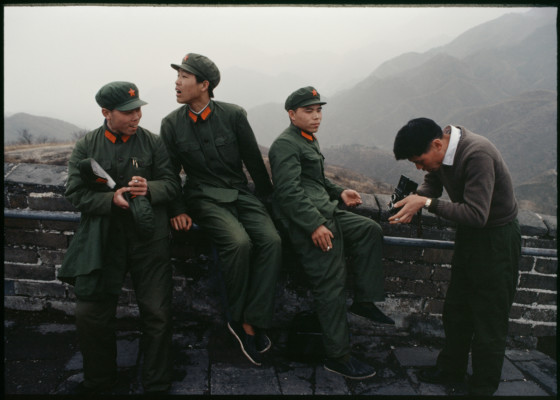
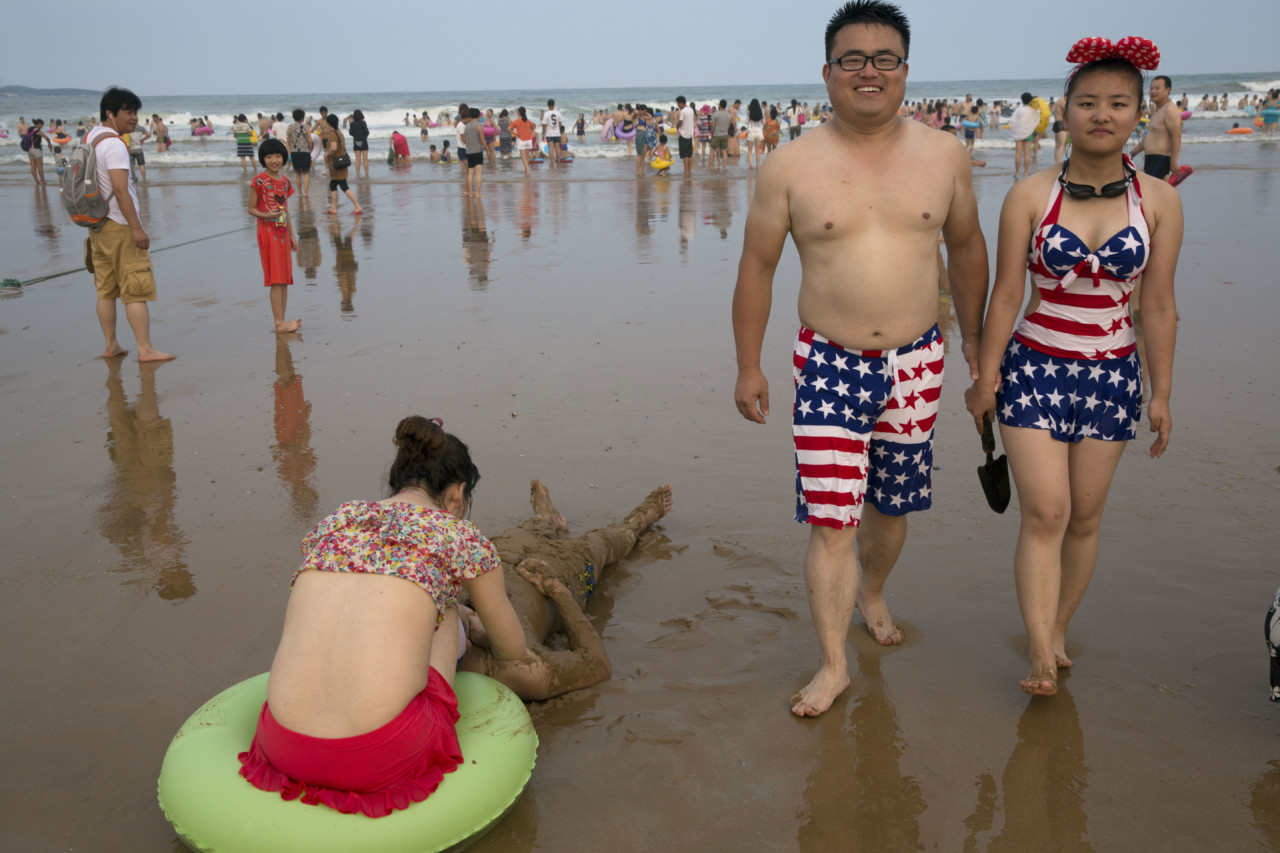
Barbey’s eye as a photographer enabled him, from 1980, to pick up on the Rolleiflex at the hands of the soldiers of the People’s Liberation Army, and the professional photographer at the Yu Garden in Shanghai, to the iPhone selfies by the vacationing new middle class on the beach of Qingdao, where he captures this couple in their swimsuits in the colors of capitalist Uncle Sam. Each scene tells the story of the China of the moment. And how well observed, how it had to be seen!

Bruno Barbey YuYuan Gardens. Shanghai. China. 1980. © Bruno Barbey | Magnum Photos
 Bruno Barbey Qingdao. Shandong province. China. 2015. © Bruno Barbey | Magnum Photos

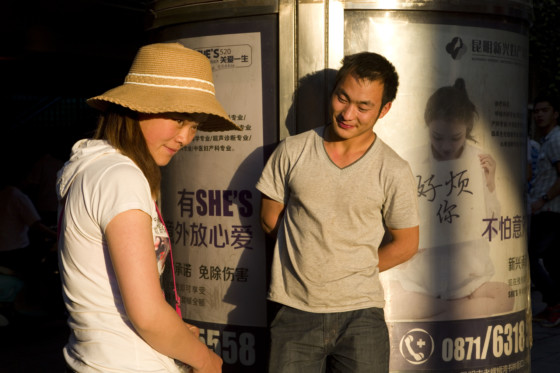
Bruno Barbey’s eye shows us how China passes from the nation of the “popular masses” in the years of the Cultural Revolution – for example in his  telling image of the poster celebrating the Constitution of Anshan Steel in 1973 – toward the emergence and strengthening of the individual, through the images of two lovers in Shanghai who no longer hesitate to embrace in public on the Bund, or the couple flirting in Kunming in front of a poster advertising a safe medicine for painless abortion.

Bruno Barbey China. 1973. © Bruno Barbey | Magnum Photos

“Barbey’s journey was not only a simple passage through space, but also through time”

 
Bruno Barbey Lovers on the promenade of the renovated Bund against the skyline of Pudongs Lujiazui Financial District. Shanghai, China. September, 2010. © Bruno Barbey | Magnum Photos
Bruno Barbey Young couple in front of an advertising for a pain-free abortion method. Kunming. China. 2013. © Bruno Barbey | Magnum Photos

Barbey’s journey was not only a simple passage through space, but also through time – from 1973 to 2018 – a real challenge; the China Expo in 2010 which Barbey eagerly photographed already appears, today, a little washed out in comparison with the contemporary China that is galloping towards 2020.

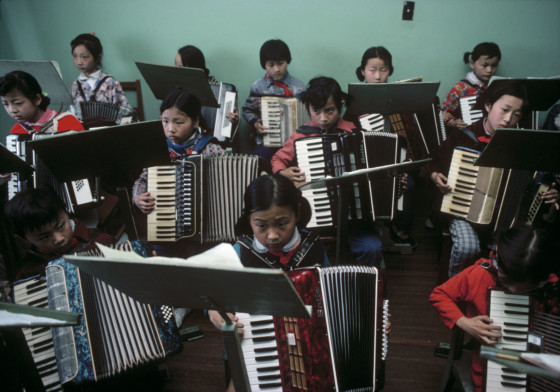
The magic of photography makes certain images timeless, like those of the children: the tenderness that Bruno Barbey’s gaze holds for these youths is striking. In the alley of a working class neighbourhood in Shanghai in 1980, the carefree innocence of childhood permeates this game of ping-pong played on an old wooden board with a brick in the place of a net, while the sense of effort to rise through the ranks is evident on the concentrated faces of the little girls in accordion class at the Children’s Palace in Shanghai, admirably organized in a geometry punctuated by the black and white keyboards of the instruments and the rectangles of the notation stands. The little accordionist in the upper left corner recognized herself in the photo and contacted Bruno over thirty years later: it turns out she is now married and living comfortably between New York and Palm Beach in the United States.

Bruno Barbey Children playing ping-pong in front of the Hu-Nan factory. Workers’ district of Tchao Yang. Shanghai. China. 1980. © Bruno Barbey | Magnum Photos
Bruno Barbey Music classes in the Municipal Children’s Palace. Shanghai. China. 1980. © Bruno Barbey | Magnum Photos

“Of the Western photographers who came to China, few really got to the heart of the country as Barbey did.”

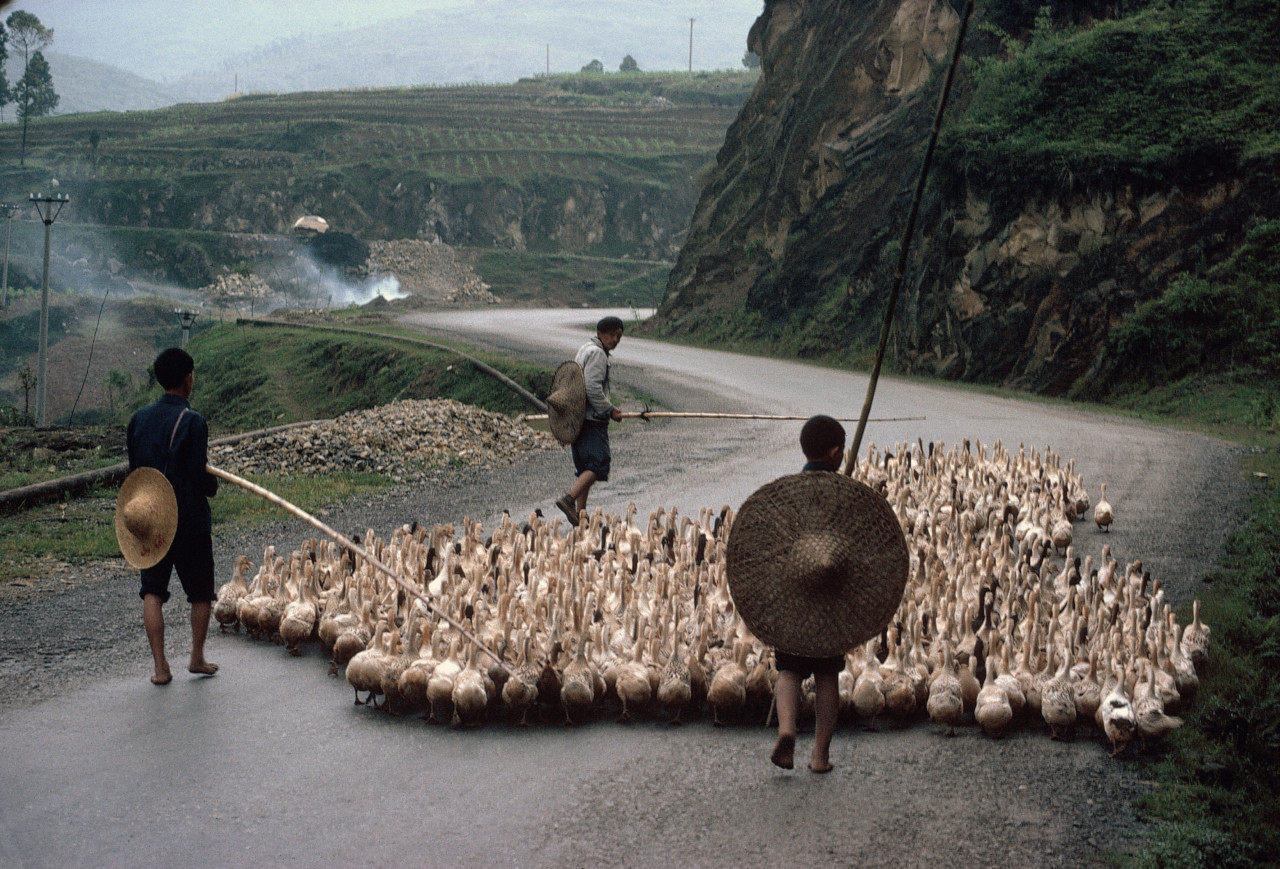
Bruno Barbey Ducks are led down a paved country road. Chengdu. Sichuan. China. 1980. © Bruno Barbey | Magnum Photos

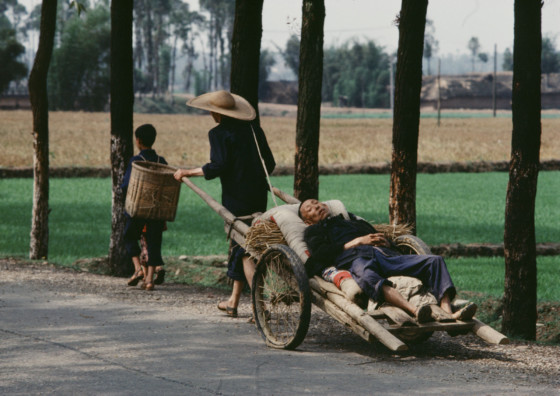
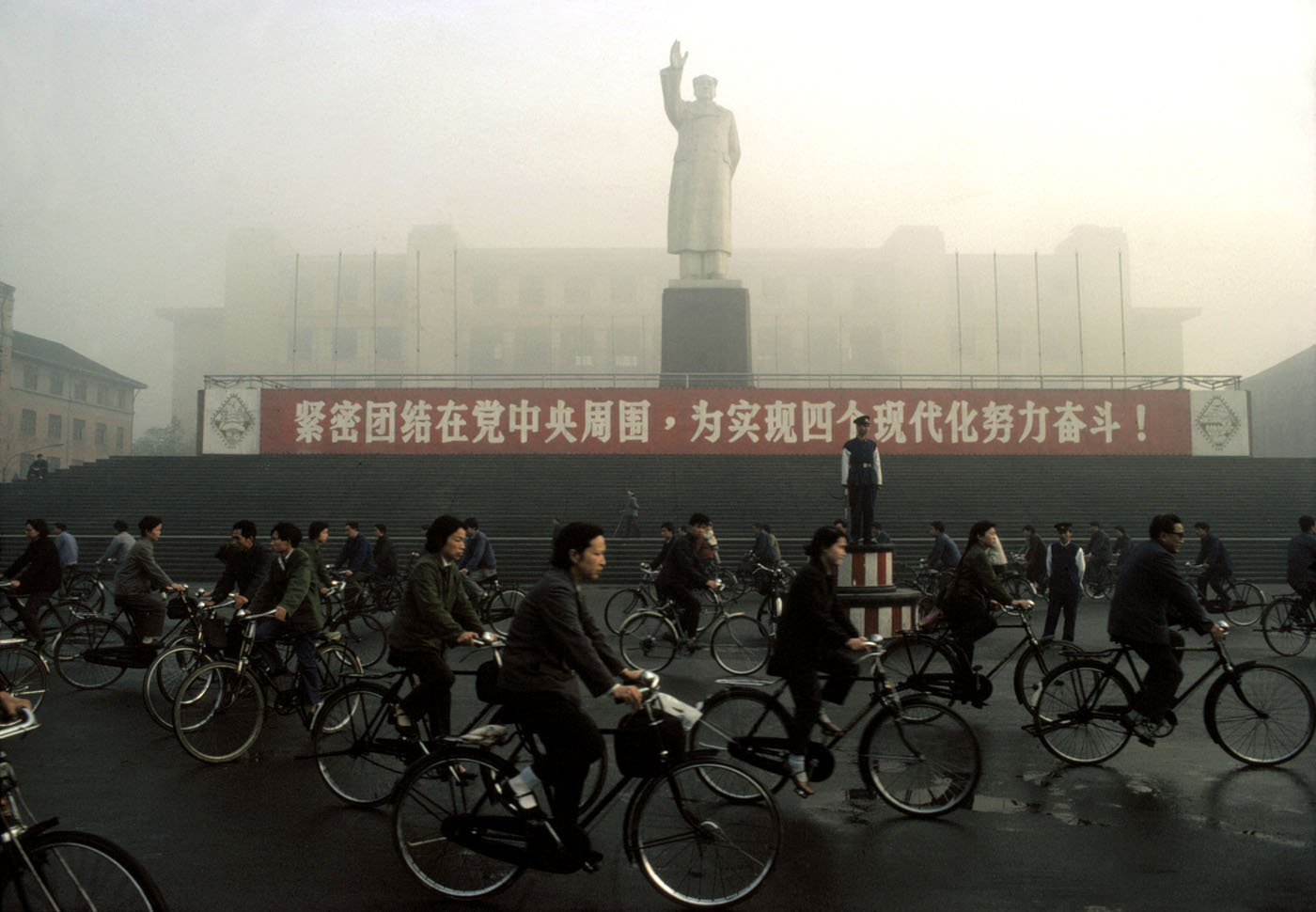
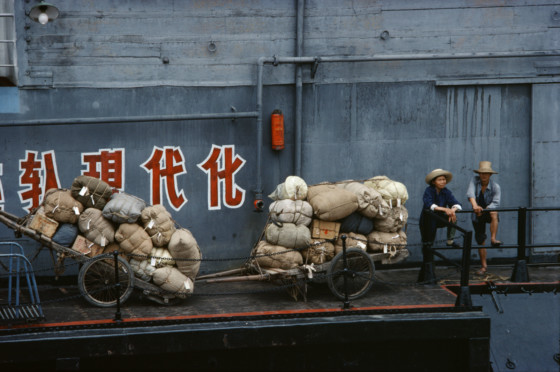
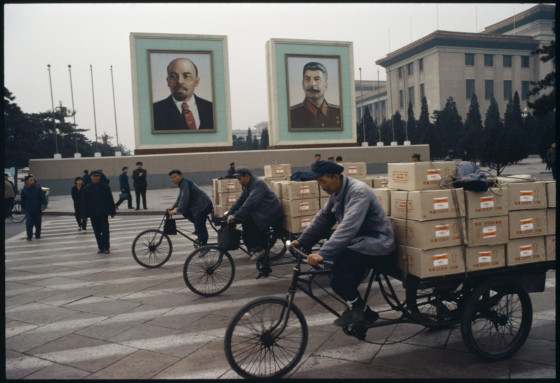
In Sichuan, Barbey noticed the slogans and propaganda posters for the Four Modernizations (a campaign led by Deng Xiaoping for the new era of reform) while bicycles and tricycles, including handcarts, abounded on city streets and country roads alike, even on this boat in Chongqping with a slogan marked “Modernization of Transport.” On the square in Chengdu, under the raised arms of President Mao, cyclists circulate in all directions; near Tiananmen Square in Beijing these three delivery men in boiler suits pedal their tricycles with heavy wares from the factory, under the impassive gaze of Lenin and Stalin, who would never have imagined what China has become: reflections of a new Shanghai, and architectural splendors of a futuristic Beijing.

Bruno Barbey is therefore not simply a traveller in space, but also a traveller in time.

Bruno Barbey On the road to the hospital near Loshan. China. 1980. © Bruno Barbey | Magnum Photos
Bruno Barbey Place of Industry with in the background a statue of Mao and the slogan “Be united in support of the Central Committee of the Communist Party, fight for the Four Modernizations to become real.”
Bruno Barbey China. 1980. © Bruno Barbey | Magnum Photos
Bruno Barbey Beijing. China. 1980. © Bruno Barbey | Magnum Photos
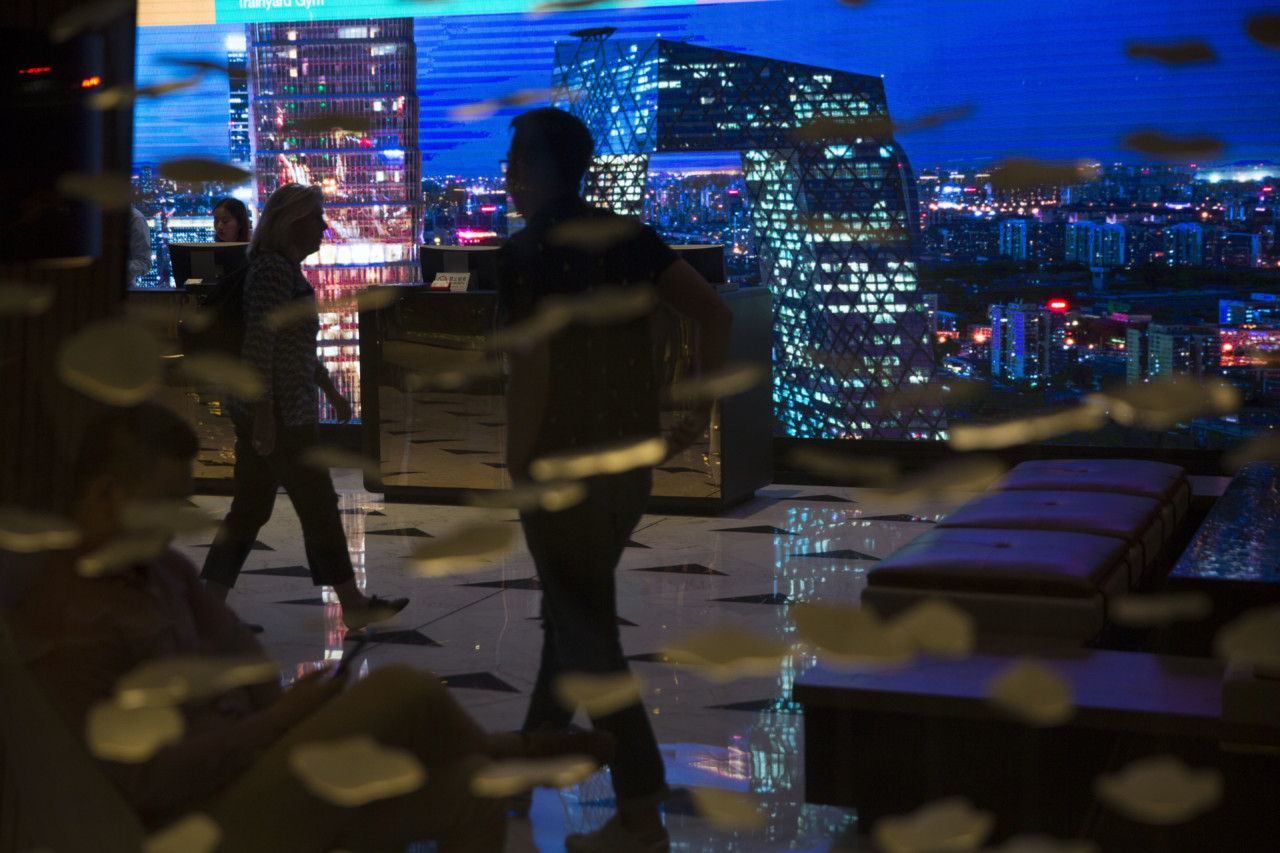
Bruno Barbey CCTV Tower. Beijing. China. 2017. © Bruno Barbey | Magnum Photos

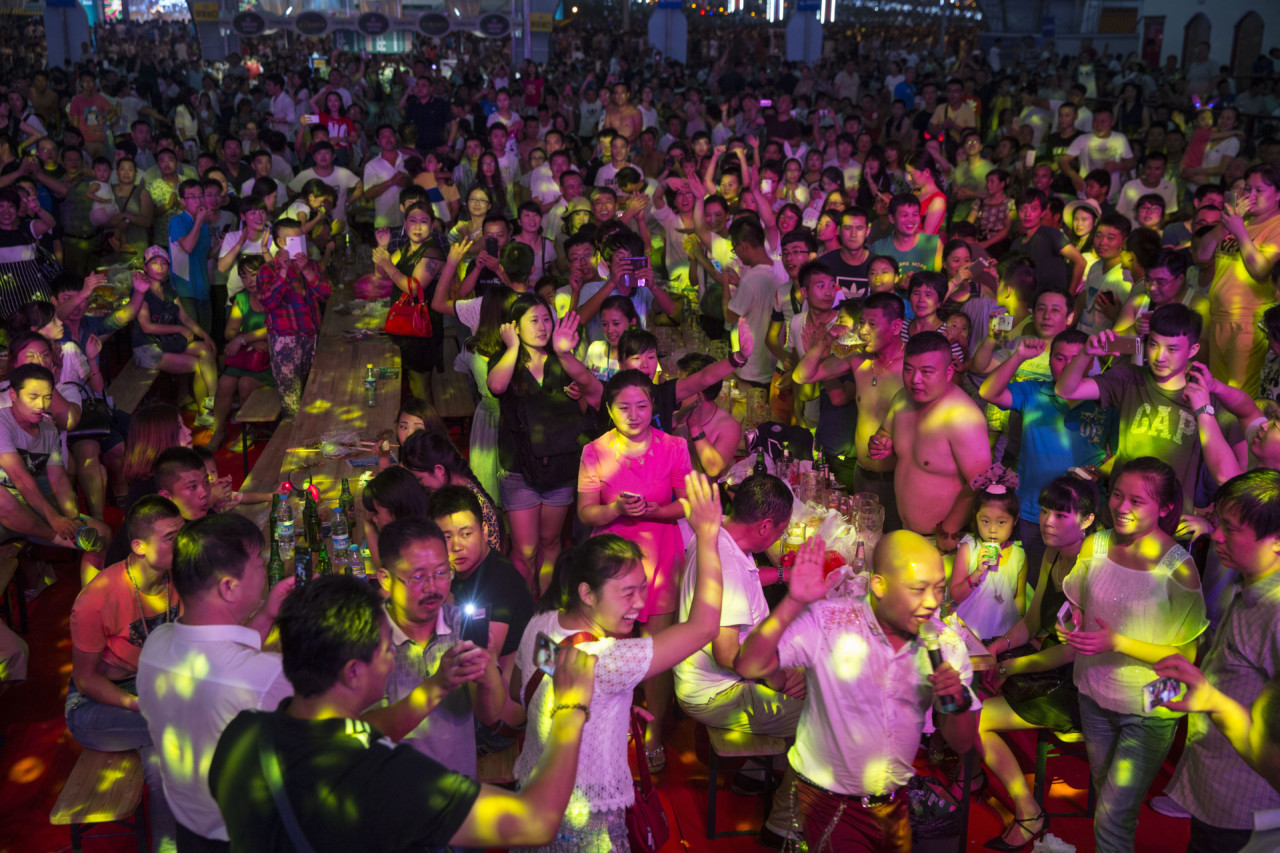
From Guilin’s cormorant fishermen to festivalgoers at the Qingdao Beer Festival, from the Macao pedicab driver taking a nap to the pilgrim pushing his bike outside the Id Kah Mosque in Kashgar, from the intimate portrait of a troubled prime minister to a group of children at the end of their spectacle during the Photo Festival of Pingyao, Barbey has not stopped questioning “reality” in this Land of the Real.

Bruno Barbey The Li river. Xingping, in Guilin. China. 1980. © Bruno Barbey | Magnum Photos

“From Guilin’s cormorant fishermen… to a group of children at the end of their spectacle during the Photo Festival of Pingyao, Barbey has not stopped questioning “reality” in this Land of the Real.”


Bruno Barbey Qingdao. Shandong province. China. 2015. © Bruno Barbey | Magnum Photos

Celtic Knots: Discover the Meaning Behind These Intricate Designs

From My Modern Met/By Madeleine Muzdakis on November 15, 2020

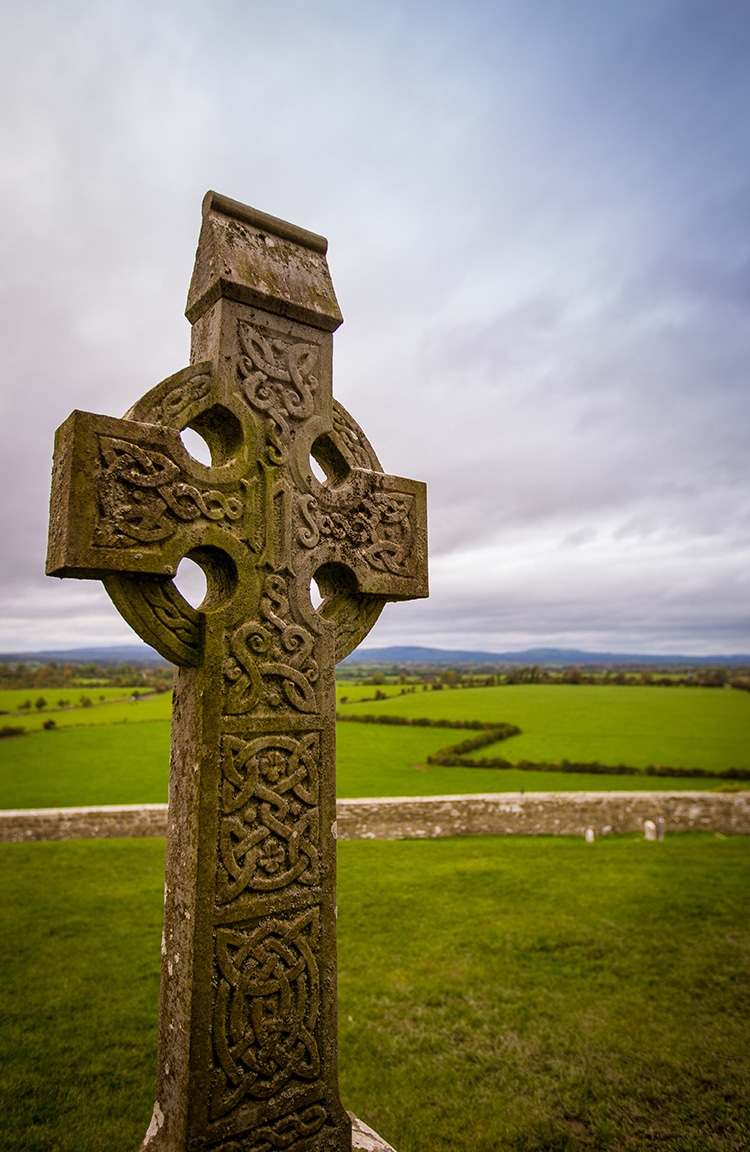
Celtic Knots Cross Irish

Photo: Stock Photos from RUSTY426/Shutterstock
This post may contain affiliate links. If you make a purchase, My Modern Met may earn an affiliate commission. Please read our disclosure for more info.

You’ve likely seen the Celtic knot before. This intricate motif is found in many places, including tattoos, decorative crosses, and silver jewelry. But how much do you know about it?

Celtic knots are strongly associated with the Irish culture in Ireland and overseas. However, few know the history and meanings behind these beautiful designs. Their story is a long one and shockingly global; many societies have developed motifs of endless or infinite knots. This is the primary characteristic of most Celtic knots—there is no obvious beginning or end.

Read on in this article to discover more about these designs and their meanings. Along the way, you might discover a pretty Celtic gift perfect for a jewelry lover or history buff.


A Brief History of Celtic Knots

Dara Knot Willow Pattern

Photo: Stock Photos from YULIA BUCHATSKAYA/Shutterstock

Pre-Christian Celtic art contained geometric motifs such as spirals, key patterns, and step patterns. The first interlace patterns—looping, braiding, and knotting—arrived on the British Isles with the Romans in the third or fourth century CE. As England, Scotland, and Ireland became Christian, the artwork of these areas began to transform. Around 600 CE, local Celtic traditions merged with Anglo-Saxon to produce the insular style of art which would dominate the early medieval period in Britain and Ireland. Interlaced motifs became an integral part of insular illuminated manuscripts and metalwork, particularly in the work of Irish Celtic monks.

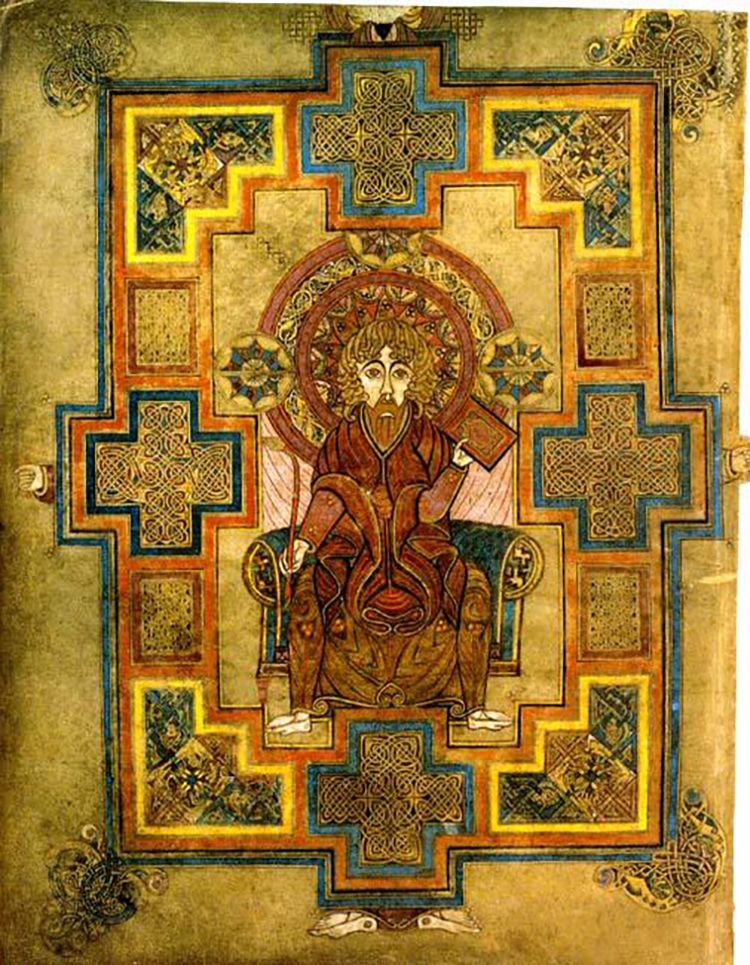
Book of Kells

Celtic knot designs as seen in the “Book of Kells,” an illuminated manuscript displaying insular art. (Photo: Wikimedia Commons [Public domain])

Some of the earliest knotted designs can be seen in the painstakingly-illustrated folios of medieval Christianity. An example can be seen in the famous Book of Kells, copied and illuminated around 800 CE. The rich and gilded borders include many examples of braided and knotted designs that also appear on Celtic crosses and monuments throughout Ireland. Irish missionaries are thought to have carried the style to other Celtic lands, such as Gaul in northern France. While medieval art in Ireland continued to incorporate insular designs, the Viking invasions of the ninth century CE are considered by scholars to have concluded the insular period in England. The style continued in Ireland until around the 12th century.

Where can you find Celtic knots today?

Celtic Knot Woodcut

3DGeekWares | $25.19+

Today, Celtic knots can still be seen on crosses, churches, and other historic public spaces throughout Ireland. Celtic knots are also a popular part of the visual culture for many of Irish-American heritage.

Whether you are looking to embrace your heritage or just like the pretty designs, there are many ways to display these Irish symbols. The knots are often worn in jewelry and can make meaningful gifts for loved ones. Engraved boxes, Christmas ornaments, and household plaques can lend Irish flair to your home. Even if you have no Irish ancestors, these knots are for everyone and similar knots exist in many cultures.


Different Types of Celtic Knots

TRINITY KNOT

Triquetra Trinity Knot

Photo: Stock Photos from HOLLYGRAPHIC/Shutterstock

The trinity knot—also known as triquetratrefoil knot, or triskele—is composed of three arcs. This motif is common throughout insular art, but it is also seen in East Asian Buddhist art. In Christian traditions, the trinity knot became a popular motif in illuminated manuscripts and stone crosses around the eighth century CE. During the 19th-century Celtic cultural revival, popular opinion dubbed the symbol to represent the Holy Trinity of the Christian faith. Repeated or embellished trinity knots are some of the most common Celtic designs.


LOVE KNOT

Celtic Love Knot

Photo: Stock Photos from OCTOPUSAGA/Shutterstock

Another common modern Celtic knot, the love knot is prized for its never-ending appearance. Two interlocking hearts form an infinite bond; it is believed that lovers exchanged these knots as symbols of affection. Today you can find the knot on lockets, Christmas tree ornaments, and keepsake boxes—great gifts for the one you love.


SAILOR’S KNOT

Sailors Knot Ring

Sabrina Silver | $61.63

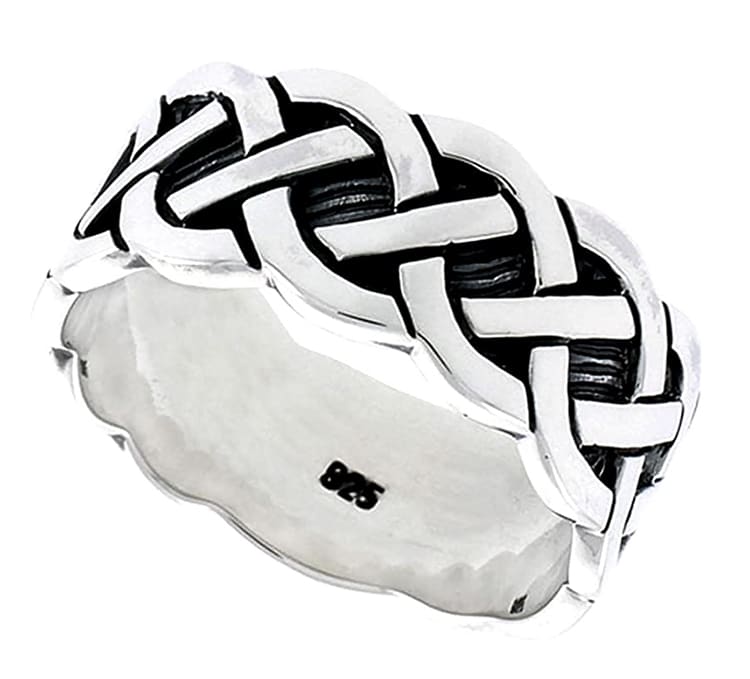
Related to the love knot is another infinite knot, the sailor’s knot. Tradition says sailors crafted these simple two-strand knots as a way to remember their loves back home. The knot symbolizes friendship, affection, and love. It is a common motif on Celtic-style wedding bands, but it also makes a sweet design for delicate bracelets and charms.


SHIELD KNOT

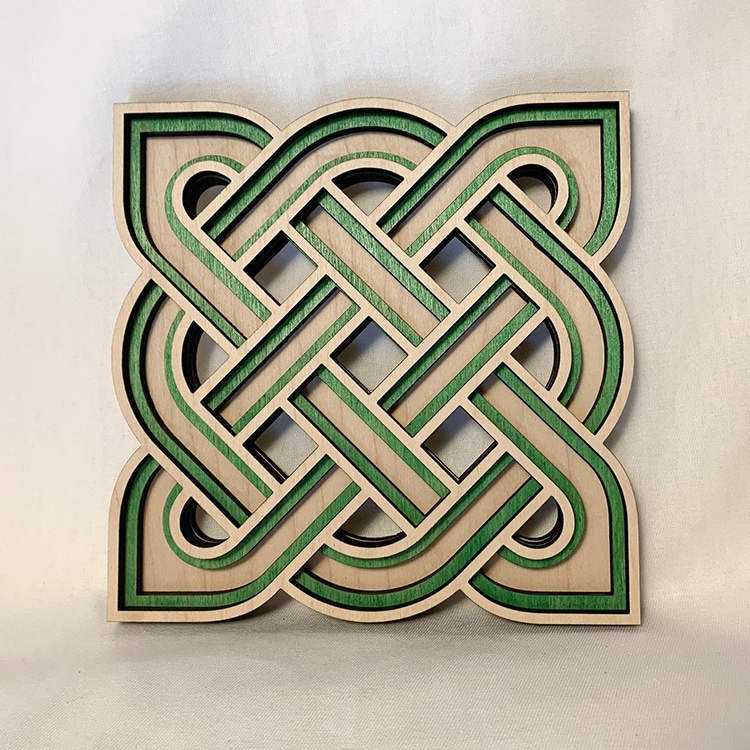
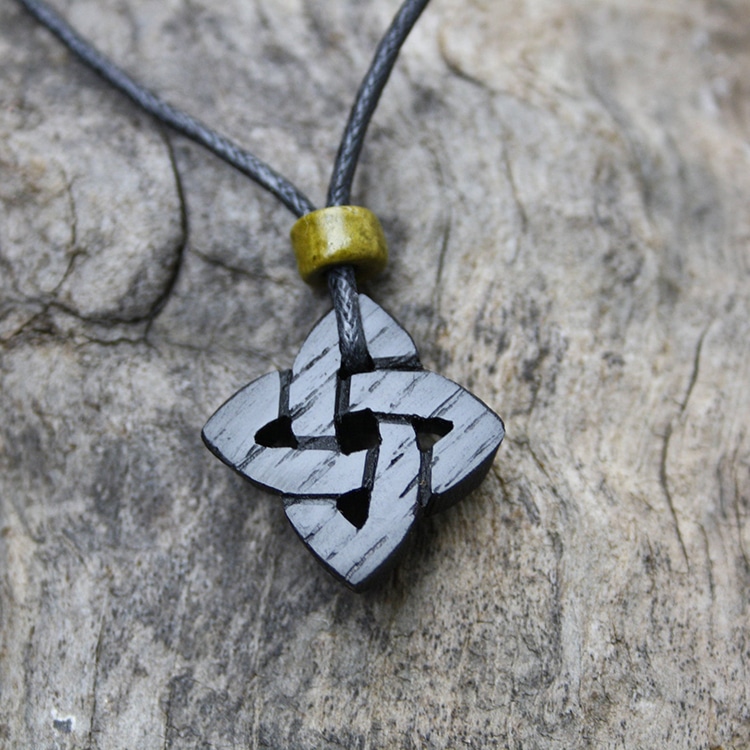
The shield knot is a four-cornered knot which can take a variety of forms ranging from simple to elaborate. Four-cornered knots are common across the world, and the oldest iterations date back to ancient Mesopotamia. In Celtic tradition, the ancient Irish used the knot for protection from spirits or opposing armies. Warriors, children, and the sick all often carried the knot in some form. Today, you can draw on this strength in your daily life with a coffee mug or leather journal.


SOLOMON’S KNOT

Solomon's Knot

Fretmajic | $41.53

Like the shield knot, Solomon’s knot is also four-cornered. The two endless loops interlock, woven together. The knot is regularly seen in ancient Roman mosaics, but its association with early synagogues likely imbued the design with its present name. The meaning of the knot varies across cultures. The Yoruba people of western Africa use the knot in textiles and carvings as a symbol of royal status. The Jewish tradition, however, regards it as a symbol of eternity. For Celtic knots, this formation likely implies infinite love or faith.


DARA KNOT

Dara Knot Infinity Knot Necklace

peatfirejewelry | $36+

The Dara knot—or eternity knot—is a modern Celtic knot taking its inspiration from traditional infinity knots. Dara knots come in varying styles, but they all draw inspiration from the roots of oak trees which wind and twine in strength. The symbolism of oak roots is grounding for all those who need anchoring in their own strength.


SERCH BYTHOL KNOT

Serch Bythol Celtic Pen

Oakring | $50

The serch bythol knot is formed from two trinity knots; placed together, the arcs of each knot combine to form a circle at the center. Modern representations of this knot are often found in jewelry or on gifts, as it is thought to denote everlasting love. The three arcs of each trinity knot represent the person’s body, mind, and spirit. Together, they form a central circle which symbolizes eternity.


MOTHERHOOD KNOT

Motherhood Celtic Knot

SongsofInkandSteel | $51.94+

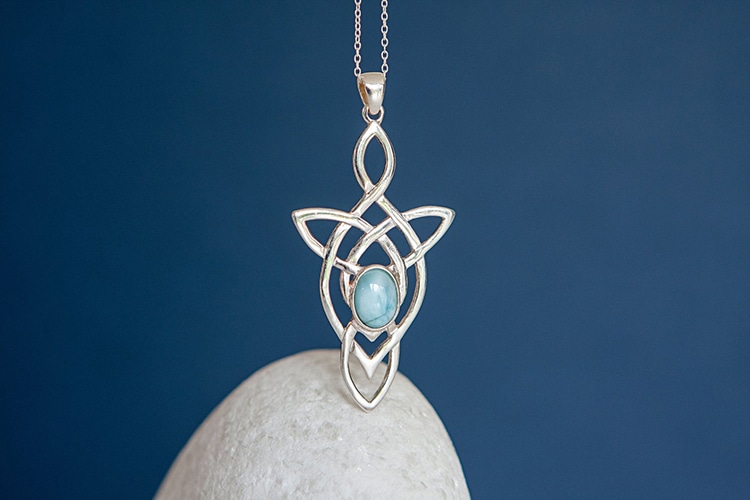
While this knot is not historically authentic, it has drawn upon ancient motifs and come to represent the beauty of motherhood. Combining heart shapes and trinity knots, the motherhood knot resembles a mother holding her child. You will notice a variety of designs that claim to be the motherhood knot; as it is a modern invention, aesthetics may be prioritized.